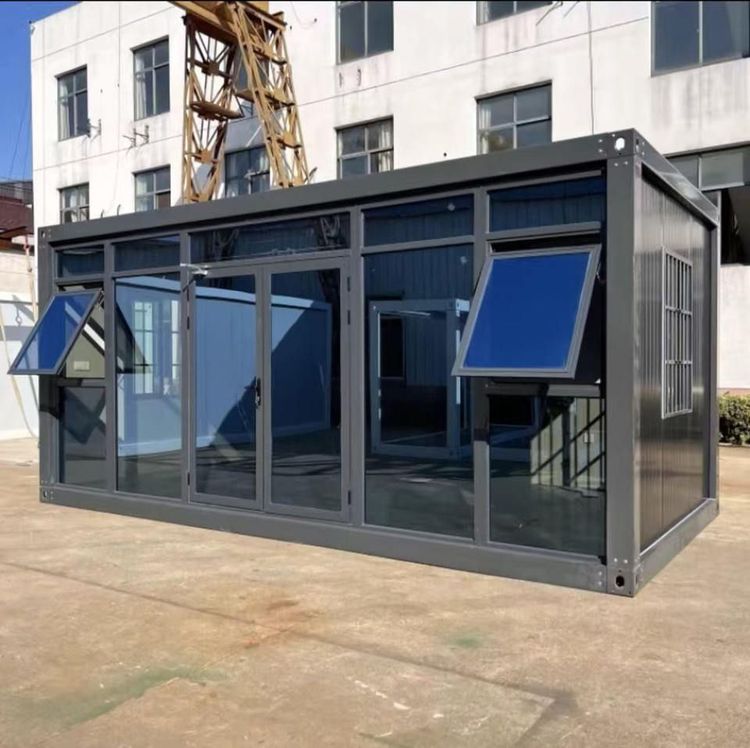
Quality of Residential Container Houses
The quality of residential container houses varies significantly due to differences in design, materials, craftsmanship, and usage scenarios. High-quality products can meet safety and durability requirements, while inferior products may suffer from structural instability and poor living experiences. Detailed analysis is as follows:

1. Quality Performance of High-Quality Container Houses
Container houses produced by leading companies feature full steel structural frames with wind resistance up to Level 12 and earthquake resistance up to Level 8, with frame deformation rates well below the industry's 0.3% qualification threshold. For example, products from Suzhou Zhongnan Steel Structure Co., Ltd. demonstrate excellent structural stability under extreme conditions, support rapid installation and flexible layouts, with a single unit requiring only 2-4 hours for installation and capable of being disassembled and reassembled more than 15 times, with a service life spanning decades. Products from Yunnan Hongfeng Container Co., Ltd. undergo strict quality control processes, offering wind, rain, sound, heat, and thermal insulation properties, with a service life of up to 50 years, suitable for scenic hotels, emergency shelters, and other scenarios.
2. Quality Defects of Inferior Container Houses
Non-standard off-brand products, aiming to reduce costs, commonly use thin steel plates or inferior steel materials, with wind resistance only reaching Level 6-8. In strong winds, they are prone to frame deformation and wall detachment, with rework costs reaching 3-5 times the purchase cost. For example, container dormitories used at the Nagoya Asian Games suffered from insufficient ceiling height, poor sound insulation, and inadequate air conditioning, resulting in a poor living experience for athletes. In heavy rain, they even experienced water accumulation and backflow, exposing serious defects in waterproofing and structural strength of inferior products.
3. Core Factors Influencing Quality Differences
- Materials and Craftsmanship: High-quality products use hot-dip galvanized coatings and fully automated welding processes to ensure corrosion resistance and structural strength; inferior products, due to thin materials and poor craftsmanship, are prone to rust and loose connection points.
- Design Rationality: Compliant products optimize spatial layouts through ergonomic design, while inferior products often affect the user experience with short beds and narrow aisles.
- Compliance and Certification: Products from leading companies pass international certifications for fire prevention, wind resistance, and earthquake resistance, while off-brand products often lack qualifications, posing safety hazards.