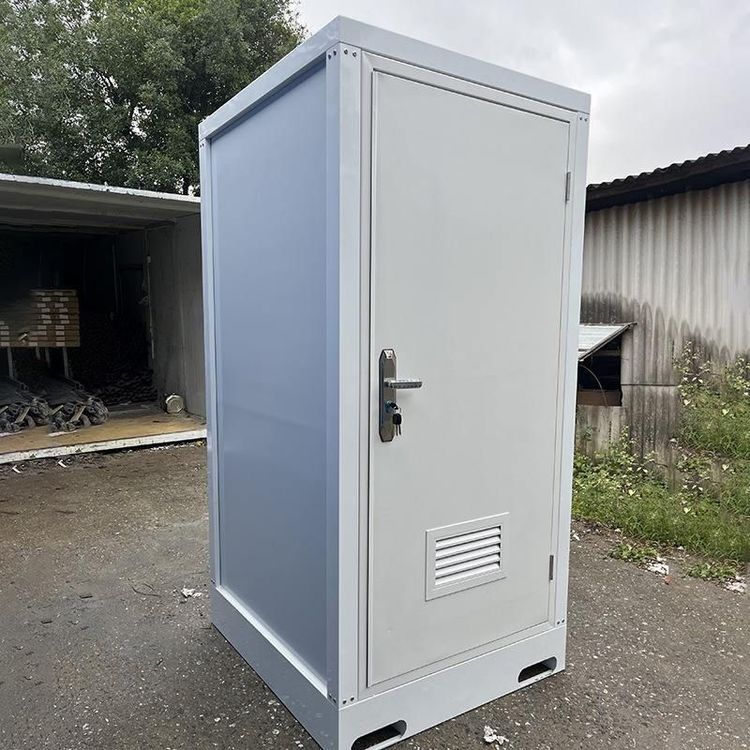
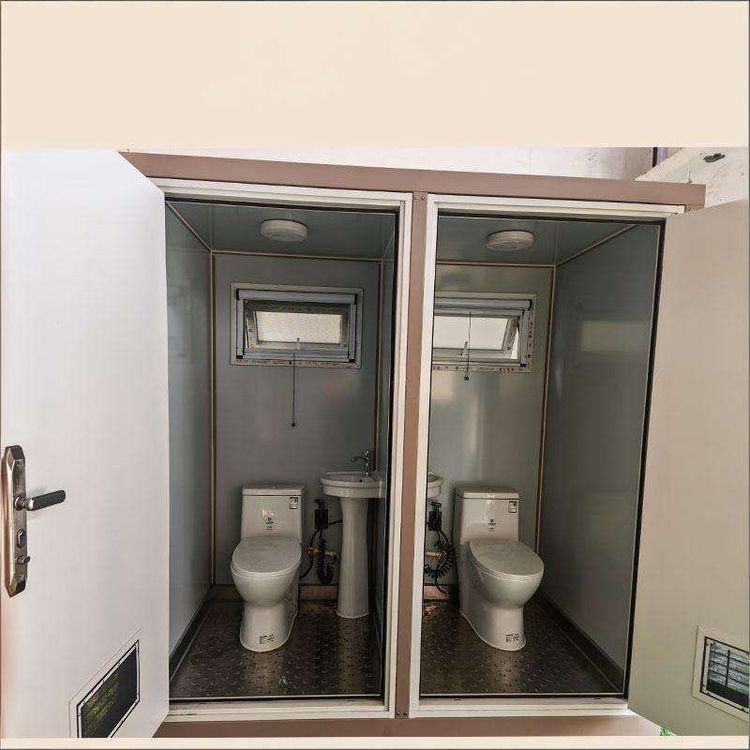
Qingyang Water Circulation Mobile Toilet
The Qingyang water circulation mobile toilet achieves water conservation, environmental protection, and efficient operation through multi-module collaboration. Its core mechanisms cover water circulation, waste treatment, energy supply, and environmental adaptability design.

Water Circulation Mechanism: Water Conservation as the Core
The Qingyang water circulation mobile toilet employs a water-saving flushing system, with water sourced from pre-stored freshwater tanks or treated recycled water. After flushing, the water undergoes multi-stage filtration (such as sand filtration and activated carbon adsorption) and disinfection (such as ultraviolet light and ozone) before entering the storage unit for reuse. The amount of water replenished per flush is only 30% of that in traditional toilets, significantly reducing water consumption. For example, in arid or water-scarce regions, this design reduces reliance on municipal water supplies while preventing sewage discharge and environmental pollution through closed-loop circulation.
Waste Treatment and Resource Conversion: Harmless and Reusable
The waste treatment module achieves resource conversion through two technical pathways:
- Biodegradation: Utilizing microbial communities to decompose organic matter, converting feces into carbon dioxide, water, and a small amount of inorganic salts, with the final product usable as greening fertilizer;
- Physical-Chemical Treatment: Dehydrating waste with solidifying agents to form harmless solid blocks that can be directly landfilled or further processed.
The entire process occurs within a closed system, preventing odor leakage and pathogen transmission, meeting environmental protection standards. For example, in ecologically sensitive areas like Qingyang scenic spots, this design reduces the risk of soil and groundwater pollution from traditional toilets.
Energy Supply and Module Collaboration: Self-Sufficiency and Smart Management
The energy module uses a combination of solar photovoltaic panels + energy storage batteries to provide power for the water circulation system, waste treatment, lighting, and ventilation, enabling off-grid operation. The remote monitoring module uploads real-time data (such as usage frequency and waste tank levels) via wireless networks, supporting maintenance personnel in optimizing collection routes and maintenance plans. For example, during peak tourist seasons, the system can dynamically adjust flushing frequency based on foot traffic data, balancing water conservation and user experience.
Environmental Adaptability and Material Selection: Durability and Safety Combined
The structural frame uses lightweight alloy materials with a weather-resistant coating, capable of withstanding temperature variations from -30°C to 50°C and UV aging. Contact surfaces employ antibacterial coating technology to inhibit the growth of microorganisms such as Escherichia coli and Staphylococcus aureus; multi-stage waterproofing ensures internal electronic components remain dry, while temperature control components automatically adjust to prevent system failures in extreme weather. For example, in Qingyang's cold winter environment, insulation design prevents freezing of the storage unit, ensuring normal toilet operation.
This design reduces long-term environmental loads through technological integration, aligning with circular economy principles, and is particularly suitable for scenic spots, temporary events, and other scenarios requiring minimal ecological intervention.