
Mobile Toilet at Qingyang Road Junction
The mobile toilet at Qingyang Road Junction features adaptability to special geographical conditions, environmental protection, high efficiency, energy and water conservation, and optimized design for the local climate.
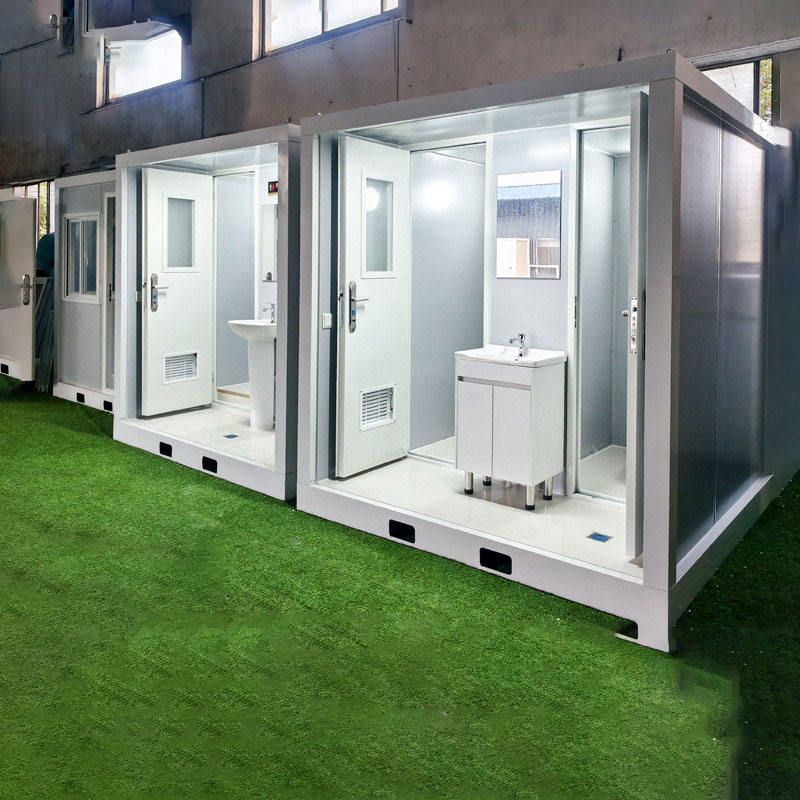
Adaptability to Special Geographical Conditions: Qingyang is located on the Loess Plateau, characterized by a rugged terrain with numerous gullies and ravines, making the construction of traditional fixed sanitation facilities difficult. The mobile toilet employs a modular chassis design, which allows it to flexibly adapt to undulating terrain and can be easily transported and installed at road junctions with varying elevations, addressing the challenges of toilet construction in complex terrains.
Environmentally Friendly and Efficient Waste Treatment: The toilet integrates a biodegradation treatment system internally, relying on the decomposition action of microbial communities to convert waste without depending on an external power grid, enabling continuous operation for several weeks. The feces collection device uses negative pressure collection technology, combined with an oxidation decomposition reaction vessel, to transform organic matter into neutral ash, with the residual volume being only about 15% of the original waste, significantly reducing the amount and difficulty of waste treatment. The treatment terminal is equipped with a three-layer protective isolation device to effectively prevent leakage and soil contamination, protecting the local ecological environment. The methane gas generated during equipment operation is directed into a small burner and converted into carbon dioxide and water, with the heat energy also used to maintain the active temperature of the microbial communities, achieving rational utilization of energy.
Energy and Water Conservation Design: The water supply module is equipped with a dual-cycle filtration mechanism. The high-quality filtration stage uses physical sedimentation to separate solid impurities, while the second stage removes odor substances through activated carbon adsorption, improving single-use water efficiency by approximately 40% compared to the early direct flushing mode with storage tanks, effectively conserving water resources. In terms of energy supply, photovoltaic panels are generally integrated, with the solar auxiliary system providing at least 60% of daily energy consumption under sunlight conditions. The power management module automatically adjusts the power of ventilation fans and lighting systems based on usage frequency, reducing energy consumption.
Optimization for Local Climate: Considering the local climate's dryness, significant temperature variations, and potential water shortages in some areas, the manufacturer has provided targeted solutions in the selection of thermal insulation materials, integration of solar power supply systems, and application of water-saving flushing technologies during product design, ensuring the normal operation of the mobile toilet under different climatic conditions.
You may also like

Portable Toilet Eco-Friendly Custom & OEM: Design & Bulk Production Guide
Read More
How to Assemble & Install Container House Step by Step
Read More
Portable Toilet Eco-Friendly in 2026: Buying Guide & Recommendations
Read More