
Installation of Mobile Toilets in Qinglong County
The installation of mobile toilets in Qinglong County requires comprehensive consideration of site selection, main body installation, and functional connections, with modern modular design enhancing installation convenience.
I. Site Selection Requirements
The site selection for mobile toilets must balance usage needs with environmental conditions. Taking Shichengzi Village in Qinglong County as an example, its location is in a depression at the foot of a mountain, with a flat surface and good concealment. It is adjacent to a river on the northwest side and surrounded by woods on the other three sides, connected to the outside only by a path along the river. Such a site can meet the toilet needs of a large crowd during the harvest festival while minimizing visual interference with the surrounding environment. The core principles of site selection include: a flat terrain to ensure installation stability; being away from pollution sources (such as downstream of rivers or sewage discharge areas); and convenient transportation for easy maintenance later.
II. Main Body Installation Process
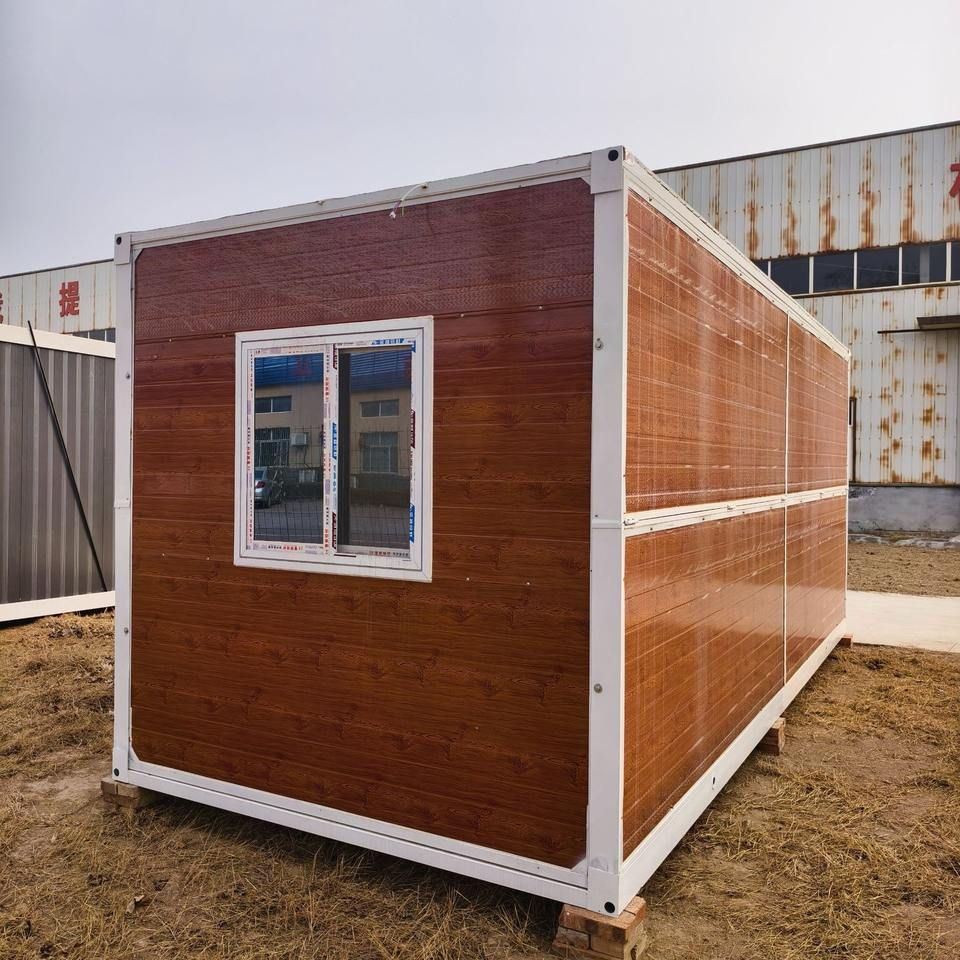
The main body installation of mobile toilets typically adopts a modular design to simplify the construction process. In the case of Shichengzi Village, the toilet main body is covered with color-coated steel plates, forming a rectangular shape, with the long side extending along the river to fully utilize the site space; the plank path extends along the existing path, connecting the toilet main body to the external site. The specific steps include:
- Foundation Treatment: Clear the site and compact the ground to ensure there are no gravel or depressions, preventing the main body from tilting after installation.
- Module Assembly: Assemble the prefabricated toilet modules (such as walls, roofs, and door frames) according to the design drawings, using bolts or welding to fix them and form a closed space.
- Plank Path Construction: Design the path of the plank path according to the terrain, using anti-corrosion wood or lightweight metal materials to ensure a stable structure and seamless connection with the main body.
III. Functional Connections and Debugging
For water-flush mobile toilets, the following functional connections need to be completed:
- Drainage System: Connect the drainage pipes to the septic tank or municipal sewage network, ensuring the pipe slope meets the specifications (usually not less than 2%) to avoid blockage or odor.
- Ventilation Design: Install exhaust fans or open windows to ensure air circulation inside the toilet and reduce odor accumulation; if natural ventilation is used, optimize the position and size of the windows.
- Signage Posting: Post usage instructions, precautions, and emergency contact information in conspicuous locations to guide users in proper usage.
The modular design of modern mobile toilets significantly improves installation efficiency, but actual convenience is still influenced by site conditions, toilet type (such as water-flush or dry-flush), and the experience of the construction team. Reasonable site planning, strict adherence to the installation process, and complete functional connections are key to ensuring the rapid deployment of mobile toilets.



