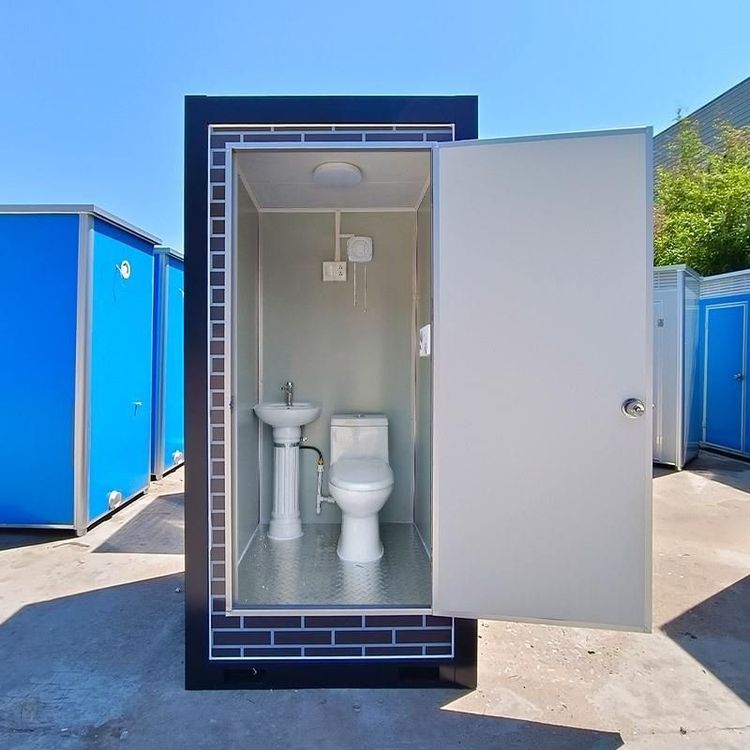
Qinghai Environmental Protection Mobile Toilet Design
The design of Qinghai's environmental protection mobile toilets is reflected in multiple aspects such as materials, treatment systems, environmental attributes, manufacturing, transportation layout, and responses to special environments.

Material Selection: The frames of Qinghai's environmental protection mobile toilets are mostly made of lightweight alloys. These materials are light in weight and high in strength, facilitating quick installation and disassembly, and meeting the needs of temporary or mobile use. The walls are made of color-coated steel plates, which are corrosion-resistant and can withstand the wind and sand erosion in plateau regions. They also have thermal insulation properties, maintaining a relatively stable temperature inside the toilet under the plateau climate conditions with large temperature differences between day and night, ensuring user comfort.
Internal Treatment Systems: Equipped with water-saving flushing devices, these toilets reduce water consumption through optimized design, aligning with the reality of relatively scarce water resources in plateau regions. They adopt a preliminary waste classification and collection design, separating different types of waste for easier subsequent resource recovery and harmless treatment. Some designs use modular connections to ensure coordinated operation among various functional modules, improving overall treatment efficiency. Others employ dry treatment technologies to reduce dependence on municipal sewage systems and lower construction and operational costs.
Environmental Attribute Realization: Color-coated steel plates are recyclable, reducing resource consumption throughout the facility's lifecycle and aligning with sustainable development concepts. Some manufacturers integrate small solar panels on the roof to provide auxiliary power for lighting and ventilation systems, transforming mobile toilets into micro-energy nodes, reducing dependence on traditional energy sources, and lowering carbon emissions.
Manufacturing Process Considerations: During manufacturing, materials undergo weather resistance tests to ensure stable performance in plateau environments with significant temperature differences, extending the facility's service life. The production process emphasizes standardized interfaces for various components, allowing different functional modules to be flexibly combined according to different site requirements, improving the facility's adaptability and versatility.
Transportation and Layout Optimization: Lightweight design reduces transportation energy consumption and costs. Temporary placement relies on analyzing urban pedestrian flow data to reasonably plan toilet locations, improving facility usage efficiency and avoiding resource waste.
Responses to Special Environments: In cold conditions, leveraging Qinghai's abundant solar thermal resources, active and passive solar heating is used to warm the toilet compartments, while building insulation materials are employed to reduce heat loss. In drought conditions, water-saving measures at the source reduce flushing volume, and hand-washing water is reused to achieve water conservation goals.