
Qingdao Two-Toilet-Stalls Mobile Toilet
There are two-toilet-stalls mobile toilets in Qingdao. Here is a detailed introduction to the two-toilet-stalls mobile toilets in Qingdao:
I. Practical Cases
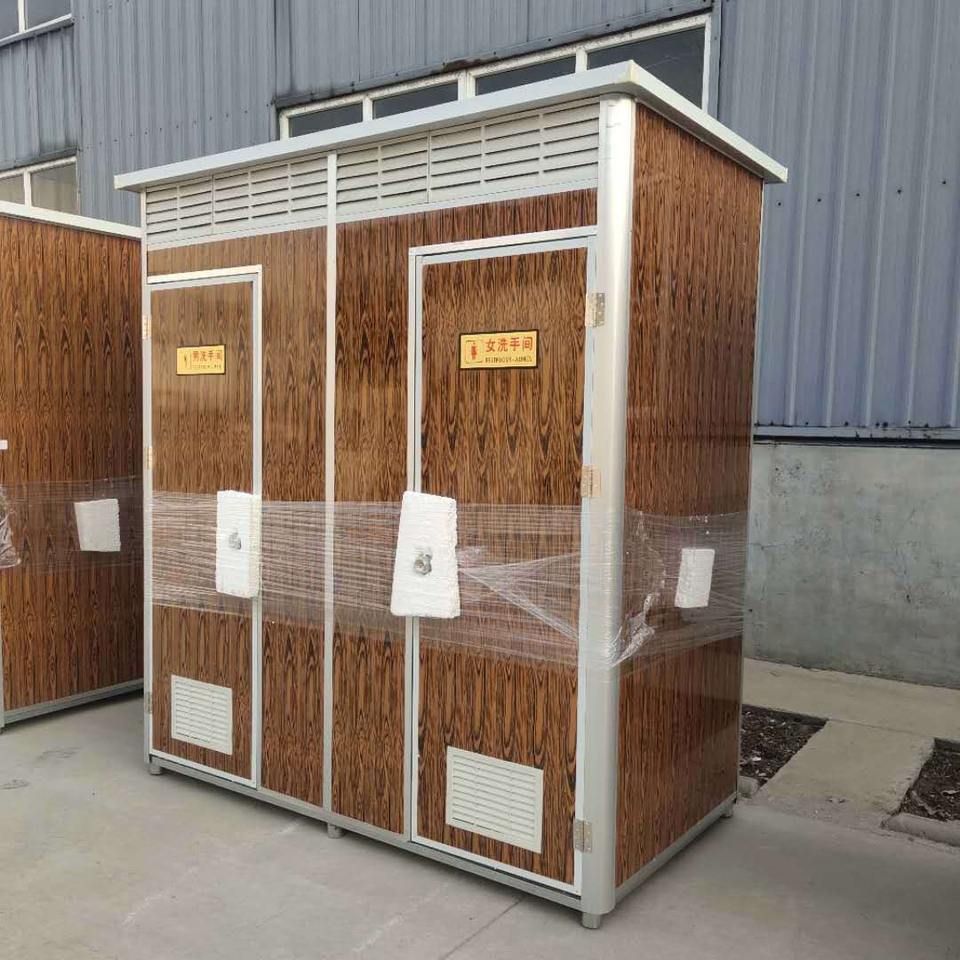
Dezhou Hongtu Metal Products Co., Ltd. once customized a two-compartment mobile toilet for Mr. Wang in Qingdao in front of his office building. This toilet adopts the classic design of one squatting position each for men and women with a hand-washing area in the middle. It not only meets basic toilet needs but also enhances convenience and hygiene through the hand-washing area in the middle. This design is not only suitable for the front of office buildings but can also be widely applied in various places such as parks, scenic spots, and construction sites.
II. Customization Services
In addition to the above practical cases, users in the Qingdao area can also obtain two-toilet-stalls mobile toilets through customization services. Enterprises such as Cangzhou Hengtai Sanitation Equipment Co., Ltd. provide mobile toilet customization services. Their products include various types and can be customized according to user needs in terms of the number of toilet stalls, layout, materials, etc. This means that users can design two-toilet-stalls mobile toilets that meet their requirements based on their specific needs and site conditions.
III. Design Features
Two-toilet-stalls mobile toilets usually have compact and practical design features. They adopt a modular design, which is convenient for transportation and installation, and can be flexibly combined and expanded according to needs. In terms of material selection, durable and easy-to-clean materials are mostly used to ensure the long-term use effect and hygiene conditions of the toilets. In addition, two-toilet-stalls mobile toilets also focus on humanized design, such as setting up reasonable ventilation systems and lighting systems to enhance the user experience.
IV. Application Scenarios
Two-toilet-stalls mobile toilets are suitable for various scenarios. In public places such as parks and scenic spots, they can serve as temporary or permanent sanitation facilities to provide convenience for tourists; in temporary workplaces such as construction sites, they can meet the basic toilet needs of workers; in places such as the front of office buildings, they can serve as supplementary sanitation facilities to improve the overall environmental quality.



