
Puyang Container Mobile Houses
Container mobile houses in Puyang City feature diverse products, a wide range of application scenarios, and durability, along with advanced production processes and comprehensive market services.
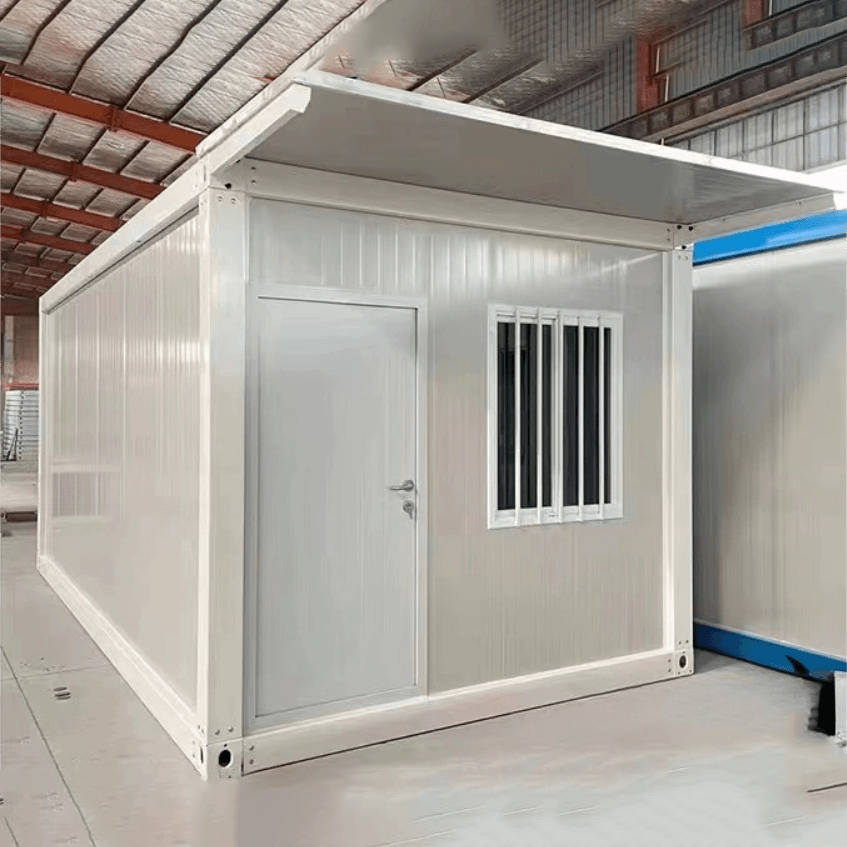
Product Types and Prices
Container mobile houses in Puyang City come in a rich variety, with price ranges covering different needs. The price of a basic Puyang container house is approximately ¥4,500.00, suitable for short-term or low-cost usage scenarios; the price of Fanxian color-steel temporary buildings can be as low as ¥50.00 per square meter, applicable to temporary and simple structures; and the starting price for customized residential container temporary buildings is ¥1,200.00, which can be individually designed according to functional requirements (such as office or residential use). Price differences mainly stem from materials, sizes, and configurations, with high-end products possibly equipped with explosion-proof electrical systems or photovoltaic power generation devices.
Application Scenarios
As a petrochemical city, Puyang sees wide application of container houses in the energy sector. For example, in scenarios such as field operation camps and well site support buildings, their advantages of rapid deployment and mobility are prominent; within chemical parks, container houses are used for temporary offices, warehousing, and safety monitoring, meeting explosion-proof and corrosion-resistant requirements. Additionally, in the relocation project for residents in the Yellow River floodplain, container houses serve as temporary transitional housing, solving居住 problems during construction. In the future, their potential for emergency rescue is outstanding, as they can be quickly transformed into medical modules, emergency command centers, and other facilities.
Product Features and Technical Requirements
Puyang container houses are characterized by durability and uniform specifications. The container body adopts a flat-top design, with solar water heaters or photovoltaic panels installable on the top, and forklift slots or lifting holes at the bottom for easy transportation and stacking. Interior materials are selected from flame-retardant panels of Grade B1 or above, meeting explosion-proof, anti-static, and corrosion-resistant requirements. For special scenarios such as oil fields, technical requirements are stricter: electrical equipment must be explosion-proof, with cables passing through explosion-proof tubes; the grounding resistance of the container body must be less than 4 ohms; and the thickness of the insulation layer must reach over 100 millimeters to ensure stability in extreme environments.
Production Process and Quality Inspection
Excellent factories in Puyang adopt advanced processes such as laser tube cutting and robotic welding to enhance the precision and structural strength of container bodies. The quality inspection process covers key indicators, including container body size deviations, diagonal differences, and door and window opening and closing forces, ensuring airtightness and safety. For example, the diagonal difference of the container body must be controlled within ±5 millimeters, and the door and window opening and closing force must not exceed 50 Newtons to avoid deformation during long-term use.
Market and Services
The container house market in Puyang is vibrant, with suppliers offering one-stop services including rental, sale, recycling, and customization to meet different cycle needs. Some factories also provide post-sale inspections, regularly checking the airtightness, structural safety, and electrical systems of container bodies to extend their service life. For example, container houses used in oil fields require a comprehensive inspection every six months, including grounding resistance tests and insulation layer performance evaluations.



