Principle of Mobile Toilets in Public Places
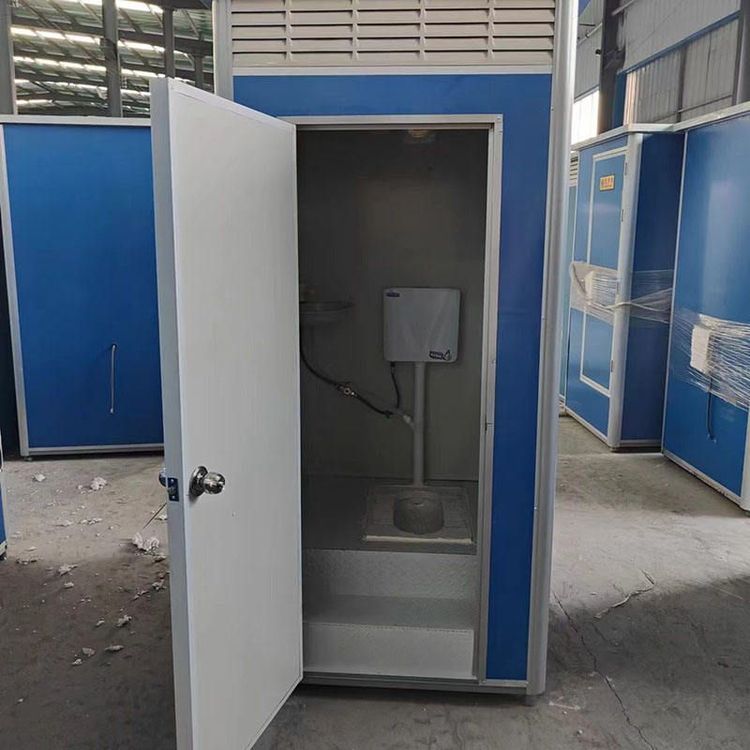
The principles of mobile toilets in public places vary depending on the technological type, primarily divided into five categories: mechanical packaging, circulating water flushing, dry packaging, foam sealing, and microbial degradation, all of which rely on integrated system modules for operation.

1. Mechanical Packaging Type This type uses a mechanical sealing device to isolate excreta from the outside environment. After the user defecates, the device automatically seals the feces in a biodegradable plastic bag, preventing odor diffusion and pollution. Once the bag is full, it can be replaced entirely and disposed of collectively, making it suitable for scenarios without water sources or requiring rapid cleanup. Its core advantage lies in the absence of water flushing and the reduction of environmental burden after the plastic bag degrades.
2. Circulating Water Flushing Type These toilets are equipped with intermittent aerobic and anaerobic treatment devices, accelerating fecal decomposition through the addition of biological strains and biofilm technology. The treated water is purified by a circulating filtration device and reused for flushing the toilet, forming a closed-loop system. This technology significantly reduces water consumption; for example, intelligent water-saving ecological toilets can achieve a low water flushing effect of 0.46 to 1.5 liters per person, making them suitable for areas with scarce water resources or high environmental protection requirements.
3. Dry Packaging Type Similar to the mechanical packaging type, the dry packaging type lacks a water flushing device, with excreta directly collected by a biodegradable plastic bag. After use, the system automatically replaces the bag with a new one and collects the old one for disposal. It has a simple structure, low maintenance costs, and does not require connection to water sources or sewage pipes, often used in temporary events or remote areas.
4. Foam Sealing Type A foaming device generates a large amount of foam to cover the surface of the toilet, using the lubricating effect of the foam to reduce excreta residue while preventing odor leakage and splashing through its sealing properties. The active ingredients in the foam inhibit bacterial growth, further improving hygiene conditions. This type requires regular replenishment of foaming liquid but has extremely low water consumption, suitable for scenarios requiring both hygiene and water conservation.
5. Microbial Degradation Type Some high-end models introduce specific microbial communities that convert excreta into harmless substances (such as water and carbon dioxide) through biodegradation, significantly reducing the frequency of cleanup. These toilets are usually equipped with temperature and humidity control systems to optimize microbial activity, suitable for long-term use in places with limited maintenance resources, such as scenic spots or野外科研站 (field research stations).
Integrated System Support All types rely on modules such as a sewage storage tank (made of leak-proof, corrosion-resistant high-density polyethylene material), a freshwater tank (equipped with a filtration device for the circulating water flushing type), and a ventilation system (featuring a bidirectional air exchange design combined with an activated carbon filter layer) working in synergy. The ventilation system reduces odors through forced air exchange, while the activated carbon layer adsorbs harmful gases, ensuring internal air quality.