
Production Process of Container Houses
The production process of container houses mainly includes steel pre-treatment, frame welding, enclosure panel installation, tiered ceiling construction, internal equipment installation, surface anti-corrosion treatment, and quality inspection and testing.
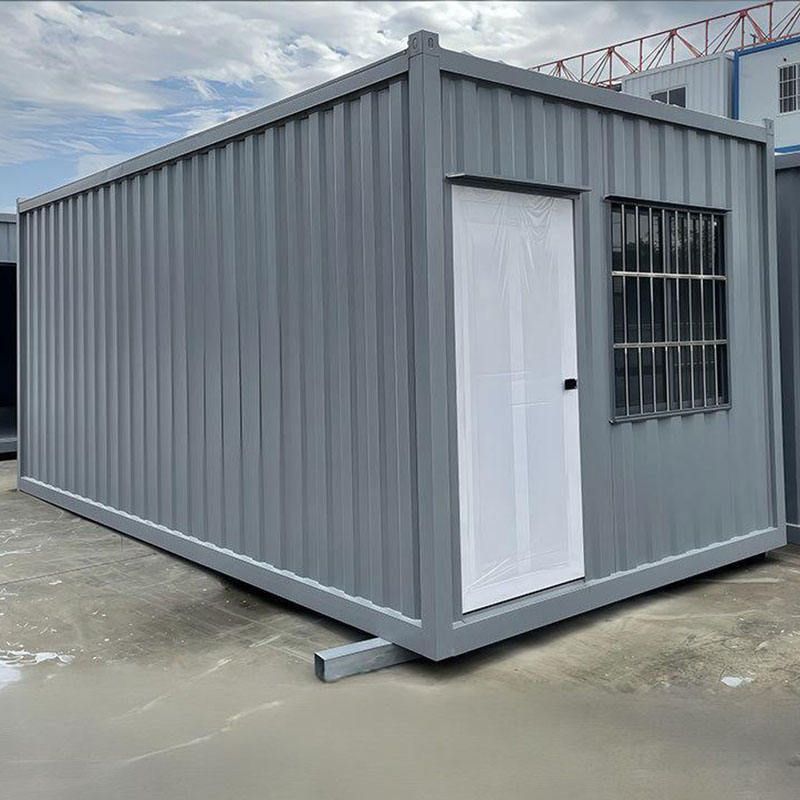
Steel pre-treatment is the foundational step in production. After the steel arrives at the factory, it undergoes straightening, rust removal, and cutting operations to ensure that the materials meet subsequent production requirements and provide high-quality raw materials for further processing.
The frame welding step is crucial. Using automatic welding equipment, section steels such as channel steels and square tubes are combined to form the box frame. The welding quality directly affects the overall rigidity of the house, so the factory is equipped with weld inspection instruments for spot checks to ensure the stability of the frame.
Enclosure panel installation follows closely. After the frame is completed, the floor, wall, and roof panels are installed. The panels are mostly made of fire-resistant rock wool sandwich panels, which combine thermal insulation and flame-retardant properties, effectively enhancing the safety and comfort of the house. In some processes, for box wall fabrication, uprights are nailed onto the resin board, window spaces are reserved, and the structure is reinforced with steel nails and adhesives.
Tiered ceiling construction is a relatively complex step. First, a fiberboard ceiling is laid, followed by covering with a plastic film barrier. Ceiling joists are installed, with drainage holes and wire holes reserved. Finally, the structure is framed with墩板 (assuming it means a type of support board, if not, please replace with the correct term) and wires are laid to ensure the functionality and safety of the ceiling.
The internal equipment installation step is customized according to needs. This includes filling with glass fiber wool to form a sound-insulating and insulating layer, laying a plastic film barrier, installing smooth wooden wall panels, as well as configuring doors, windows, floors, etc., to meet different usage requirements.
Surface anti-corrosion treatment extends the service life of the house. Anti-rust primers and topcoats are sprayed onto the steel components to form a double-layer anti-corrosion coating, protecting the steel from damage by outdoor environmental erosion.
Quality inspection and testing are the final checkpoints in production. During production, non-destructive testing of welds and dimensional checks are required. Before the finished product leaves the factory, overall waterproof testing and load-bearing verification are completed. Some factories also establish traceable quality inspection files to ensure that product quality meets standards.
In addition, some container houses adopt a modular design. Manufacturers pre-fabricate the positions of windows and doors in advance. During installation, assembly is completed through stacking and stacking, and the overall production cycle can be shortened to three to five days to one week.


