
Prefabricated Wooden House
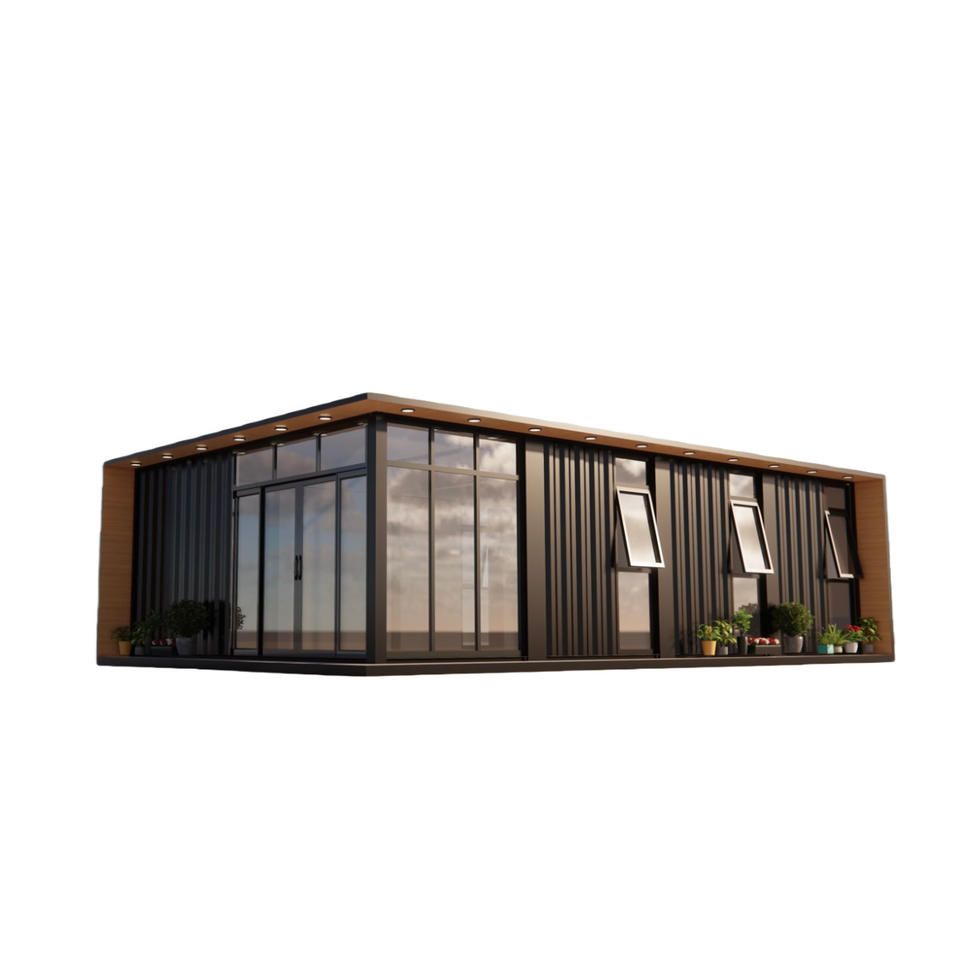
A prefabricated wooden house is a type of building that uses a wooden structure as its main body and adopts a construction method of assembling factory-prefabricated wood on site.
I. Construction Method and Characteristics
The core construction model of a prefabricated wooden house is 'factory prefabrication + on-site assembly'. Wooden structural components are precisely processed in the factory, including cutting, polishing, and fire-retardant treatment, and then transported to the construction site for modular assembly, similar to the rapid building method of 'assembling building blocks'. This model significantly shortens the construction period. For example, manufacturers in Shenzhen on the Alibaba platform can deliver customized products such as anti-corrosion wooden houses and rural resort wooden houses within 10 days. Its main structure is mainly a lightweight frame, combined with dimension lumber and cladding to form a load-bearing system, with three core advantages:
- Outstanding environmental friendliness: Wood, as a renewable resource, has much lower carbon emissions during production compared to concrete and steel, and is recyclable.
- Strong design flexibility: It supports a variety of schemes such as modern ecological styles and all-wood structures, with a配套 (this Chinese word means 'accompanying' or 'supporting', here it may refer to a set of) drawing library and customization services, which can be adapted to different scenarios such as rural areas and tourist attractions.
- Energy-saving and health benefits: The natural properties of wood enable it to regulate indoor humidity, purify the air, and have antibacterial functions, while also balancing the psychological emotions of occupants and enhancing comfort.
II. Technical Standards and Safety
Since 2011, China has gradually improved the standard system for wooden structure buildings, including national standards such as the 'Code for Acceptance of Construction Quality of Wooden Structure Works' and the 'Technical Specification for Glued Laminated Timber Structures'. The 'Technical Standard for Prefabricated Wooden Structure Buildings' implemented in 2017 further standardized the industrial production process. In enterprise practice, glued laminated timber technology has achieved large-span column-free structures, breaking through the span limitations of traditional wooden structures; through fire-retardant treatment (such as impregnation with fire retardants and surface coatings) and structural optimization design, the fire resistance and seismic performance have been significantly improved. Actual projects in Sichuan and other places have verified their structural stability, which can meet the building requirements of high-rise or complex terrains.
III. Application Scenarios and Development Trends
The application scenarios of prefabricated wooden houses have expanded from traditional residences to the field of eco-tourism real estate. In tourist attractions, eco-wooden villas have become a new concept product in the tourism real estate industry due to their integration with the natural environment, such as rural resort and inn projects. With the maturity of prefabricated building technology and consumers' pursuit of a green lifestyle, the market demand for prefabricated wooden houses continues to grow, showing broad prospects especially in rural renovation and resort development.
You may also like
Top Portable Toilet Material Manufacturers: How to Choose a Factory Partner
Read More
Container House Near Me: A Practical Buyer's Guide
Read More
Portable Toilet Quality in 2026: Buying Guide & Recommendations
Read More