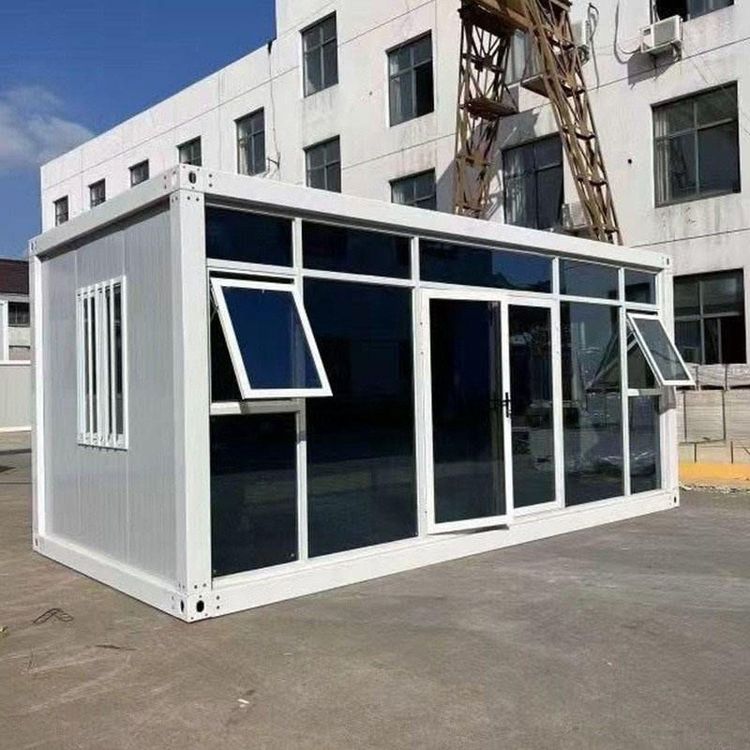
What is the Bearing Capacity of Prefabricated Slab Houses?
The bearing capacity of prefabricated slab houses is not a fixed value and needs to be comprehensively judged based on factors such as the type, specifications, and span of the prefabricated slabs. The common bearing capacity range for various types is 150-400 kilograms per square meter. Here is a detailed analysis:

1. Impact of Prefabricated Slab Types on Bearing Capacity Hollow concrete prefabricated slabs are calculated based on uniformly distributed loads, with national standards ranging from 200-250 kilograms per square meter. For example, a hollow slab that is 3.6 meters long and 0.6 meters wide has an area of 2.16 square meters and a total bearing capacity of approximately 432 kilograms (2.16 × 200). Solid prefabricated slabs, due to their more substantial reinforcement, can bear 250-300 kilograms per square meter. Solid slabs produced by large factories, with higher reinforcement and concrete grades, can have a bearing capacity of up to 300 kilograms per square meter. Prestressed prefabricated slabs, incorporating high-strength steel wires, can bear 300-400 kilograms per square meter within a span of 3 meters and maintain a bearing capacity of 250-300 kilograms per square meter for spans over 4 meters.
2. Detailed Impact of Specifications on Bearing Capacity Span is a crucial factor: the shorter the span, the stronger the bearing capacity. For example, a hollow slab with a 2.4-meter span can bear 250 kilograms per square meter, while a 3.6-meter span reduces it to 200 kilograms per square meter. In terms of thickness, a 10-centimeter-thick prefabricated slab has a bearing capacity of 150-250 kilograms, while a 12-centimeter-thick slab can reach 250 kilograms. Additionally, in civil buildings, the live load rating for 120-millimeter-thick prefabricated hollow slabs is generally 1.5 kilonewtons per square meter (approximately 150 kilograms per square meter) or 2.0 kilonewtons per square meter (approximately 200 kilograms per square meter). However, it is important to note the difference between live load ratings and actual bearing capacities; the former is a design standard value, while the latter requires comprehensive evaluation based on material properties.
3. Differences in Load Types and Usage Scenarios Concentrated loads are more dangerous than uniformly distributed loads. For example, when the bearing capacity is 200 kilograms per square meter, uniformly laying 200 kilograms of sand is harmless, but placing a 300-kilogram safe within 1 square meter may crack the slab. Therefore, it is necessary to avoid local overloading in actual use, especially the concentrated placement of large furniture and heavy equipment.
4. Necessity of Comprehensive Evaluation The actual bearing capacity needs to be comprehensively judged based on material properties, installation methods, support conditions, and building layout. For example, excessively large spacing between support structures, concrete aging, or reinforcement corrosion can significantly reduce bearing capacity; actions such as opening holes or renovations in the building layout may also affect structural safety. It is recommended to obtain accurate data through professional agency inspections or by consulting the original design drawings.