
Prefabricated Reinforced Concrete House
Prefabricated reinforced concrete houses are a form of construction that involves the industrial production of building components and their on-site assembly. They offer advantages such as shortened construction periods and reduced pollution, but have not become widespread in rural China.
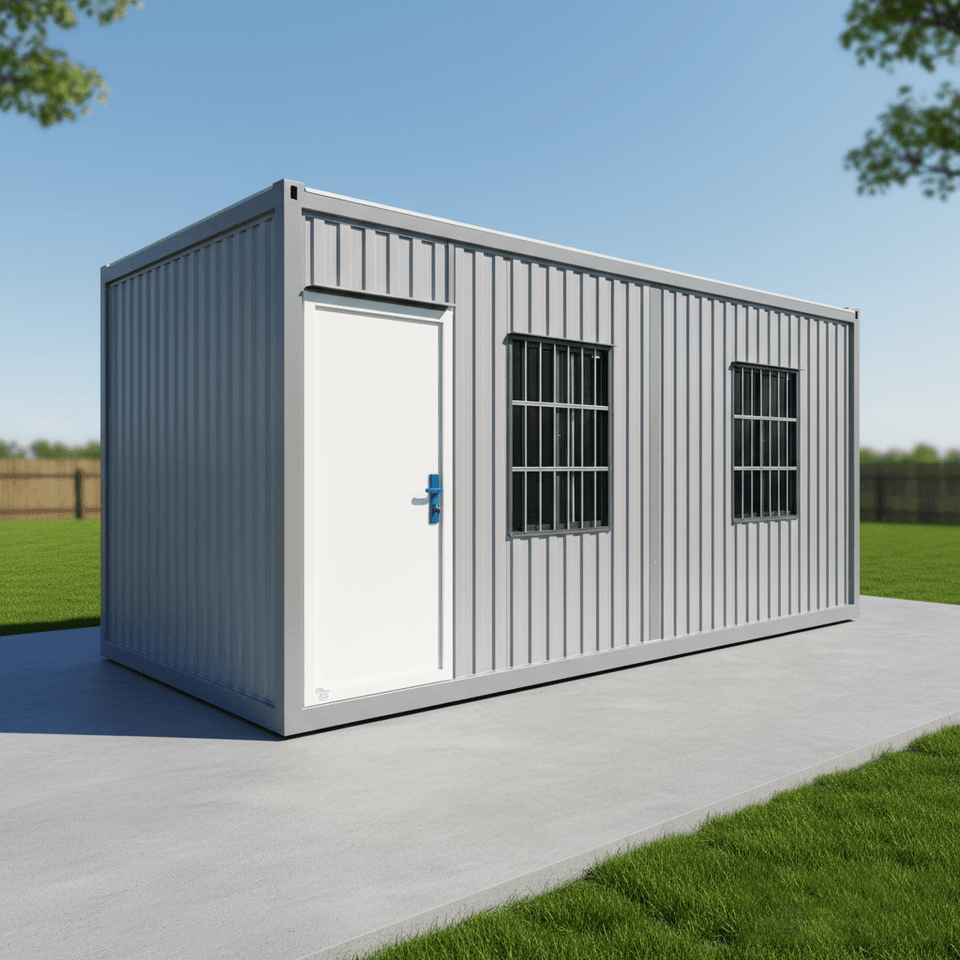
I. Definition and Types of Prefabricated Reinforced Concrete Houses Prefabricated reinforced concrete houses, also known as prefabricated assembled buildings, use reinforced concrete as the material. The house is divided into modules (such as beams, slabs, walls, columns, etc.), which are produced on an assembly line and then transported to the site for assembly. Water pipes, electrical wires, etc., are all pre-arranged, allowing for quick occupancy. The technology encompasses assembled concrete structures and steel structures, with the main types including:
- Panel-assembled: Using prefabricated wall panels and floor slabs as the core components, this type can expand the usable area but has limited design flexibility.
- Box-assembled: By combining prefabricated functional units (such as bedrooms and kitchens), construction speed can be increased by 50%-70%, but it has higher requirements for transportation and lifting equipment.
- Modular buildings: With a higher degree of integration, they represent an advanced form of prefabricated assembled buildings.
II. Technological Development History China's prefabricated concrete technology began in the 1950s and was initially used for factory and residential construction. In the 1970s, driven by the "Three Modernizations" policy, technical systems such as large-panel structures and box structures were formed. In the mid-1980s, the technology stagnated due to cost and quality defects. After the 21st century, it experienced a resurgence due to production efficiency and environmental advantages. Companies like Vanke Group developed assembled shear wall residential structural systems and applied prefabricated frame technology in projects (such as the Nanjing Jindi Yufang project, which adopted a prestressed prefabricated concrete assembled integral frame structural system).
III. Market Status and Challenges
- Popular overseas: Chinese-made prefabricated houses are selling well overseas. In the first four months of 2026, the Guangzhou Customs district exported movable houses worth 1.4 billion yuan, a year-on-year increase of 38.1%.
- Reasons for not being widespread in rural areas:
- Small cost difference: The cost of self-built houses in rural areas is not significantly different from that of prefabricated houses, and self-built houses are more reassuring to the people.
- Quality and structural issues: Compared to better self-built houses, prefabricated houses have slightly lower quality and insufficient structural stability. Cracks and water leakage are prone to occur at module connections.
IV. Policy Support and Environmental Benefits In places like Fujian Province, policy support has been used to establish industrial bases, achieving a reduction in construction waste of over 70%, demonstrating the environmental advantages of prefabricated assembled buildings.
You may also like

Portable Toilet Custom Explained: How to Choose the Right One
Read More
Top Portable Toilet Smart Manufacturers: How to Choose a Factory Partner
Read More
Portable Toilet Picture: Top Options & Considerations
Read More