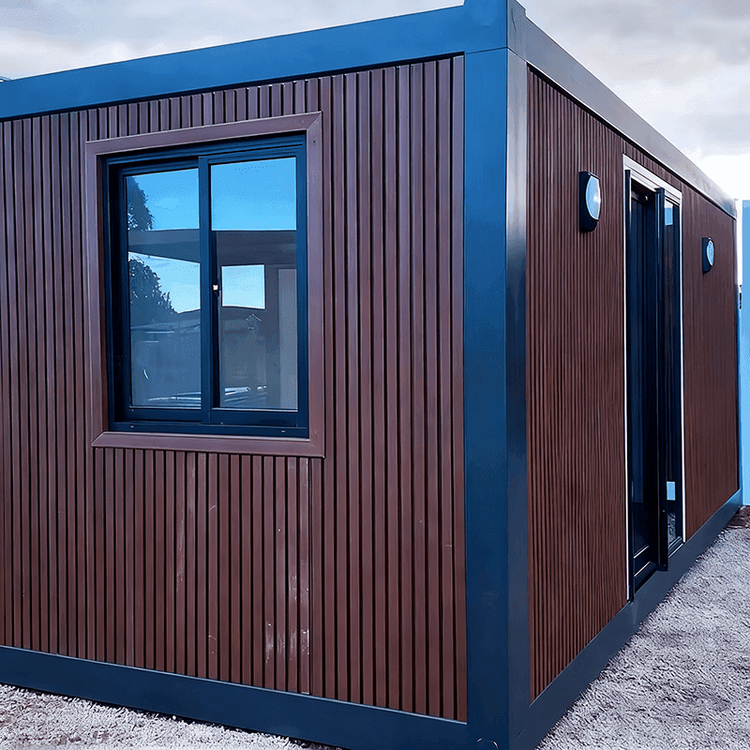
Settlement Specification for Prefabricated Panel Houses
The settlement specification for prefabricated panel houses mainly involves requirements for foundation settlement, settlement differential, and inclination, as detailed below:

Foundation Settlement: According to the 'Code for Design of Building Foundation' (GB 50007 - 2011), the maximum allowable settlement varies for buildings of different types, uses, and heights. For prefabricated panel houses, especially self-built rural houses, a fixed value cannot be simply given for the reasonable range of settlement. Instead, a comprehensive assessment is required, taking into account specific geological conditions, building structural types, and design requirements. In areas with complex geological conditions, soft soil, or high groundwater levels, foundation settlement may be relatively large. Different building structural types also have varying sensitivities to foundation settlement. Due to their structural characteristics, prefabricated panel houses have higher requirements for the uniformity of foundation settlement. Design requirements are determined based on factors such as the building's intended use and safety class, serving as an important basis for evaluating whether the foundation settlement is reasonable.
Settlement Differential and Inclination: In addition to monitoring foundation settlement, close attention should be paid to the settlement differential between different foundation points within the same building and the overall inclination. If the sinking of prefabricated panels causes significant settlement differentials or overall inclination in adjacent parts, this poses a serious threat to the structural safety of the building. For example, uneven foundation settlement may occur, leading to cracking or inclination of the superstructure, severely affecting the normal use and safety of the house. When the foundation settlement rate exceeds 2mm per month for two consecutive months and shows no sign of stopping in the short term, it indicates that the foundation settlement is in an unstable state and requires serious attention. Additionally, if obvious uneven settlement cracks appear in the walls of adjacent houses and the maximum settlement differential exceeds the value specified in national standards, although it may not yet pose a serious threat to overall stability, close monitoring is still necessary, and timely measures should be taken for reinforcement or repair to prevent further expansion of cracks and aggravation of settlement.