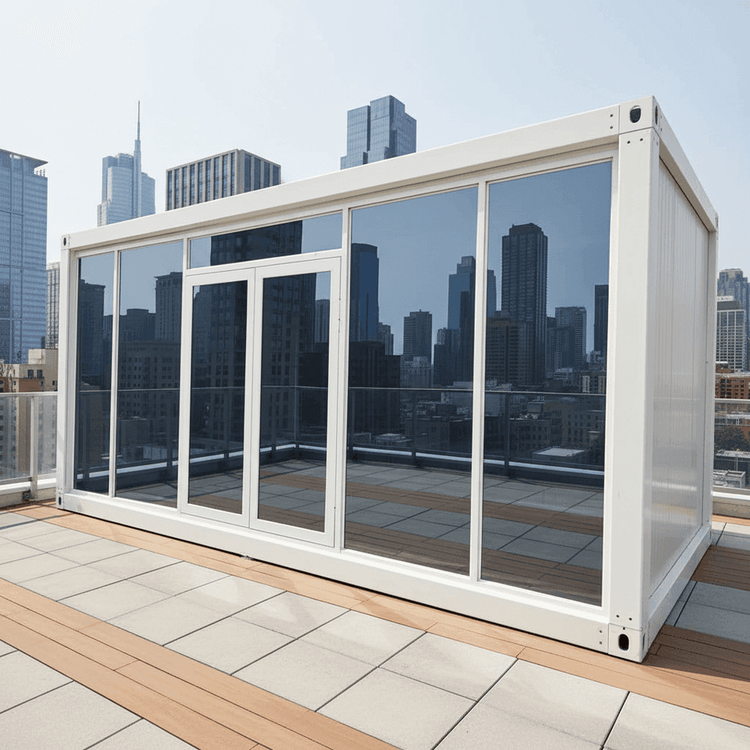
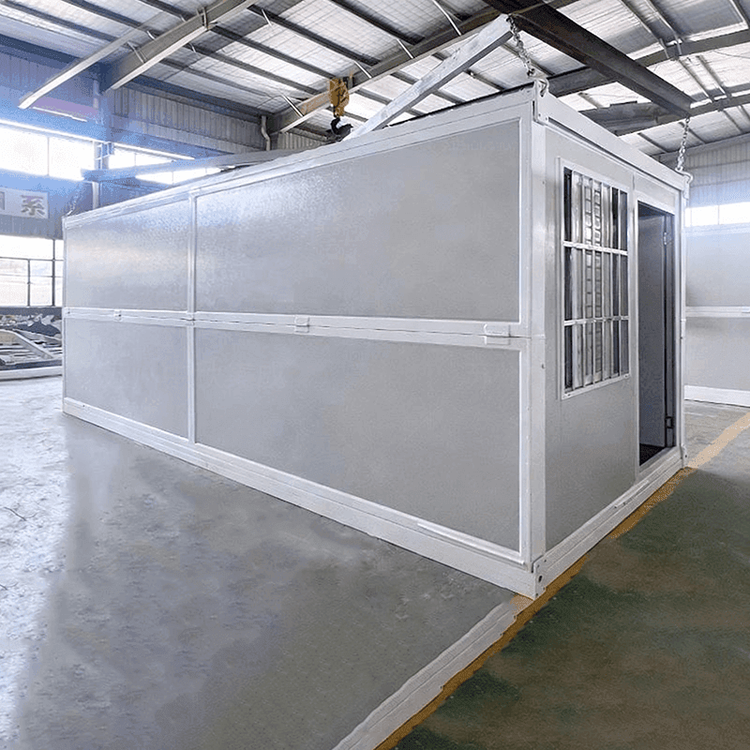
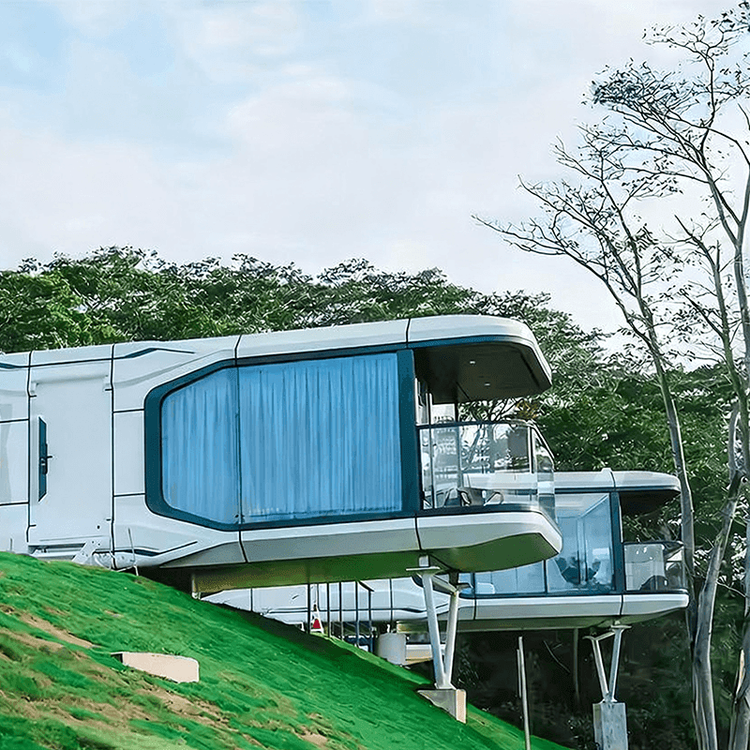
Prefabricated Panel House Price
The price of prefabricated panel houses varies significantly due to differences in materials, specifications, uses, and regions, and needs to be analyzed in combination with specific scenarios. The following is an explanation from different dimensions:
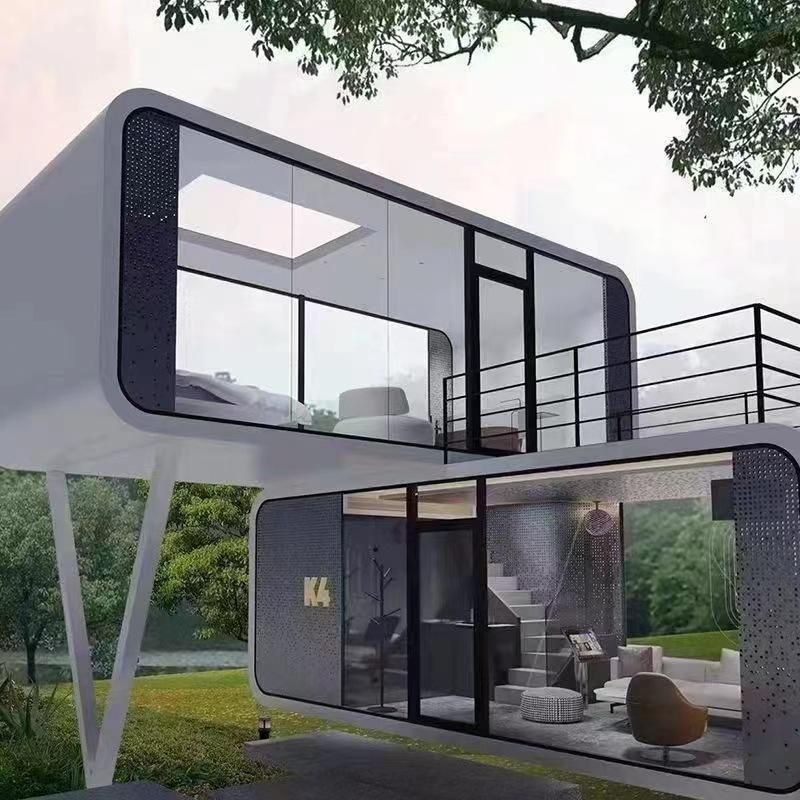
1. Price range of prefabricated panels themselves
As the core material for house construction, the price of prefabricated panels is significantly affected by materials and specifications. Taking common prefabricated floor slabs as an example, the market price range is from 12.0 yuan per meter to 95.0 yuan per square meter. For instance, ordinary concrete prefabricated panels usually cost between 30 and 60 yuan per square meter due to their simple process and low cost; while high-strength composite material or special-specification (such as thickened and reinforced) prefabricated panels may cost more than 80 yuan per square meter due to improved material performance and increased process complexity. In addition, factors such as transportation distance and purchase volume can also cause a 5%-15% fluctuation in the final price.
2. Cost differences in rural self-built houses
In rural self-built houses, the cost comparison between prefabricated panels and cast-in-place structures is a key consideration. Taking a 100-square-meter house as an example, the total cost of using prefabricated panels for construction is about 10,000 to 20,000 yuan, while the total cost of a cast-in-place structure is usually 20,000 to 40,000 yuan higher than that of prefabricated panels due to the need for on-site formwork erection, pouring, curing, and other processes, resulting in higher material and labor costs. This difference mainly stems from:
- Construction efficiency: Prefabricated panels can be produced in the factory in advance and installed directly on site, shortening the construction period by 30%-50%;
- Material loss: Cast-in-place structures require additional consumption of auxiliary materials such as formwork and scaffolding, with a loss rate of about 5%-8%;
- Labor cost: Cast-in-place construction requires more skilled workers, and labor costs can account for 40%-60% of the total cost.
3. Evaluation principles for demolition compensation prices
If the demolition of a prefabricated panel house is involved, the compensation price needs to be determined by a qualified evaluation agency in accordance with the 'House Demolition Evaluation Measures'. The core principle is 'not lower than the market price of similar real estate of the demolished house on the date of the demolition decision announcement'. During evaluation, the following factors need to be comprehensively considered:
- House structure: The compensation standard for prefabricated panel houses is usually lower than that for brick-concrete or frame structures, but higher than that for simple sheds;
- Condition rate: Adjust the compensation coefficient according to the service life and maintenance condition of the house. The compensation ratio for newly built prefabricated panel houses can reach 80%-90%, while that for old houses may drop to 50%-70%;
- Regional differences: The benchmark compensation prices in first-tier cities and third- and fourth-tier cities may differ by 3-5 times, and the benchmark land prices and housing prices announced by the local government need to be used as references.
Summary: The price of prefabricated panel houses needs to be comprehensively judged in combination with material costs, construction scenarios, and policy requirements. In rural self-built houses, prefabricated panels have become the mainstream choice due to their advantages of low cost and short construction period; for demolition compensation, evaluation norms need to be strictly followed to ensure fairness and reasonableness.