
Images of Exterior Walls of Prefabricated Panel Houses
Although we cannot directly provide images of the exterior walls of prefabricated panel houses, we can describe their common features and types in detail to help you understand their appearance characteristics.
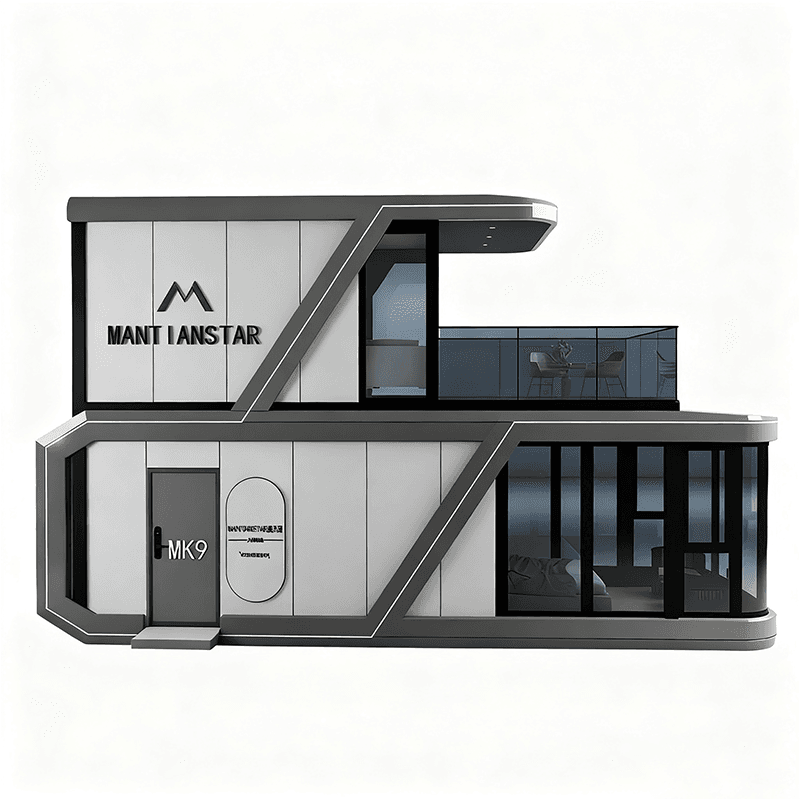
The appearance characteristics of the exterior walls of prefabricated panel houses are closely related to their structural types, construction eras, and material choices. Common exterior walls of prefabricated panel houses can be divided into the following three categories, each with distinct design styles and material applications:
1. Concrete Prefabricated Panel Exterior Walls
Concrete prefabricated panels are one of the most widely used materials in early prefabricated buildings. Their exterior walls usually exhibit a grayish-white or light gray tone with a relatively rough surface texture. Typical features of these exterior walls include:
- Regular panel joint marks: Prefabricated panels are produced in factories and then transported to the site for assembly, leaving obvious joint seams between panels. The seam width is typically 1-2 centimeters, and some older buildings may exhibit uneven seams due to settlement.
- Surface treatment methods: Some exterior walls undergo simple plastering to conceal the joint seams, but cracks or peeling may occur after long-term use; some buildings retain the original concrete color, creating an industrial-style appearance.
- Additional decorative layers: To enhance aesthetics, some houses apply tiles, mosaics, or spray real stone paint on the concrete panels, creating a colorful facade.
2. Lightweight Composite Panel Exterior Walls
With the development of building technology, lightweight composite panels (such as metal sandwich panels, EPS panels, etc.) have gradually become mainstream, and their exterior walls have a more modern appearance:
- Smooth and flat surface: Composite panels usually adopt an integrated factory molding process, resulting in a high surface flatness that allows for direct painting or粘贴 (pasting) of decorative materials.
- Diverse color options: Through painting processes, exterior walls can exhibit any color, commonly neutral tones such as white, beige, and gray. Some designs use contrasting color combinations to enhance visual effects.
- Hidden joint design: Panels are fixed with special connectors, resulting in thin and regular joint seams. Some high-end products can achieve seamless joint effects.
3. Imitation Brick/Stone-Textured Prefabricated Panel Exterior Walls
To meet decorative needs, some prefabricated panels simulate traditional material textures through mold forming or surface treatment processes:
- Imitation brick texture: Molds are used to press out the concave-convex texture of brick arrangements, combined with red, brown, and other paints to create a visual effect similar to brick walls.
- Imitation stone texture: Special paints or veneer materials are used to simulate the texture of natural stones such as marble and granite, often used in villas or high-end residential projects.
If you need specific images, it is recommended to conduct a precise search on architectural image libraries (such as ArchDaily, Pinterest) or search engines by entering "prefabricated panel house exterior wall + material type/style".
You may also like

Portable Toilet Eco-Friendly: MOQ, Samples & Quotation Guide
Read More
Top Portable Toilet Color Steel Manufacturers: How to Choose a Factory Partner
Read MorePortable Toilet Picture: Types, Features & Buying Tips
Read More