
Prefabricated Modular Housing
Prefabricated modular housing is a construction model that breaks down buildings into independent modules, prefabricates them in factories, and then transports them to the site for assembly. It offers advantages such as short construction periods, controllable quality, energy conservation, and environmental protection, with a wide range of application scenarios and promising market prospects.
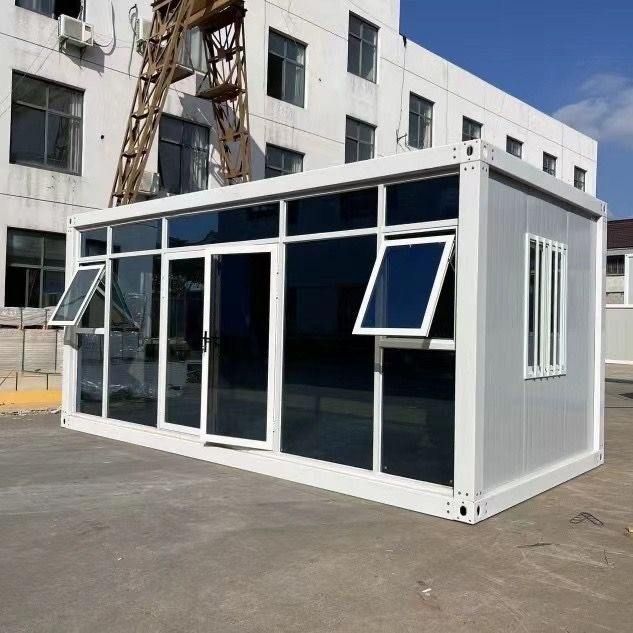
Construction Model and Characteristics
Prefabricated modular housing, also known as modular construction or prefabricated construction, centers on dividing buildings into independent modules. All components, including ceilings, floors, and water and electricity pipelines, are prefabricated in factories and then transported to the construction site for assembly. This "building block" construction method achieves a deep integration of industrialization and standardization in construction. Compared to traditional construction techniques, modular construction significantly shortens the construction period. For example, in a public housing project in Shenzhen, Guangdong, the use of 6,028 concrete modules reduced the completion and delivery time from 2.5 - 3 years to just 1 year, with a reduction in on-site labor by approximately 50%. Meanwhile, factory production ensures uniform building quality, avoiding quality fluctuations caused by environmental and technical factors during on-site construction. Additionally, modular construction excels in energy conservation and environmental protection, as factory prefabrication reduces construction waste generation, and centralized production modes lower energy consumption.
Application Scenarios and Market Performance
Modular construction has a wide range of application scenarios, covering various building types such as hotels, apartments, dormitories, office buildings, hospitals, and data centers. Its flexibility and efficiency have made it highly popular in the international market. For instance, a British buyer purchased Chinese-made modular elderly care apartments, with 63 modules arriving and being assembled on-site in just two weeks; in Papua New Guinea, 84 modules quickly constructed a fully functional hotel. Chinese modular construction is being exported globally in the form of "giant parcels," with data from the General Administration of Customs showing that China's prefabricated building exports nearly tripled from 2015 to 2025, with a growth rate of 45% in the first quarter of 2026, demonstrating strong international competitiveness.
Future Development Trends
According to market research institutions, the global modular construction market is expected to exceed $142.8 billion by 2030. With technological advancements and cost optimization, modular construction is expected to replace traditional construction methods in more fields, especially in emergency construction, temporary facilities, and high-density urban development, showcasing unique value. As a major exporter of modular construction, China will continue to drive technological innovation and industrial upgrading, providing Chinese solutions for global construction industrialization.



