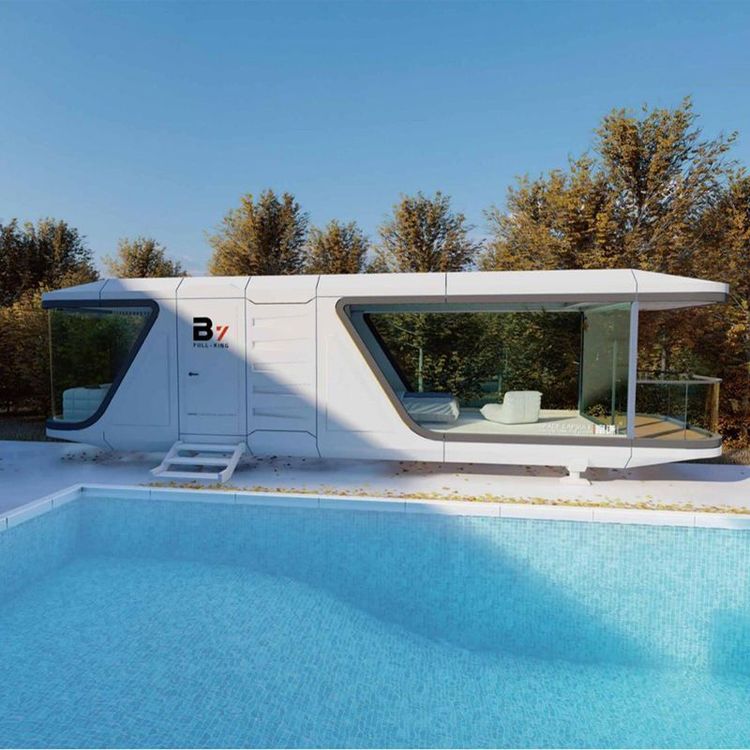
Prefabricated Integrated Housing
Prefabricated integrated housing adopts a construction model of factory-prefabricated modules assembled on-site, offering advantages such as short construction periods, controllable quality, and energy efficiency and environmental protection. However, it also has limitations, including high requirements for industrial foundations and poor sound insulation in some products. Currently, both domestic and international markets are showing growth trends.

Construction Model and Core Features
Prefabricated integrated housing breaks down buildings into independent modules (such as ceilings, floors, and walls), completing processes like steel bar positioning and pre-embedding of water and electricity pipelines in the factory with millimeter-level precision. On-site assembly and connection are all that is required. For example, the Shenzhen affordable housing project used 6,028 concrete modules to compress the construction period from 2.5-3 years to just 1 year, demonstrating its core advantage of a short construction period. Factory production also reduces human errors through standardized processes, achieving controllable quality. For instance, the industrial base in Fujian Province reduced construction waste by more than 70% through policy support, highlighting its energy-efficient and environmentally friendly characteristics.
Types and Technical Systems
The main types include panel-based assembly, box-based assembly, and frame-based assembly, with technologies covering prefabricated concrete structures and steel structures. Components involve prefabricated products such as beams, slabs, walls, and columns. Among them, modular construction, as a more integrated model, completes details such as bathroom partitions and waterproof layers in the factory. For example, the Shenzhen Zhongjian Hailong Industrial Park delivers 20,000-30,000 modules annually, reflecting its technological maturity.
Advantages and Limitations
In addition to the aforementioned advantages of short construction periods and environmental protection, the module's "ID card" system (recording project name, model, and production date) facilitates post-maintenance. Limitations include a high dependency on the technical system, production system, and industrial cluster, resulting in higher barriers to promotion; average sound insulation in some products due to module assembly methods; and the inability to obtain property certificates for some temporary buildings due to land nature or planning restrictions.
Market Development Status
China's prefabricated housing exports have grown significantly, with export value in the Guangzhou Customs area increasing by 38.1% year-on-year in the first four months of 2026, and the export value of enterprises across the country via the Shenzhen port increasing by 19.6% year-on-year, covering products to more than 150 countries and regions. The domestic market is also gradually expanding, such as the completion of fully furnished houses in the new energy plant in Changzhou, Jiangsu, in just 7 days. It is predicted that the global modular construction market size will exceed $142.8 billion by 2030, reflecting the industry's strong growth potential.