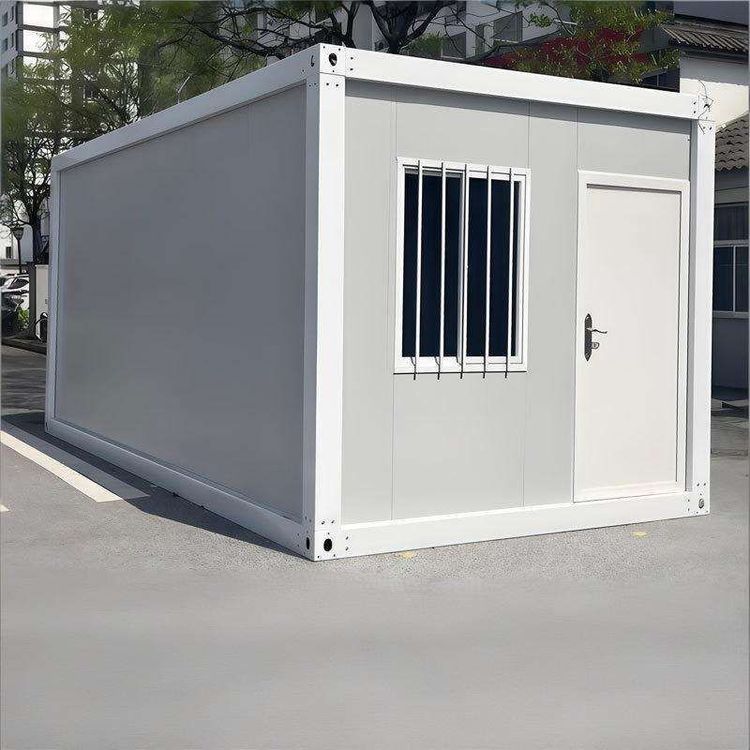
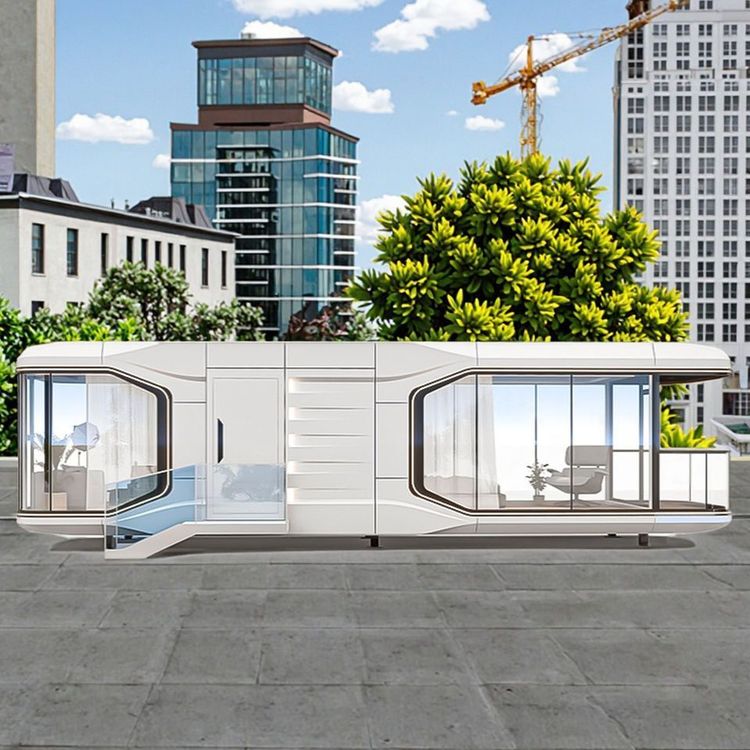
Prefabricated Housing Manufacturer Export
The export scale of prefabricated housing manufacturers continues to grow, with extensive market coverage, diverse products, and prominent advantages.

Export Scale and Strong Growth Momentum
In the first seven months of 2026, the Shatian Customs under the Huangpu Customs supervised the export of modular houses worth 548 million yuan, a 7.3-fold increase year-on-year. Nationwide, enterprises exported movable houses worth 1.68 billion yuan through Shenzhen ports, a 19.6% increase year-on-year, with products exported to over 150 countries and regions. Data from the General Administration of Customs shows that China's prefabricated building exports nearly tripled over the decade from 2015 to 2025, with a 45% growth rate in the first quarter of 2026. At the enterprise level, Guangdong CIMC Modular Building Manufacturing Co., Ltd. delivered modular buildings worth 59.772 million yuan in the first half of 2026, while Foshan Zhujian Integrated Housing Technology Co., Ltd. saw orders increase by over 80% year-on-year, and the export volume of prefabricated buildings in Gaoming District, Foshan City, increased by over 400% year-on-year, all reflecting the industry's rapid expansion trend.
Export Markets Show Diversification and Key Breakthroughs
The ASEAN market has seen significant growth, with countries like Indonesia and Vietnam shortening delivery cycles through the "Dongguan-Vietnam" direct shipping route, while markets like Thailand and Malaysia are actively engaging. Australia has become an important market due to increased immigration and infrastructure needs (such as the 2032 Olympics). Regions including the UK, US, Japan, Algeria, Central Asia, the Middle East, and Hong Kong, China, have seen substantial order volumes. The market covers over 20 countries, including the UK and Australia, with products tailored to different regional needs.
Diverse Export Product Types Covering All Scenarios
Products span high-end office buildings, hotels, schools, data centers, senior living apartments, staff dormitories, oil and gas camps, and residential categories, among others. For example, Foshan Zhujian Integrated Housing Technology Co., Ltd. focuses on residential products, with rapid growth in data center products, while Guangdong CIMC Modular Building Manufacturing Co., Ltd. covers projects in countries like Cameroon and Indonesia.
Significant Export Advantages Form Core Competitiveness
Core advantages include rapid delivery, environmental protection and energy efficiency, strong adaptability, and controllable quality. The construction model adopts factory-prefabricated unit modules for on-site assembly, resulting in short construction periods and stable quality. Cost competitiveness is strong, as high overseas labor costs make modular buildings more economical by reducing on-site labor, with more certain cost recovery periods. The industrial cluster effect is prominent, with enterprises in the Pearl River Delta region of Guangdong forming a collaborative system for manufacturing, material supply, logistics, and foreign trade services, enhancing export efficiency.