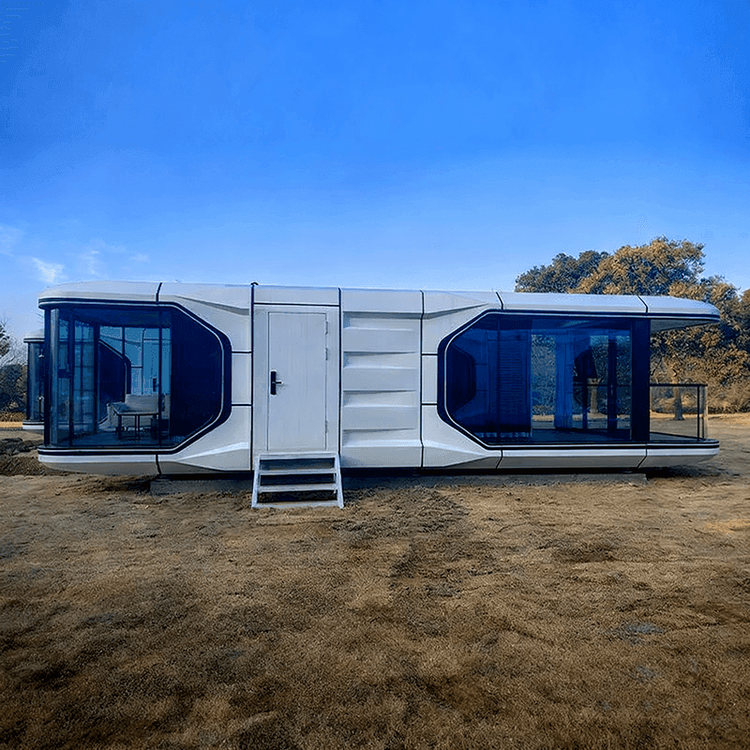
Prefabricated Houses in Xianyang
The situation of prefabricated houses in Xianyang is as follows:

I. Historical Construction
From the 1980s to the late 1990s, Xianyang saw large-scale construction of prefabricated panel structures, primarily concentrated in core old urban areas such as Weicheng District and Qindu District. These buildings mainly consisted of office buildings and some self-built residential houses, with flat roofs commonly constructed using prefabricated concrete hollow panels. The structural characteristic was the side-by-side assembly of individual prefabricated panels, with longitudinal through-seams between them. The original waterproofing process often involved laying bituminous felt or early SBS membranes on the panel leveling layer.
II. Existing Problems and Risks
After decades of use, old prefabricated houses face two core issues:
- Structural Aging: Temperature stress causes relative displacement in panel seams, leading to cracking and deformation of prefabricated panels, and even a decrease in local structural load-bearing capacity.
- Leakage Risk: The aging and displacement cracking of the original waterproofing membranes result in widespread leakage on roofs and walls, especially severe during rainy seasons or extreme weather conditions. These issues not only affect living comfort but also pose potential threats to building safety.
III. Market Status and Product Updates
As of December 16, 2024, the Baidu Aicai platform shows that there are still 121 pieces of product information related to cement prefabricated houses in the Xianyang area, covering the design, production, and sales of new prefabricated houses. These products may adopt improved prefabrication techniques, such as high-strength concrete, modular assembly processes, and new waterproofing materials (e.g., polymer waterproofing membranes, waterproof coatings), to enhance structural durability and waterproofing performance.
IV. Recommendations and Outlook
For old prefabricated houses, it is recommended to conduct regular structural safety inspections, focusing on panel seams, load-bearing components, and the condition of the waterproof layer, and take reinforcement or renovation measures when necessary. For new construction or renovation projects, reference can be made to new prefabricated house technologies in the market, prioritizing products that comply with current standards (such as the 'Technical Standard for Prefabricated Concrete Buildings') to improve building quality and service life.