
Handmade Prefabricated Houses
Handmade prefabricated houses can be mainly divided into two categories: handmade small house models and industrial prefabricated houses. The former are suitable for parent-child or creative handicrafts, while the latter rely on factory production and differ significantly from handmade ones.
I. Handmade Small House Models
Origami Small Houses
Made from square colored paper, these houses are completed through steps such as folding triple creases, folding up and down, and folding corners. Their core advantage lies in the fact that no complex tools are required, making them suitable for parent-child interaction or children's handicraft classes. When making them, attention should be paid to the symmetry of the creases, especially the folding angle of the roof, which directly affects the stability of the final model. The finished product can be unfolded for storage, combining both fun and practicality.Cola Bottle and Clay Fairy-Tale Cottages
These cottages are made using discarded cola bottles as the base, combined with materials such as tin foil and clay. The steps include:- Structural Construction: Cut the cola bottle to an appropriate height and wrap the bottom and roof with tin foil to form the basic framework;
- Detail Shaping: Cover the bottle body with clay and use tools to carve patterns such as doors, windows, and tiles, and add decorations such as chimneys and fences;
- Coloring: After the clay dries, use acrylic paint or watercolors to enhance the visual effect.
This plan is suitable for handicraft enthusiasts, achieving a combination of environmental protection and creativity through recycled materials. However, attention should be paid to the drying time of the clay and color matching.
II. Industrial Prefabricated Houses (Non-Handmade)
Traditional Prefabricated Panel Houses
These houses are constructed using factory-prefabricated cement components (such as solid or hollow panels) and were once widely used for residential floor slabs and roof insulation layers. Their characteristics include:- Structural Defects: Existing houses generally have problems such as weak earthquake resistance and poor sound and heat insulation. Since 2022, China has focused on repair and renovation, only demolishing dangerous houses;
- Application Scenarios: They are mostly seen in the renovation of old residential areas or temporary buildings and are gradually being replaced by new materials.
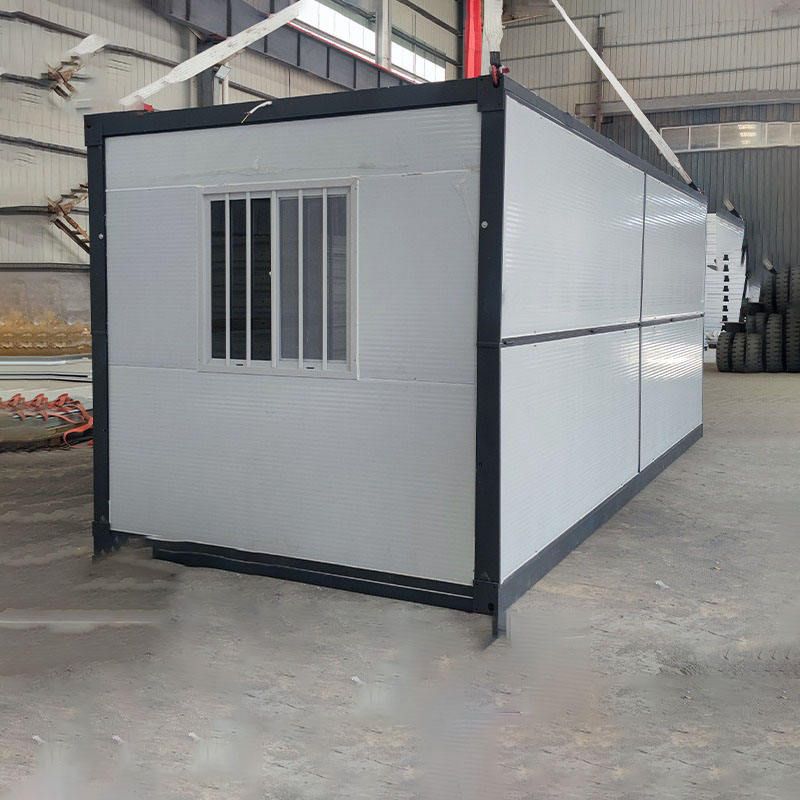
Modular Buildings (Chinese 'Prefab Houses')
These buildings are produced on an assembly line in factories, with building modules (such as ceilings, floors, and water and electricity pipelines) completed and then assembled on-site. Their advantages are significant:- Efficiency Improvement: The construction period is shortened by more than 60%, suitable for rapid construction needs;
- Quality Control: The factory environment reduces human errors and ensures structural stability;
- Environmental Protection and Energy Efficiency: Materials can be recycled, reducing on-site construction pollution.
These buildings have been exported overseas and are widely used in scenarios such as residences, schools, and hospitals.
Summary: If handmade production is required, origami or cola bottle and clay plans are recommended, with an emphasis on creativity and safety. If attention is paid to industrial prefabricated houses, it should be clear that they rely on factory production and differ fundamentally from handmade ones in terms of technology, scale, and purpose.



