
Prefabricated House Transportation Requirements Specification
The Prefabricated House Transportation Requirements Specification mainly includes aspects such as transportation vehicle selection, loading and securing, transportation route planning, transportation process monitoring, unloading requirements, and emergency plans.
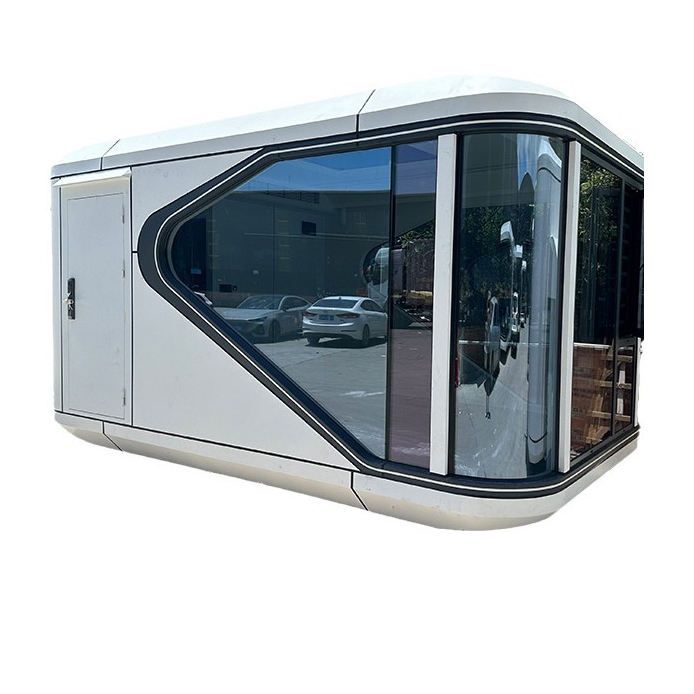
Transportation Vehicle Selection: Appropriate vehicles should be selected based on the size, weight, and shape of the prefabricated components. For large and heavy components, such as concrete walls and large steel beams, flatbed trailers or large trucks should be used to ensure that the vehicle's load-bearing capacity meets the weight requirements of the components. For small and lightweight components, like doors, windows, and small decorative parts, small trucks or enclosed vans can be used for transportation.
Loading and Securing: The positions of the components on the vehicle should be arranged reasonably, with proper isolation and securing between components to prevent collision and friction damage. Fragile glass doors and windows should be wrapped with special packaging materials, and buffer materials such as foam boards and rubber pads should be placed between components. Ropes, steel straps, etc., should be used to firmly secure the components to the vehicle to prevent movement during transportation. Buffer materials such as foam and rubber should be wrapped around vulnerable parts. For the transportation of prefabricated components, low-bed trailers are preferred, equipped with special racks and reliable measures to stabilize the components. Prefabricated components can only be transported when their concrete strength reaches the designed strength. Different types of components have different transportation methods. For example, prefabricated exterior wall panels should be placed vertically, while prefabricated composite floor slabs, prefabricated balcony slabs, and prefabricated stairs can be transported horizontally, with the correct selection of support positions.
Transportation Route Planning: Information such as road conditions, bridge load-bearing capacity, height and width restrictions along the route should be understood in advance. Routes with good road conditions and low traffic volume should be selected, avoiding sharp turns, steep slopes, or road construction sections. At the same time, the transportation time should be considered, and traffic peak hours should be avoided as much as possible to ensure safe and efficient transportation.
Transportation Process Monitoring: Dedicated personnel should be arranged to monitor the vehicle and components in real-time. The vehicle's driving position and status can be grasped by installing a GPS positioning system. Before transportation, a comprehensive inspection of the vehicle should be carried out to ensure that equipment such as the braking system, tires, and lights are operating normally. During transportation, the driver should strictly abide by traffic rules, control the speed, and avoid sudden braking, sharp turns, and other operations to prevent damage to the house due to inertia.
Unloading Requirements: Upon arrival at the destination, unloading should be carried out in the correct order and method to avoid damaging the components during the unloading process.
Emergency Plan: An emergency plan should be formulated to deal with unexpected situations, such as traffic accidents and severe weather conditions.



