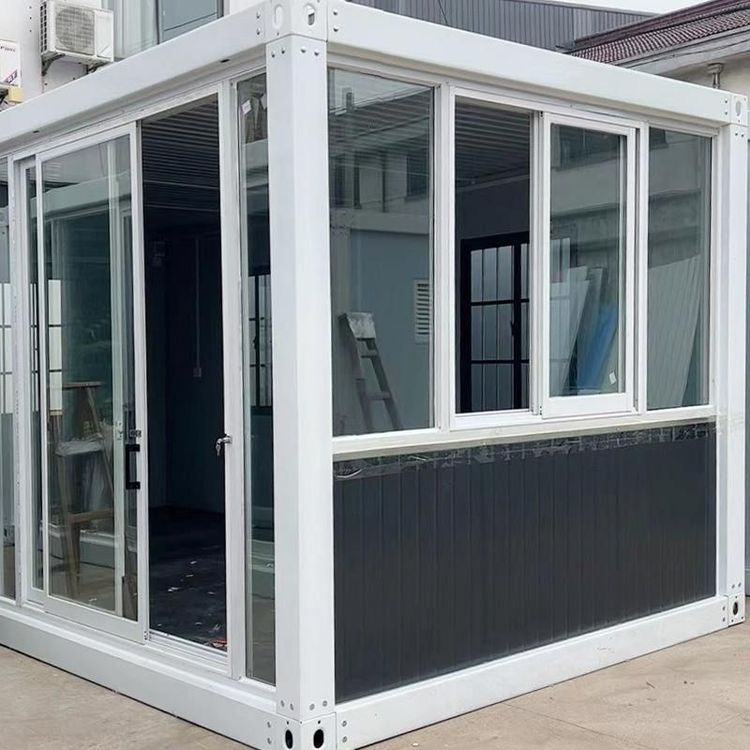
Three-Year Effect of Prefabricated Houses
The overall performance of prefabricated houses after three years of use is good, with outstanding performance in structural stability and living experience, but seasonal maintenance needs should be noted.

1. Excellent Structural Stability and Durability Prefabricated houses produced by regular manufacturers (such as assembled concrete houses) are cast in one piece using C30 high-strength concrete, with national standard threaded steel frames inside. Standardized factory production controls dimensional errors to within millimeters. This process ensures the overall structural stability of the house. After three years of use, no cracks or water seepage have appeared on the walls, and the durability and earthquake resistance are significantly better than those of early traditional prefabricated panel houses. For example, although the cement prefabricated panel houses commonly seen in rural areas in the 1980s have been in use for over 30 years without major cracks, their earthquake resistance is relatively weak. Modern prefabricated houses, through process improvements, have significantly enhanced safety and can remain structurally stable after minor earthquakes.
2. Seasonal Maintenance Needs Should Be Taken Seriously Although the overall performance of prefabricated houses is stable, regular inspections are still required under extreme weather conditions. During the rainy season or high-temperature seasons, minor issues such as leakage and dampness may occur inside the house, especially in areas such as roofs and window and door joints, which require focused inspection. Timely repairs can prevent problems from expanding, extend the service life, and ensure living safety. For example, if an assembled concrete house is in a humid environment for a long time, it is necessary to check whether the wall's damp-proof layer is intact to prevent internal steel bars from rusting.
3. Significant Advantages in Living Experience
- Outstanding Thermal Insulation Performance: Types of prefabricated houses such as light steel villas use thermal insulation materials like glass wool filled in the walls. The indoor temperature in winter is significantly higher than that of traditional brick-and-concrete houses, and it is relatively cooler in summer, reducing air conditioning usage time and lowering energy consumption.
- Good Sound Insulation Effect: After sound insulation treatment of walls and floors, the isolation effect on living noise is obvious, especially suitable for multi-story buildings or densely populated areas, effectively reducing interference between upper and lower floors.
- Excellent Earthquake Resistance: The flexible structural system makes prefabricated houses perform outstandingly in earthquake-prone areas. After experiencing minor earthquakes over three years, the structure remains as stable as ever, providing higher safety for occupants.
4. Strong Applicability in Special Scenarios Assembled concrete houses support overall hoisting and relocation without the need for demolition and reconstruction, suitable for scenarios such as rural tourism and park facilities that require flexible adjustment of land use. This characteristic reduces the cost of repeated construction and also reduces the generation of construction waste, in line with the concept of green buildings.
Summary: Prefabricated houses can be used for a long time under standardized construction and regular maintenance. Their structural stability, living comfort, and environmental friendliness are all better than those of traditional buildings. However, attention should be paid to seasonal maintenance needs and differences in earthquake resistance according to the material type (such as concrete or light steel).