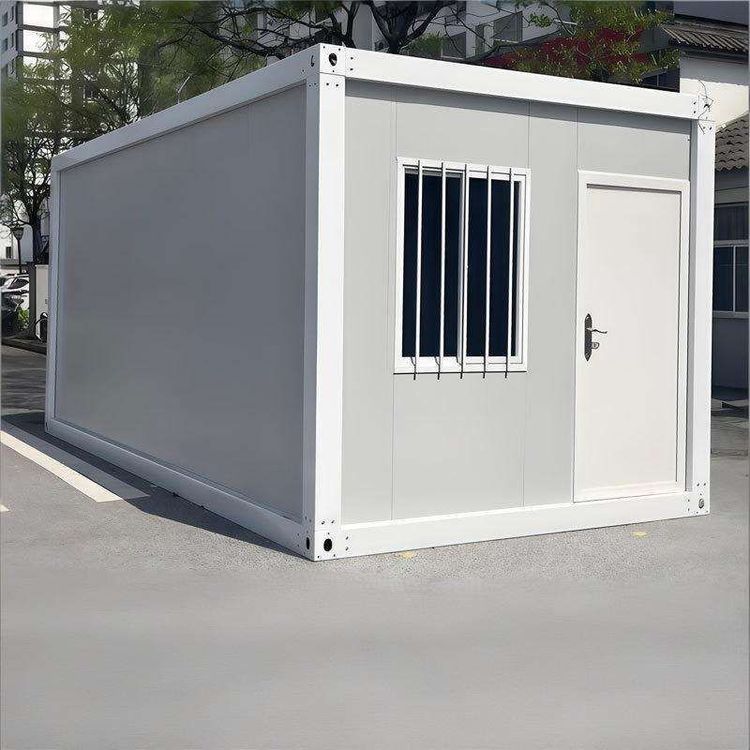
Sound and Thermal Insulation Materials for Prefabricated Houses
The commonly used sound and thermal insulation materials for prefabricated houses can be divided into two main categories: thermal insulation materials and sound insulation materials. The specific choice should be based on performance requirements and usage scenarios.

Thermal Insulation Materials
Expanded Polystyrene (EPS)
Lightweight and with excellent insulation properties, EPS is widely used in the thermal insulation layers of prefabricated houses. It has strong resistance to water vapor permeability, along with moisture-proof, chemical-resistant, and sound-absorbing functions, making it suitable as a basic insulation material.Polyurethane Foam (PUR/PU)
An efficient thermal insulation material, PUR/PU can be used in the form of sandwich panels or spraying. For example, Cosmo's rigid polyurethane foam adhesive has a wide temperature resistance range (-60~150℃), outstanding thermal insulation, sound insulation, and shock absorption properties, and is easy to apply. Its foaming volume can reach 15-25 times the original volume, making it suitable for scenarios with high requirements for sealing and thermal insulation.Mineral Wool Board and Glass Wool
Both are made of mineral fibers. Mineral wool board has both thermal insulation and sound absorption functions and is suitable for walls, roofs, and floors. Glass wool, on the other hand, excels in thermal insulation and sound absorption and is commonly used in the thermal insulation layers of walls and roofs.High-Density Foam Materials
Blue foam (XPS) and extruded polystyrene (XEPS) are high-density polystyrene foams with high strength and pressure resistance, suitable for projects requiring higher thermal insulation performance, such as cold storage warehouses. Closed-cell polyurethane foam (PIR) improves thermal insulation efficiency through its closed-cell structure, but its specific characteristics need further confirmation.Medium-Density Fiberboard (MDF)
Made of fine wood shavings and adhesives, MDF has moderate thermal insulation properties and can be used inside walls or in the production of sandwich panels, suitable for scenarios with environmental protection requirements.
Sound Insulation Materials
Sound Insulation Coatings and Gypsum Boards
Sound insulation coatings reduce noise by absorbing and isolating sound transmission. Sound insulation gypsum boards absorb noise and prevent its spread through their special structure and are commonly used in interior wall decoration.Sound-Absorbing and Sound-Insulating Felts
Sound-absorbing and sound-insulating felts are made of porous polyester fibers, with low density and good sound absorption effects. They can be attached to walls and ceilings. Sound insulation and thermal insulation bricks integrate dual functions, isolating sound and heat through their unique structure.Soundproof Curtains and Floors
Soundproof curtains use multi-layer materials with sound insulation fillers to effectively block external noise. Soundproof floors reduce noise transmission to the lower floors through a multi-layer design of elastic layers, sound insulation layers, and wear-resistant layers, improving living comfort.Cellulose Thermal Insulation Materials
Commonly made from waste newspapers abroad, cellulose thermal insulation materials have both sound insulation and thermal insulation functions and are suitable for environmentally friendly decoration projects.