
Prefabricated House Finished Staircase Effect Drawing
Currently, it is not possible to directly provide effect drawings of finished staircases for prefabricated houses. However, it is not recommended to use prefabricated slab staircases due to serious safety hazards. Here is a detailed analysis:
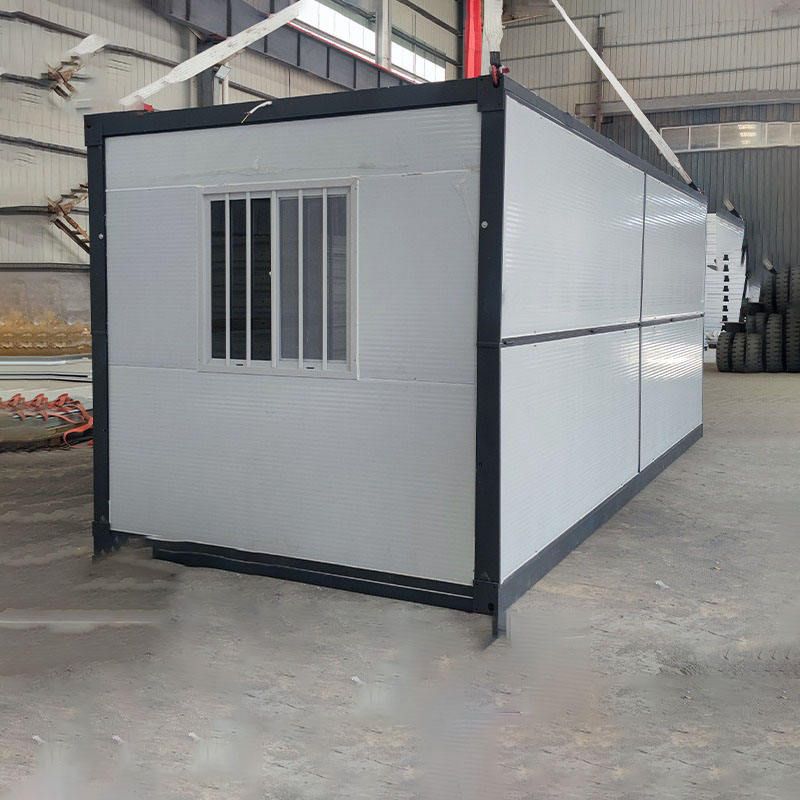
Inability to Meet Seismic Performance Requirements
Prefabricated slab staircases are typically manufactured in a factory in advance and then transported to the construction site for installation. The connection between such staircases and the main building structure is often not strong enough. During an earthquake, due to the intense vibrations caused by seismic waves, prefabricated slab staircases can easily separate from, shift, or even collapse relative to the main structure. In contrast, staircases that meet seismic requirements need to form an integral part with the main building structure, jointly resisting seismic forces through reasonable structural design and reliable connection methods. Clearly, prefabricated slab staircases cannot achieve this, posing a serious threat to the safety of occupants.
Concerns Regarding Load-Bearing Capacity
During the manufacturing process of prefabricated slab staircases, the materials and structural forms are fixed, making it difficult to flexibly adjust them according to different usage requirements and building loads. In places with high foot traffic or where heavy items need to be carried, such as shopping malls and warehouses, prefabricated slab staircases may not be able to withstand the corresponding weight, leading to issues such as cracks, deformation, or even breakage. This not only affects the normal use of the staircases but may also trigger safety accidents.
Almost Zero Structural Stability
The components of prefabricated slab staircases are usually simply spliced or overlapped, lacking effective overall connection and reinforcement measures. This structural form makes the staircases prone to shaking and displacement when subjected to external forces, such as vibrations caused by people walking or wind forces, reducing their structural stability. Over long-term use, the connection parts of the staircases may become loose, further exacerbating structural instability and posing significant safety hazards to users.
Given the numerous problems associated with prefabricated slab staircases, caution should be exercised when choosing the method of staircase construction in housing projects. Priority should be given to more reliable methods such as on-site pouring to ensure the quality and safety performance of the staircases.



