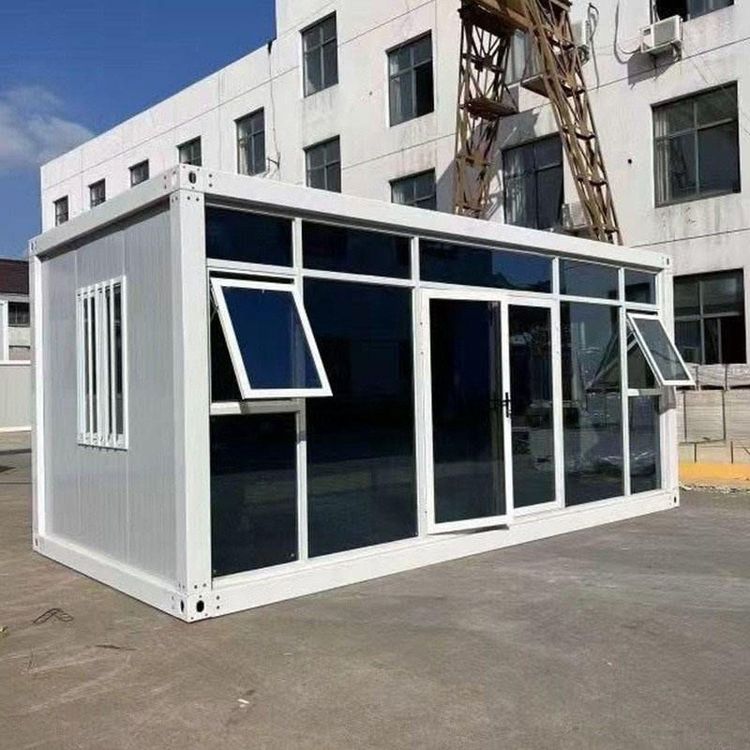
Is It Good to Customize a Three-Story Prefabricated House?
Whether it is appropriate to customize a three-story prefabricated house depends on specific circumstances. If certain conditions are met, it can be chosen with caution, but risks and benefits need to be weighed.
Conditions Suitable for Three-Story Houses Using Prefabricated Panels
- Non-earthquake-prone areas Prefabricated panels have poor integrity and weak earthquake resistance, posing extremely high risks in earthquake-prone areas. If the house is located in a non-seismic zone or an area with a relatively low seismic intensity (e.g., below magnitude 6), the structural safety risks can be reduced.
- Tight budget and time constraints The cost of prefabricated panels is about 60%-70% of that of cast-in-place panels, and they can be installed quickly (directly assembled after factory prefabrication without a 28-day curing period), making them suitable for projects that are sensitive to cost and need to shorten the construction cycle.
- Controllable quality It is necessary to select qualified manufacturers to ensure that the load markings on the prefabricated panels are ≥ 2kN/m² (meeting the basic load requirements for three-story buildings) and to verify the quality certificates and inspection reports to avoid structural failures due to quality defects.
- Stable foundation The foundation should be a solid soil layer to avoid wall cracks caused by foundation settlement (especially when there are no ground beams or structural columns). If the geological conditions are poor, the risks can be reduced by reinforcing the foundation or adding structural measures.
Risks of Three-Story Houses Using Prefabricated Panels
- Insufficient safety: Cast-in-place panels have strong integrity and significantly better earthquake resistance than prefabricated panels. Three-story buildings have high requirements for structural integrity, and cast-in-place panel houses are more recommended for such scenarios.
- Usage limitations: Prefabricated panel houses have smaller bays and more panel joints, which are prone to cracks. Moreover, their sound insulation and waterproofing performance are relatively poor, which may affect living comfort.
- High maintenance costs: If reinforcement (such as adding ring beams or structural columns) is required, the cost may be close to that of cast-in-place panels, resulting in the loss of economic advantages.
Comprehensive Recommendations
If the house is located in a non-seismic zone, has an extremely tight budget, and is under time constraints, prefabricated panels can be chosen with caution, but strict quality control and foundation construction (such as verifying load markings, reinforcing the foundation, and adding structural columns) are required. If safety and long-term usage experience (such as earthquake resistance requirements and living comfort) are valued, cast-in-place panels offer better cost-effectiveness. Although the initial cost is higher, the long-term maintenance cost is low, and the structure is more reliable.