
Prefabricated House Custom Installation
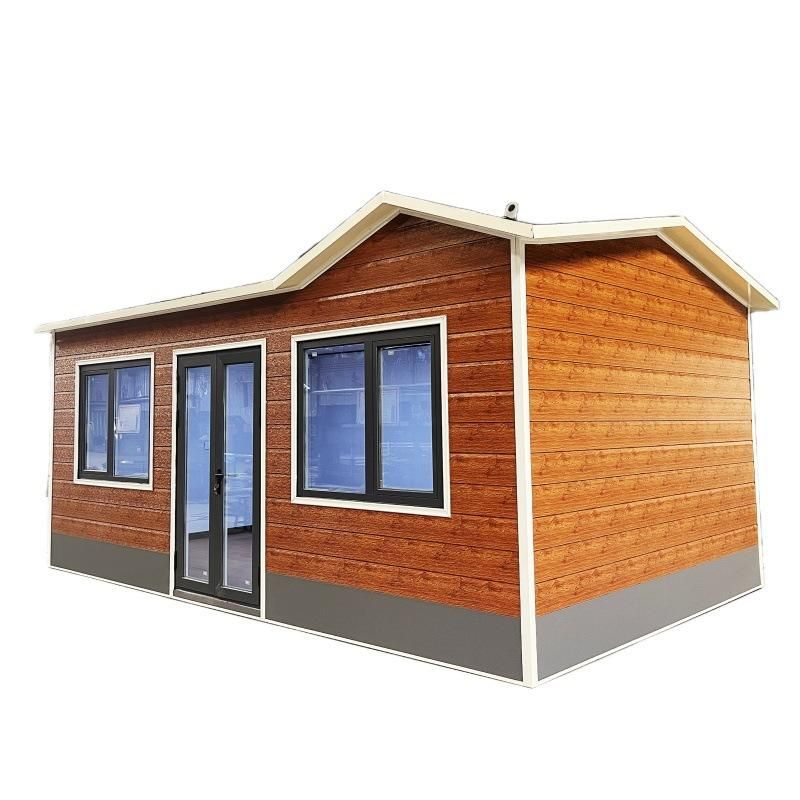
Prefabricated house custom installation is a process of constructing buildings through factory-prefabricated modules and on-site assembly, characterized by high efficiency, precision, and flexibility.
1. Core Process and Advantages
Prefabricated house custom installation breaks down buildings into independent modules, which are prefabricated in factories using standardized production lines and then transported to the site for assembly. For example, Huacheng Cement House Factory employs reinforced concrete integral pouring technology, supporting customized designs for single-story or two-story houses. The construction period is reduced by over 60% compared to traditional buildings, and it is not restricted by seasons or weather conditions. Modular production achieves millimeter-level precision through parallel operations and intelligent control, with on-site assembly resembling “building blocks,” significantly reducing manual errors and on-site work time.
2. Technical Types and Suitable Scenarios
Prefabricated assembled buildings encompass various technical types:
- Panel-based assembly: Primarily composed of prefabricated wall panels, floor slabs, and other components, suitable for low-rise residential buildings or temporary structures;
- Box-based assembly: Combines prefabricated functional units (such as bathrooms and kitchens), increasing construction speed by 50%-70%, but requiring supporting transportation and lifting equipment, suitable for rapidly deployable public facilities;
- Frame-based assembly: Uses prefabricated beams and columns as the structural main body, offering high flexibility and suitable for multi-story or complex buildings.
The reinforced concrete integral pouring adopted by Huacheng Cement House Factory is an enhanced version of frame-based assembly, ensuring earthquake resistance, compression resistance, fire resistance, and flame retardancy through high-strength materials and one-time molding processes, with a designed service life of over 70 years.
3. Quality Control and Sustainability
Each prefabricated module is labeled with project name, model number, production date, and other information, enabling full lifecycle traceability. Factory-based production reduces on-site wet operations, lowering dust and noise pollution, and complying with green building standards. Additionally, modules support overall relocation or secondary disassembly, with a material recovery rate of over 90%, significantly reducing construction waste. For example, products from Huacheng Cement House Factory are reusable, adapting to site changes or functional upgrades.
4. Application Limitations and Solutions
Prefabricated houses have high requirements for transportation and lifting equipment, especially for large modules that require wide-body vehicles and heavy-duty cranes. During the design phase, transportation routes and on-site assembly sequences need to be planned in advance to avoid efficiency reductions due to site constraints. Furthermore, the sealing and waterproofing of module interfaces must be strictly tested to prevent leakage after assembly.



