
Mobile Wooden Prefabricated House
A mobile wooden prefabricated house is an integrated structure that can be modularly disassembled and assembled quickly, featuring high efficiency, flexibility, and environmental friendliness. The following provides an introduction from three aspects: definition, types, materials, and functions.
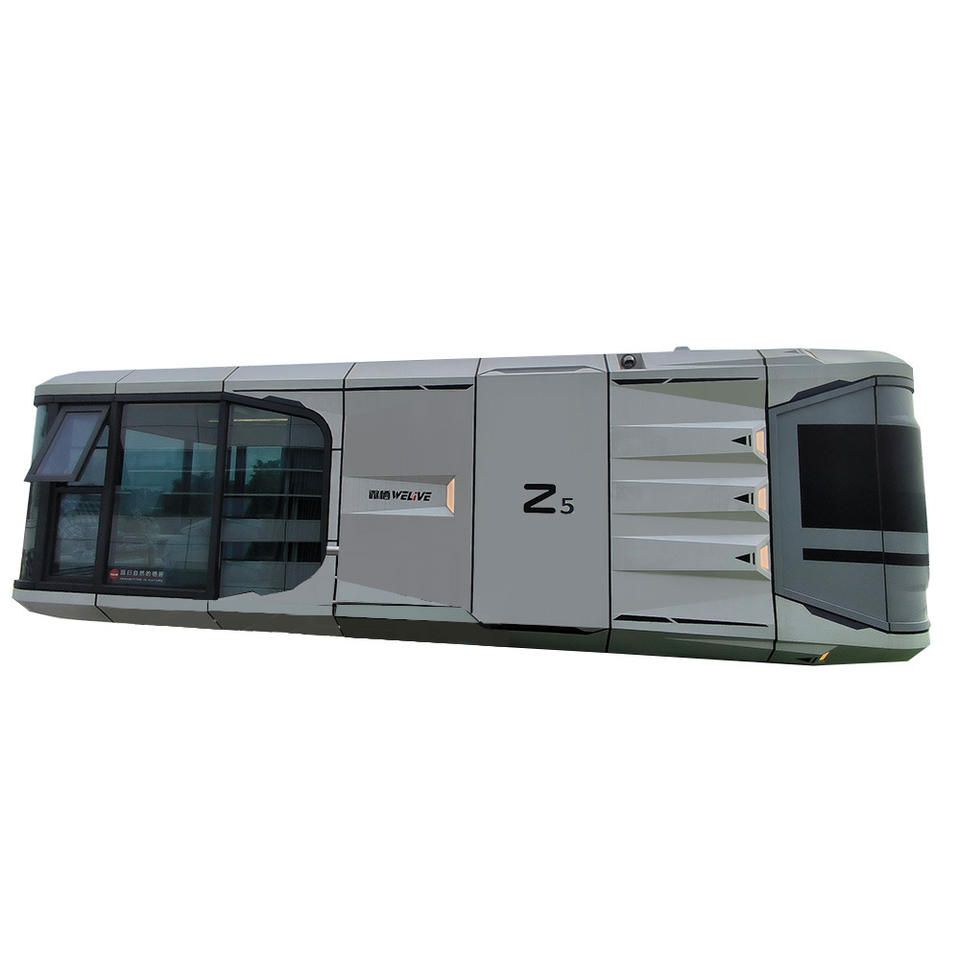
I. Definition and Construction Characteristics
Mobile wooden prefabricated houses adopt a factory-prefabricated modular design. Core components are manufactured in the factory and then transported to the site for rapid assembly using standardized interfaces. Their construction efficiency is significantly higher than that of traditional buildings, with the main structure installation taking only 2-3 hours on-site, and the overall construction period shortened by more than 50% compared to traditional house building. This model reduces wet construction processes on-site, mitigates the impact of weather on the construction schedule, and ensures component precision through industrial production, enhancing the stability of building quality.
II. Main Types and Applicable Scenarios
According to their mobility and structural characteristics, mobile wooden houses can be divided into three main types:
- Trailer Type: Equipped with a wheeled chassis at the bottom, it can be towed by a car and is suitable for camping sites, temporary accommodations, and other scenarios. Its design emphasizes lightweight and portability, often adopting a foldable structure to reduce transportation height.
- Lifting Type: Equipped with dedicated lifting rings on the roof, it can be hoisted as a whole by a crane, making it suitable for scenarios requiring frequent relocation, such as construction site offices and emergency housing. These houses typically adopt a steel frame structure to enhance lifting stability.
- Fixed Foundation Type: Although retaining a modular design, it is not movable and is fixed with a concrete foundation, suitable for long-term use scenarios such as rural homestays and vacation villas, combining rapid construction with personalized customization advantages.
III. Material Innovation and Functional Upgrades
Modern mobile wooden houses have achieved breakthroughs in materials and functions:
- Nano-treated Anticorrosive Wood: By treating the wood surface with nanotechnology, a dense protective layer is formed, improving moisture resistance by more than three times and corrosion resistance by five times that of ordinary wood, significantly extending the house's service life.
- Phase Change Material Application: Advanced models incorporate microencapsulated phase change materials that absorb excess heat in summer and release it slowly, reducing indoor temperature fluctuations by 4-6°C and air conditioning energy consumption by 20%-30%.
- Seismic Structural Design: Adopting a lightweight and high-strength structural system with elastic connection nodes, it can withstand seismic intensities up to magnitude 8, meeting the building safety requirements in earthquake-prone areas.
Such houses achieve a balance between industrialization and personalization in construction through modular design, retaining the ecological advantages of wooden structures while expanding their application scenarios through technological innovation, becoming an important development direction in the modern construction field.
You may also like

Portable Toilet Eco-Friendly: MOQ, Samples & Quotation Guide
Read More
Top Portable Toilet Color Steel Manufacturers: How to Choose a Factory Partner
Read MorePortable Toilet Picture: Types, Features & Buying Tips
Read More