
Prefabricated House Concrete Pouring
The concrete pouring process for prefabricated houses primarily employs an integrated reinforced concrete pouring and forming technique, achieving efficient construction through molds and utilizing high-strength mortar for module assembly.
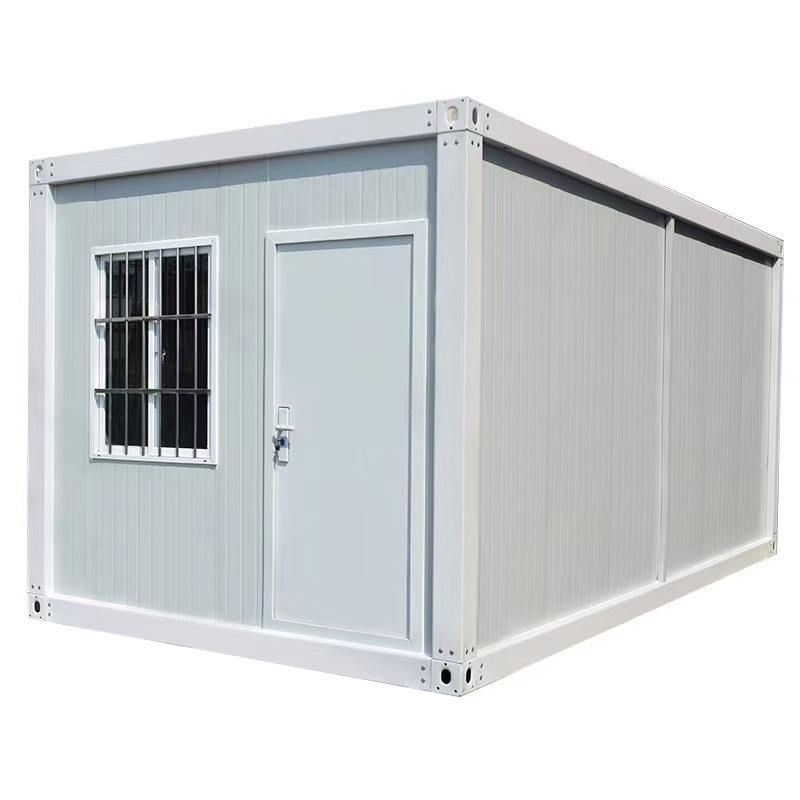
The concrete pouring process for prefabricated houses centers around reinforced concrete as the core structural element, achieving integrated concrete pouring and forming through molds. For instance, types such as cement mobile houses and cement prefabricated houses are all produced using standardized molds. During construction, mold dimensions are adjusted in advance according to the owner's requirements. The steel reinforcement framework is fixed within the mold, and concrete is poured in. After solidification, an integrated structural module is formed. This process enables modular production, with some manufacturers claiming that the main structure of a house around 200 square meters can be poured within 4 hours, significantly shortening the traditional house-building cycle.
In the module assembly phase, high-strength mortar serves as the key connecting material. When assembling concrete modules on the construction site, the joints need to be filled with specialized high-strength mortar. This material must possess characteristics such as rapid hardening and high bonding strength to ensure a stable connection between modules while meeting structural requirements for earthquake resistance and waterproofing. The mix ratio and construction technique of the mortar directly impact the overall stability of the house and must strictly adhere to technical specifications.
The application of new building materials further optimizes the construction process. For example, innovative materials like mortar pads can be directly laid on the surface of brick layers and activated by spraying water, transforming into cementitious materials through a chemical reaction. This technology simplifies the steps of mixing and applying mortar in traditional bricklaying processes, enhancing construction efficiency while ensuring structural strength. However, it should be noted that such materials are mostly used for non-load-bearing structures or auxiliary construction tasks, with the core load-bearing parts still requiring reinforced concrete pouring techniques.
The concrete pouring process for prefabricated houses achieves a balance between construction efficiency and structural performance through modular design, standardized production, and the application of new materials. Its core advantages lie in shortening construction periods, reducing on-site wet work, and ensuring concrete pouring quality through factory production. However, limitations in module size, transportation costs, and requirements for on-site assembly precision remain areas for continuous optimization in this technology.



