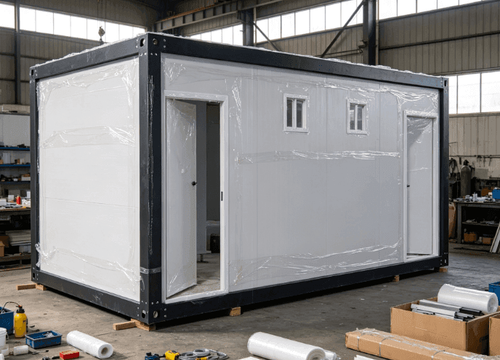
Prefabricated House Concrete Cover Plate
The prefabricated house concrete cover plate is an application type of concrete prefabricated cover plates in housing scenarios, featuring core functions such as safety protection, load-bearing passage, drainage diversion, anti-theft, and structural protection. The following provides an explanation from the perspectives of usage, structural characteristics, shape specifications, and application scenarios:

Core Usage
The prefabricated house concrete cover plate serves multiple functions in housing construction. Safety protection is its fundamental role, such as covering equipment wells and pipe trenches to prevent accidental falls of personnel or objects. In terms of load-bearing passage, some cover plates need to withstand vehicle or pedestrian loads, such as those at garage entrances and courtyard walkways, requiring sufficient strength and rigidity. The drainage diversion function is achieved through drainage holes or slope designs on the cover plate surface, guiding rainwater to designated areas and preventing erosion of the house foundation by accumulated water. The anti-theft characteristic stems from its lack of recycling value, as the concrete material is difficult to reuse, reducing the risk of theft. Structural protection is reflected in the coverage of underground pipelines, cables, and other facilities to prevent external damage.
Structural Characteristics
The prefabricated house concrete cover plate typically adopts a reinforced concrete structure, where steel bars act as the framework to enhance tensile strength, and concrete provides compressive performance. Together, they form a composite material that significantly improves the load-bearing capacity of the cover plate. In housing construction, reinforced concrete slabs are basic components of roofs, floor slabs, and other structures, and their design must comply with the requirements of the "Concrete Structure Design Code" to ensure no failure or excessive deformation occurs under load.
Shape and Specifications
Cover plates come in various shapes, commonly including rectangular, flat, and circular, to meet different scenario requirements. For example, rectangular cover plates are suitable for long trenches, while circular cover plates are often used for inspection wells. The compressive strength specifications range widely, from 4.0MPa to 1500MPa. Low-strength cover plates are used in non-load-bearing scenarios (such as covering green belts), while high-strength cover plates are used in areas with heavy vehicle traffic. In addition, parameters such as cover plate thickness and reinforcement ratio need to be customized based on the usage location (such as ground or road) and load conditions.
Application Scenarios
In housing-related scenarios, the application of prefabricated concrete cover plates is extremely widespread. In terms of ground coverage, they can be used for ground closure in courtyards, garages, equipment rooms, and other areas. In road engineering, they serve as well covers or trench covers for sidewalks and fire lanes. At the structural protection level, they cover cable trenches and drainage pipes to prevent external damage. Their prefabricated nature enables high construction efficiency and controllable quality, making them an indispensable component in modern housing construction.