Prefabricated Earthquake-Resistant Housing
The earthquake resistance of prefabricated earthquake-resistant housing varies depending on its structural type. Traditional prefabricated panel houses have relatively weak earthquake resistance, while prefabricated concrete houses using the 'full-frame shear wall + flexible connection' technology can achieve high earthquake resistance.
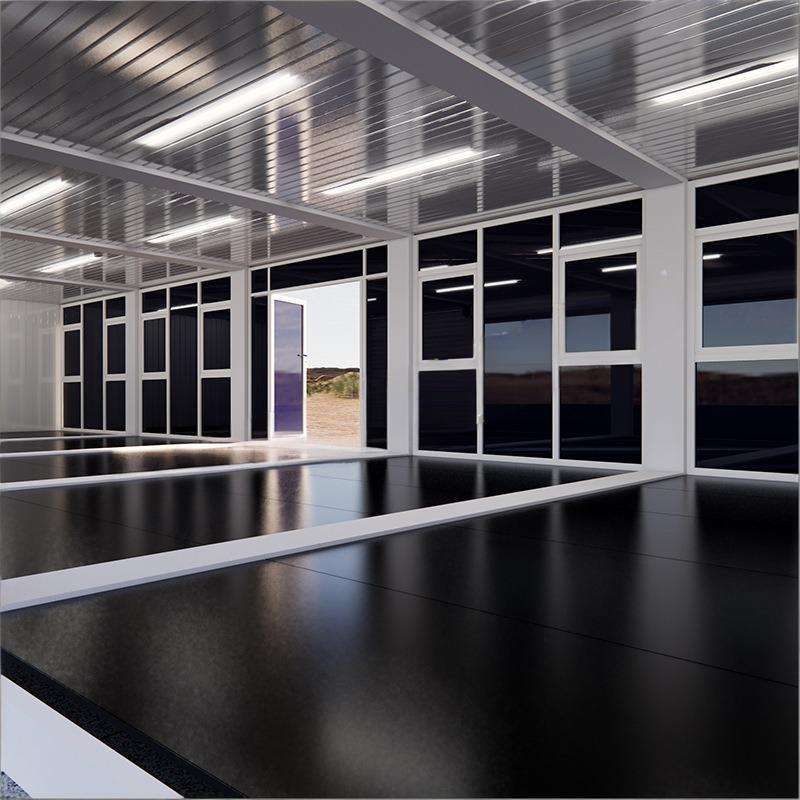
Traditional prefabricated panel houses use factory-prefabricated cement components (prefabricated panels) as the main load-bearing structure and are assembled through a splicing method. Their earthquake resistance is generally weak. They can typically withstand earthquakes of around magnitude 6. Houses built before the 1980s can only resist earthquakes of intensity 6, while newly built houses can reach intensity 7. However, their overall earthquake resistance is still lower than that of cast-in-place reinforced concrete houses. The reason is that the splicing method of prefabricated panels is similar to 'building with building blocks', resulting in poor structural integrity. During earthquakes, the houses are prone to collapse due to loosening or breakage of connection nodes.
Some new types of prefabricated concrete houses have significantly improved their earthquake resistance through technological innovation. For example, the prefabricated concrete houses near the Ludian earthquake site in Yunnan Province adopt a dual design of 'full-frame shear wall + flexible connection':
- High-strength load-bearing system: They are poured with C35 concrete and have built-in φ12 - 18 mm deformed steel bars. Each column has 8 steel bars, forming a three-dimensional load-bearing structure like a 'steel cage'. Their lateral stiffness is 6.8 times that of brick-concrete structures, enabling them to effectively resist horizontal earthquake forces.
- Modular flexible connection technology: The modules are welded with E55 welding rods, and each connection point can withstand a tensile force of 20 tons. Under the action of a rare earthquake of intensity 9 (the highest intensity level), the maximum displacement between modules is only 15 cm, but the overall structure remains intact, ensuring the integrity of the house.
- Elastic deformation energy absorption mechanism: The steel bar mesh acts like a 'building spring'. During earthquakes, it absorbs energy through elastic deformation and can withstand a maximum deformation of 15 cm without breaking. Compared to the safe deformation threshold of only 2 cm for brick-concrete structures, its safety reserve is increased by 7.5 times, significantly reducing the risk of collapse.
Points to note in practical applications: The earthquake resistance of prefabricated earthquake-resistant housing highly depends on design specifications and construction quality. Traditional prefabricated panel houses are still widely used in temporary buildings or low-intensity earthquake zones due to their low cost and fast construction. However, in high-intensity earthquake zones, priority should be given to new types of prefabricated houses using the 'full-frame shear wall + flexible connection' technology, and strict adherence to earthquake-resistant design standards is essential.