
Back to blog
Article
Prefabricated Container Houses
Admin September 10, 2026
Prefabricated container houses use standard shipping containers as basic structural modules and are factory-built then assembled on site; they are modular, fast to build, and reusable.
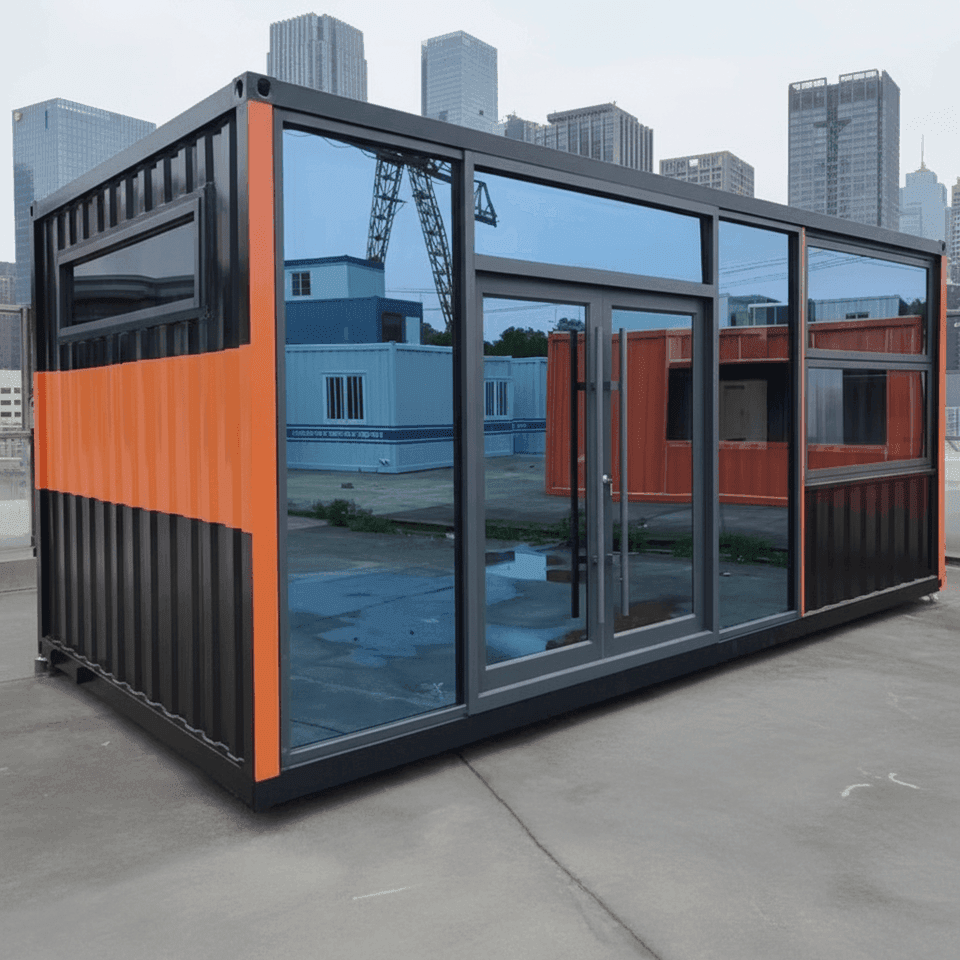
Structural types and classification
Prefabricated container houses fall into three structural types:
- Traditional cargo-container conversion units: Based on discarded or idle freight containers remodeled directly, keeping the original frame and adding doors, windows, or interior partitions by cutting and welding. Cost is lower, but spatial flexibility is limited.
- Newly welded portable box units: Formed by rewelding a steel frame; module sizes can be customized and interior layouts are more flexible, suitable where higher structural strength is required.
- Demountable portable box units: Bolt-connected demountable structures with highly standardized components, easy to transport and reassemble, suited to temporary projects that move often.
Building advantages and environmental performance
The core strengths are modular design and efficient construction:
- Rapid deployment: 20- to 60-foot containers can be joined horizontally or vertically; from factory prefabrication to on-site installation takes only about 3 months, cutting traditional construction schedules by about 50%.
- Material reuse: The main structure can be dismantled and reused; with insulation-layer design, air-conditioning energy use can drop by more than 30%, lowering long-term operating cost.
- Durability: Marine anti-corrosion coating technology supports a service life of up to 20 years, and coatings should use ship-grade eco paints to avoid fading or environmental pollution.
Diversified application scenarios
- Temporary housing: Widely used as construction-site dormitories and rental units, and even for large-event lodging (such as the 2026 Asian Games Athletes’ Village in Nagoya, Japan, and container-homestay scenic areas in Zaozhuang, Shandong).
- Emergency buildings: In earthquake relief and temporary hospitals during epidemics, medical units or isolation spaces can be set up quickly.
- Commercial innovation: Personalized conversions become viral cafés, 24-hour fitness pods, and similar uses—for example, a Tang-style container café in Xi’an draws more than 5,000 check-ins per month on average.
Directions for technical optimization
- Energy-system upgrades: After integrating “PV/thermal panels + underfloor heating,” indoor temperature fluctuation fell from 78% to 12.5%, electricity use dropped 40%, and carbon emissions were cut by nearly half again.
- Smart management: Intelligent algorithms optimize heating so that less than 38 hours of extra power are needed per year, significantly lowering long-term operating cost.
Installation and maintenance notes
Installation should be done by a professional team so wind and seismic performance meet standards; regularly inspect structural connectors and anti-corrosion coatings to avoid safety risks from environmental corrosion.



