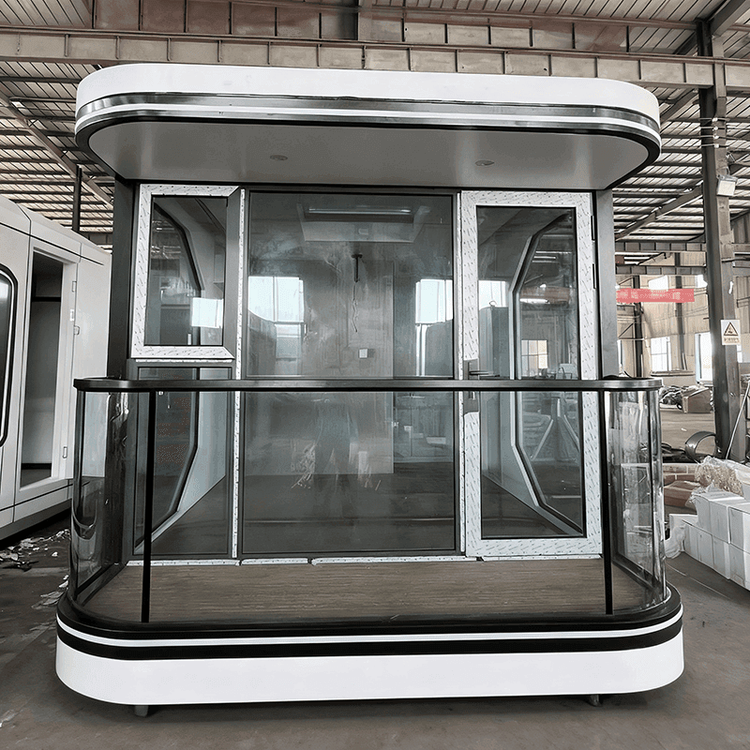
Construction of a Factory for Prefabricated Concrete Integrated Houses
When establishing a factory for prefabricated concrete integrated houses, it is crucial to focus on project approval, environmental requirements, production modes, and market adaptability. The specific processes and key points are as follows:

I. Project Filing and Approval Process
Before establishing the factory, project filing and environmental approval must be completed. Taking Bengbu Xuanda Integrated Housing Co., Ltd. as an example, its project of "New Annual Processing of 1,000 Sets of Integrated Concrete Prefabricated Houses" required filing with the local Development and Reform Commission (to obtain a project code) and preparing an environmental impact report, which had to be approved by the environmental protection department before construction could commence. Filing materials typically include a project feasibility report, land use certificate, environmental impact assessment documents, etc. Specific requirements should be consulted with the local Development and Reform Commission and the ecological environment bureau.
II. Construction Requirements and Environmental Protection Measures
- Drainage System: Implement a "rainwater-sewage separation and clean-sewage separation" system. Domestic sewage should be treated in a septic tank or sewage treatment equipment before being discharged into the municipal sewage network in compliance with standards, to avoid water pollution.
- Air Pollution Prevention: Preferably use finished concrete as raw material to reduce dust generation; equip production processes with mobile purifiers to handle dust, and welding fumes should be collected through exhaust hoods and discharged in compliance with standards.
- Noise Control: Select low-noise equipment (such as low-noise cutting machines and air compressors) and reduce noise by installing shock absorbers and soundproof enclosures to ensure that factory boundary noise complies with the "Emission Standard for Industrial Enterprise Boundary Environmental Noise."
- Solid Waste Management: Entrust domestic waste to sanitation departments for disposal; classify and recycle general solid waste such as offcuts and waste packaging materials; hazardous waste such as waste engine oil and waste paint buckets should be disposed of by qualified units, and a ledger should be maintained for records.
- Groundwater and Soil Protection: Take anti-seepage measures (such as laying anti-seepage membranes) in production workshops and raw material storage yards; set up cofferdams and strengthen operational management in key areas (such as hazardous waste temporary storage rooms).
III. Production Mode and Product Characteristics
- Prefabricated Modular Production: Adopt standardized factory production of reinforced concrete modules, which are assembled on-site through hoisting and splicing to complete the main structure construction. The construction period can be shortened to a few days, significantly improving efficiency.
- Flexible Design: Supports free splicing of single-story, multi-story, and row house units, suitable for various scenarios such as self-built houses, homestays, employee dormitories, and temporary offices, meeting diverse needs.
- Environmental Advantages: Reduces on-site wet operations (such as concrete pouring), decreases construction waste generation, aligns with the trend of green building development, and some products can apply for green building material certification.
IV. Market Cases and Manufacturer References
- Hubei Region: Xiangyang Jinguanhong Architectural Decoration Co., Ltd. provides one-stop services for design, production, and installation, with products covering prefabricated concrete houses and light steel villas, suitable for customers requiring full-process services.
- Shandong Region: Brands such as Weifang Yingchuang and Zhuoli offer double-story concrete houses and customized concrete structural houses, with price ranges of 260-400 yuan per square meter or per unit, demonstrating significant cost-effectiveness.
- Henan Region: Zhengzhou Fan'an Concrete House Factory emphasizes integral pouring and one-piece forming, eliminating the need for secondary plastering and saving approximately 30% of the construction period, suitable for projects with high requirements for construction efficiency.
Recommendation: Before establishing the factory, it is necessary to select equipment and processes based on local policies (such as environmental standards and land nature) and target markets (such as self-built houses and commercial projects), and prioritize cooperation with manufacturers that provide technical training to reduce operational risks.