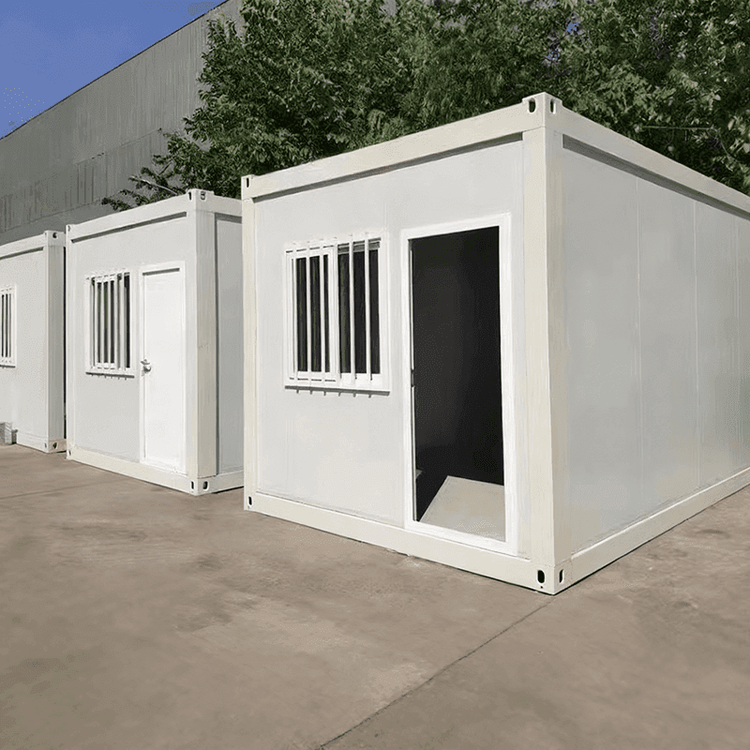
Prefabricated Concrete House with Decoration
Prefabricated concrete houses with decoration are a construction model that involves breaking down buildings into independent modules, completing manufacturing in factories with most decoration processes included, and then transporting them to construction sites for assembly. Here is a detailed introduction to this construction model:

Efficient Construction Process:
This model divides buildings into independent modules and completes the main structure and most decoration processes in factories. For example, in the new energy factory project in Wujin District, Changzhou, Jiangsu, a fully decorated house was completed in just 7 days, with water and electricity connected and kitchen and bathroom facilities fully equipped, allowing for immediate occupancy. This process significantly shortens the construction period through parallel operations and standardized production.
Integrated Decoration Processes:
Decoration processes are completed simultaneously with the main structure in factories, including details such as ceilings, walls, and bathroom waterproofing. The case of the China Construction Haolong Intelligent Construction Industrial Park in Shenzhen, Guangdong, shows that factories integrate decoration processes into module production through automated vertical warehouses and intelligent production lines, avoiding cross-operation issues in traditional on-site construction and improving the consistency of decoration quality.
Significantly Shortened Construction Period:
Compared to traditional construction, the prefabricated concrete house with decoration model can shorten the construction period by more than 60%. The standardized production process and efficient equipment application in factories enable seamless integration of module manufacturing and on-site assembly, reducing the impact of external factors such as weather on the construction schedule, making it particularly suitable for projects with tight time requirements.
Cost and Quality Advantages:
Mass production in factories reduces unit costs while minimizing material waste and labor errors through standardized management. Practices in the Shenzhen industrial park demonstrate that this model can achieve the production goal of "large-scale, low-cost, and high-quality", even exporting building products to international markets and forming a standardized industrial product export model.
Technical Support and Applicability:
The application of new materials such as lightweight aggregate concrete enhances the lightweight and structural strength of modules, facilitating transportation and assembly. This model is suitable for multiple scenarios, including residential buildings, factories, and commercial buildings, especially in areas with complex foundation conditions or limited construction space, showing stronger adaptability.