
Prefabricated Concrete House Wall
A prefabricated concrete house wall is a reinforced concrete panel component processed and manufactured in a prefabrication plant or construction site for building assembly, featuring various types, characteristics, and application scenarios.
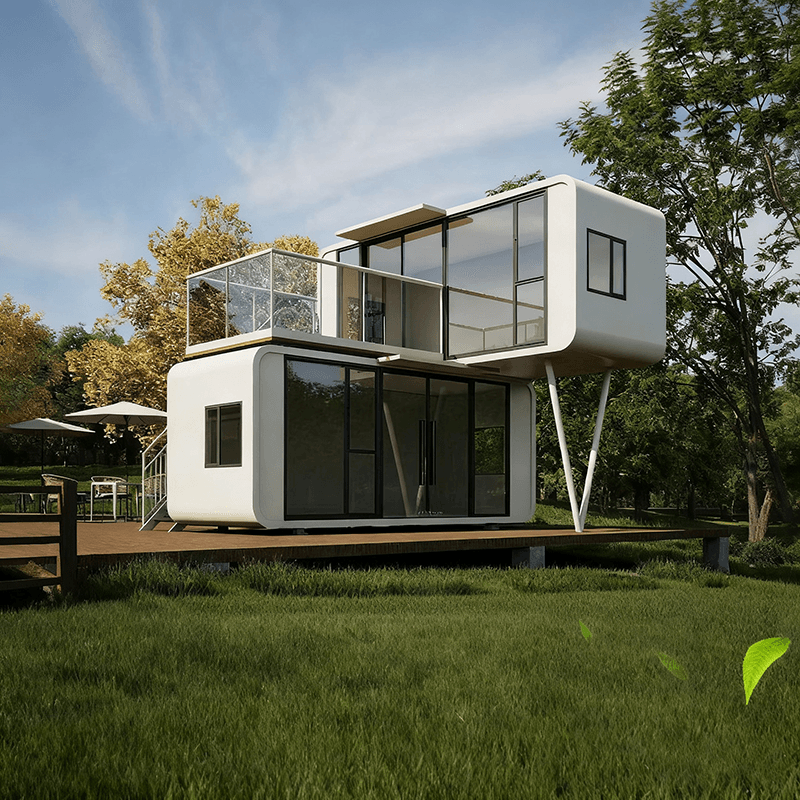
Types
The main types include PC wall panels (such as single-sided composite, double-sided composite, and fully prefabricated types) as well as industrialized finished wall panels. Different types are suitable for various building needs and scenarios. For example, the double-sided composite shear wall structural system has been developed in Europe and offers good structural performance.
Development History
North America began exploring the development and application of prefabricated concrete in the 1920s; Europe developed the double-sided composite shear wall structural system; Japan established technical systems such as the WPC system, WRPC system, RPC structural system, and HPC construction method; China started researching prefabricated large-panel housing in 1958, with such housing appearing in Suzhou in the 1970s and 1980s and gradually phasing out since 1985.
Basic Characteristics
Advantages: Fast construction speed and lower construction costs, as all wall panel components are produced through standardized factory prefabrication. Some components of wall panel houses can be recycled, and the fully disassemblable nature makes the houses easy to transport, saving costs. For example, the E-MIC prefabricated concrete box-type housing system, through design innovation, adopts a modular unit spacing layout method, significantly reducing construction cycles and costs, cutting module usage by 30% to 40%, achieving higher housing efficiency, faster construction speeds, and more flexible spatial layouts, suitable for various building scenarios such as urban renewal, new residential construction, and office spaces. Disadvantages: There are defects such as leakage, poor seismic performance, and inadequate sound and heat insulation. Construction defects such as cracking at wall panel joints and shrinkage of grouting materials lead to leakage, with insufficient fire and thermal insulation performance, easy ground water seepage, and difficulty in structural modification, limiting the scope of application.
Service Life
The service life of prefabricated panels generally ranges from 30 to 50 years, with the actual lifespan influenced by factors such as material quality, construction quality, usage environment, and maintenance conditions.
Applications
Mainly applied to old residential communities built in the 1960s to 1980s, such as Xinzhuang New Village and Nanhuan New Village in Suzhou.
Key Renovation Technologies
For the treatment process of joints in prefabricated wall panels, such as using exterior wall flexible waterproof putty as joint filling material, polyurethane elastic waterproof coating as a sealing layer, and fiber mesh cloth instead of steel wire mesh as a reinforcing layer. The exterior wall renovation of old residential communities in Suzhou has formed replicable experience.



