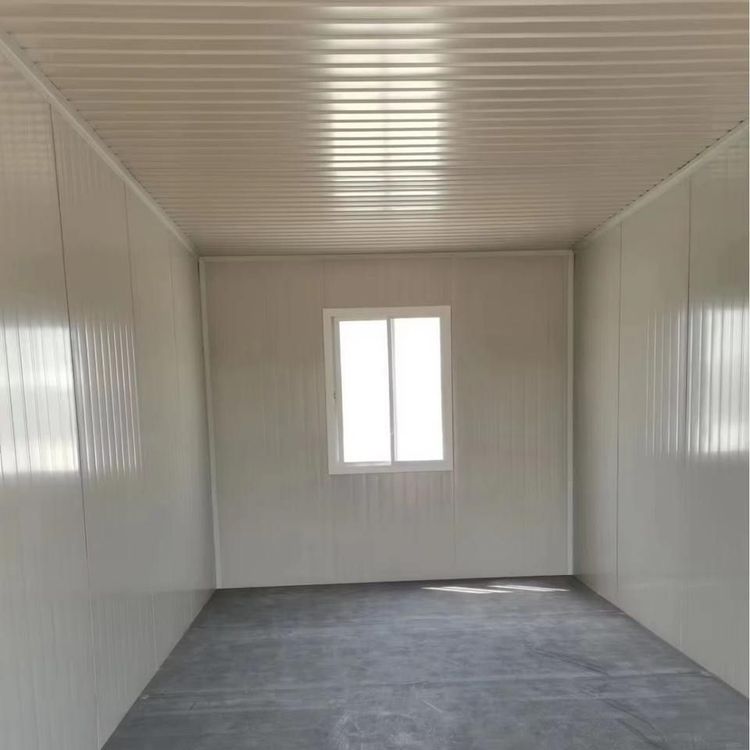
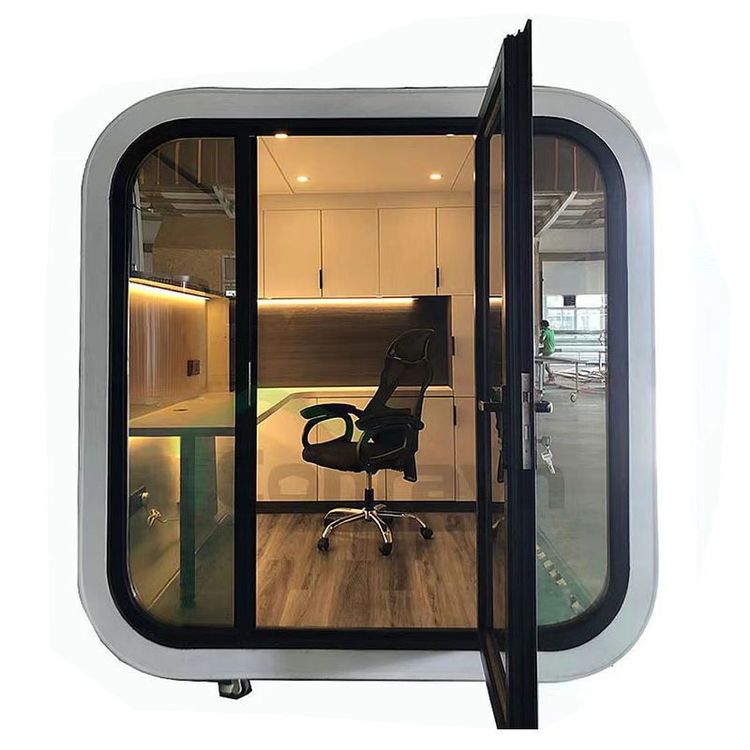
Prefabricated Concrete House - Simple House
Prefabricated concrete houses and simple houses are built by assembling industrialized prefabricated components on-site, featuring fast construction and controllable costs. However, their acceptance in the domestic market is affected by traditional concepts and performance controversies.

I. Core Features and Advantages
Prefabricated concrete houses are produced in factories with standardized components (such as beams, slabs, walls, and columns) and assembled on-site through splicing and hoisting, significantly shortening the construction period. For example, some reinforced concrete modular houses can complete the main structure within 14 days, with construction speeds 50%-70% faster than traditional methods. Their cost advantages lie in reducing material waste through large-scale production, with domestic market prices varying greatly depending on specifications and regions: the Xiangfeng brand in Xuzhou, Jiangsu, costs about 500 yuan per square meter; the Tonghang brand in Shijiazhuang, Hebei, offers rural courtyard products at about 410 yuan per square meter; and the Xiangyun movable house in Jining, Shandong, costs about 8,000 yuan per set. Additionally, the production of prefabricated components reduces on-site dust and noise pollution, aligning with green building trends.
II. Technical Types and Performance
Prefabricated house technologies are divided into panel assembly, box assembly, and frame assembly. Among them, box assembly achieves high-integration construction by combining prefabricated functional units (such as kitchen and bathroom modules); frame assembly uses prefabricated beams and columns as supports, flexibly adapting to different layout requirements. Component connection technology is crucial, with processes such as anchor plates fixing foundation piles, mortise-and-tenon joints connecting beams, and grouting components filling gaps enhancing structural stability. However, some domestic products have suffered from cracking and water leakage due to insufficient sealing at module connections, affecting durability evaluations.
III. Market Applications and Challenges
Overseas demand for Chinese prefabricated houses is strong, with exports of movable houses from the Guangzhou Customs area reaching 1.4 billion yuan in the first four months of 2026, a year-on-year increase of 38.1%, primarily due to cost-effectiveness: a 200,000-yuan prefabricated house in the U.S. covers only part of the labor costs, where local construction workers earn $200-$500 per day, and there is a shortage of 500,000 workers and a housing gap of 4.03 million units. However, acceptance in the domestic rural market is limited due to:
- Cost comparison: Traditional self-built houses have similar costs to prefabricated houses (around 100,000-200,000 yuan) and offer more flexible material choices;
- Conceptual differences: Prefabricated houses were once seen as upgraded versions of temporary panel houses, with traditional brick-and-mortar construction perceived as more durable;
- Performance controversies: Some early products had insufficient sound insulation and thermal insulation, requiring technological improvements (such as adding insulation layers and optimizing connection joints).
In the future, with technological upgrades and policy support (such as subsidies for prefabricated buildings), the penetration rate of prefabricated houses in the rural market is expected to gradually increase.