
Prefabricated Concrete House Forming
Prefabricated concrete house forming is a construction technique that involves pre-processing and manufacturing building concrete components in factories or construction sites, followed by transportation to the site for assembly and forming.
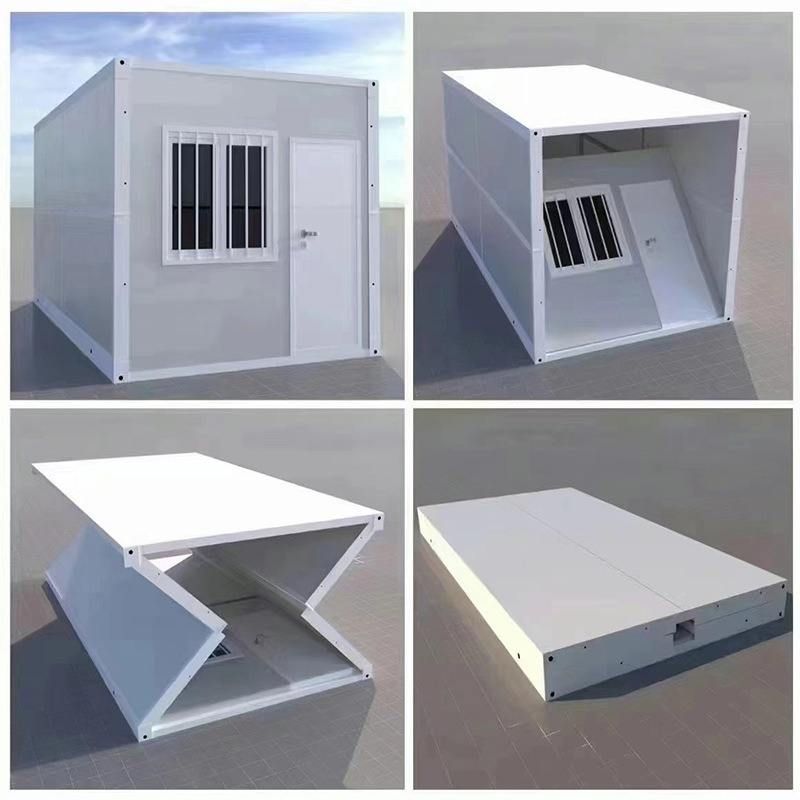
I. Forming Methods
The forming methods for prefabricated concrete houses mainly include flat-mold assembly line and vertical-mold methods. The flat-mold assembly line is suitable for large-scale standardized production, improving efficiency through assembly line operations. The vertical-mold method, on the other hand, forms components using vertical molds, offering the advantage of saving land space, especially suitable for projects with limited site areas. Additionally, the long-line bed method is often used for open-air production of thin components such as floor slabs and wall panels, achieving continuous production by extending the bed.
II. Modular Construction and Prefabricated Assembly
Modular construction represents a higher level of integration within prefabricated assembly-type buildings. Its core involves breaking down the building into independent modules (such as rooms, bathrooms, etc.), with full prefabrication of structures, finishes, and equipment pipelines completed in factories. For example, the CSCEC Hailong Intelligent Construction Industrial Park in Shenzhen, Guangdong, employs welding robots and highly automated production lines to achieve factory-based total assembly of components such as ceilings, walls, and waterproof layers, with an annual delivery capacity of 20,000 to 30,000 modules. This model significantly shortens on-site construction periods and reduces construction waste and noise pollution.
III. Curing and Quality Inspection
Prefabricated components are cured using methods such as steam, hot molds, and solar energy. Steam curing accelerates the development of concrete strength through a high-temperature, high-humidity environment. Hot mold curing utilizes residual heat from molds for energy conservation, while solar curing is suitable for areas with ample sunlight. In the quality inspection process, QR code tracing and 3D laser scanning technologies are introduced: QR codes record information throughout the production, transportation, and installation processes of components, enabling quality responsibility tracing; 3D laser scanning, through non-contact measurement, accurately detects dimensional deviations and surface flatness of components, ensuring assembly precision.
IV. Technical Advantages and Application Scenarios
The prefabricated concrete house forming technique offers advantages such as high construction efficiency, controllable quality, and environmental protection and energy conservation. It is widely applied in standardized building projects such as affordable housing, schools, and hospitals. Modular construction further expands application scenarios, such as temporary housing and post-disaster reconstruction projects requiring rapid delivery. Its factory-based production model also aligns with the development trend of construction industrialization.



