
Advantages and Disadvantages of Prefabricated Component Assembled Houses
The advantages and disadvantages of prefabricated component assembled houses (modular buildings) are as follows:
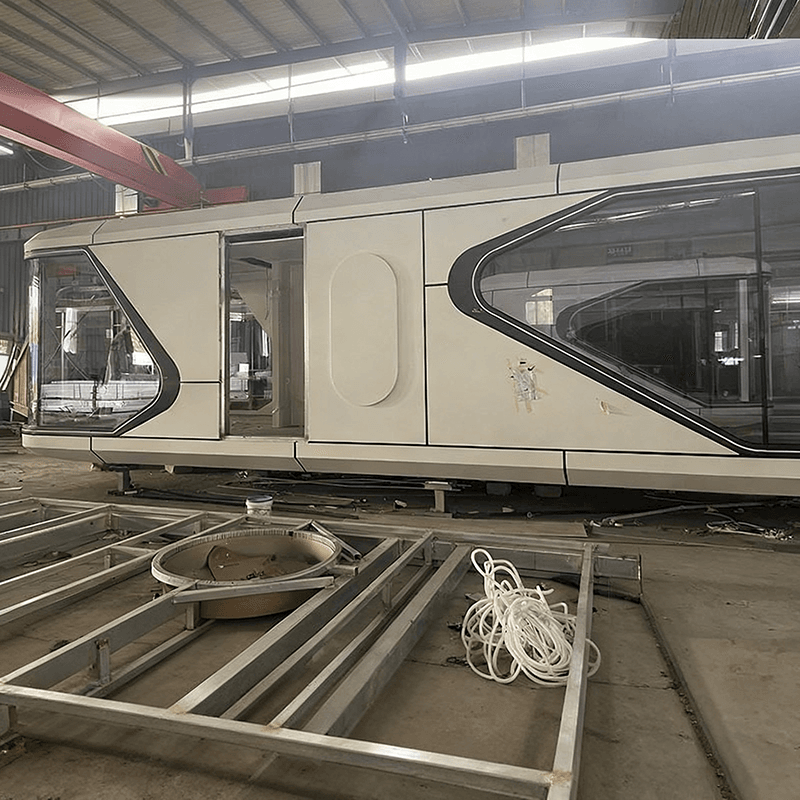
Advantages
Rapid Construction, Shortened Project Duration
The core advantage of prefabricated component assembled houses lies in their high construction efficiency. Since components such as walls, floors, and roofs are prefabricated in factories, only assembly is required on-site, typically reducing the construction period by more than 50% compared to traditional buildings. For example, a 100-square-meter prefabricated residence can be completed in just 1-2 months, whereas a traditional brick-and-mortar residence may take more than 6 months. This characteristic makes them highly advantageous in emergency housing, temporary facilities, or rapid development projects.Cost Control
Factory production optimizes material and labor costs through standardized processes, reducing the complexity of on-site construction. The construction cost of ordinary prefabricated houses typically ranges from 1,000 to 3,000 yuan per square meter, far lower than that of traditional high-end residences (over 5,000 yuan per square meter). Additionally, modular design reduces the risk of design changes and rework, further controlling the budget.Environmental Protection and Energy Efficiency
Factory production reduces dust, noise, and waste pollution from on-site construction, aligning with green building principles. Many prefabricated houses use lightweight steel, wood, or recyclable materials, with some high-end models integrating solar panels, efficient insulation materials, and intelligent energy-saving systems, significantly reducing energy consumption. For example, the insulation performance of lightweight steel houses is superior to that of traditional brick-and-mortar structures, reducing energy consumption by more than 30%.Flexibility and Portability
Modular design allows users to customize the house layout according to their needs and even disassemble and reassemble it at other locations in the future. This characteristic makes them suitable for scenarios requiring frequent relocation, such as tourist accommodations, construction site dormitories, or temporary exhibition facilities. Container houses and lightweight steel houses are typical examples, with their portability providing solutions for areas with limited land resources.Quality Control
Factory production environments are stringent, with components manufactured under controlled conditions, avoiding quality issues caused by weather or worker skill variations in traditional construction. For example, the strength and dimensional accuracy of prefabricated concrete components are far superior to those of on-site casting, reducing common defects such as cracks and leaks.
Disadvantages
Currently, specific disadvantages are not explicitly mentioned in the reference information, but based on industry experience, prefabricated component assembled houses may have the following potential issues:
- Transportation Limitations: The transportation of large prefabricated components requires special vehicles and route planning, potentially increasing costs in remote or inaccessible areas.
- Design Limitations: Modular design may limit the diversity of architectural styles, with complex structures (such as curved walls) requiring additional customization and increasing costs.
- Connection Node Risks: If the mechanical connections or welded joints between components are not properly constructed, they may affect the overall structural integrity, necessitating strict quality inspections.



