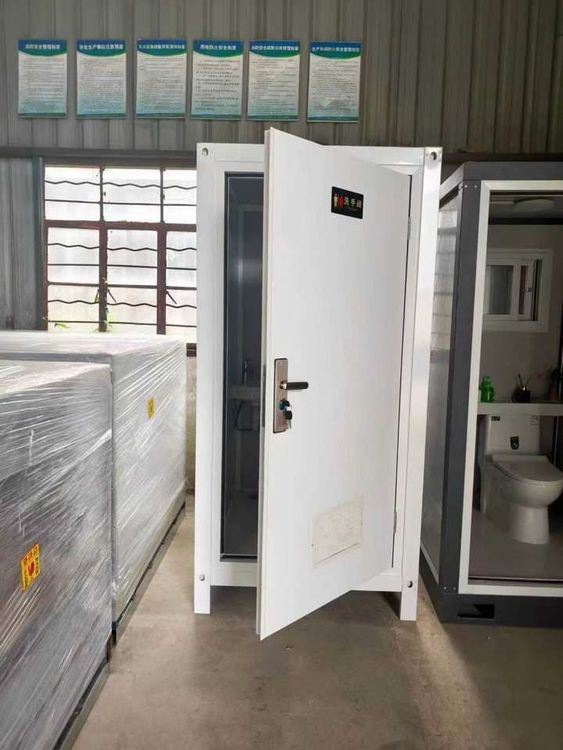
Prefabricated Cement Prefab House
Prefabricated cement prefab houses are a form of rapid construction that uses prefabricated reinforced concrete modules as the core, achieved through factory prefabrication and on-site assembly. Their full name is "prefabricated reinforced concrete full-frame shear wall structure houses."
Core Process and Structural Features
These houses adopt a factory prefabrication + on-site assembly model: Core components such as walls, floors, beams, and columns are cast in one piece using high-precision molds at specialized production bases. Each module integrates multiple structures, including a steel reinforcement framework, insulation layers, waterproofing layers, and pre-embedded piping, forming flexible "building blocks."
- Material Strength: C30-C40 grade concrete is used, with built-in Φ8-Φ12 steel reinforcement mesh, achieving a compressive strength of 25-30MPa, 1.5 times that of traditional brick-and-mortar structures.
- Thermal Insulation: Walls are designed with reserved slots for EPS insulation panels, which, when inserted on-site, improve thermal insulation by 40%, ensuring warmth in winter and coolness in summer.
- Connection Method: Modules are connected using pre-stressed bolts and welded steel plates, forming an integrated frame capable of withstanding wind speeds up to Category 10 and seismic intensity of 7 degrees (able to resist damage equivalent to the Wenchuan earthquake).
Core Advantages
- High Efficiency: Traditional self-built houses take 3-6 months to construct, whereas a 30㎡ module can be prefabricated in the factory in just 7 days. During on-site installation, three workers with a crane can complete a single module in 4 hours, and a 100㎡ house can be fully assembled in just 2 days.
- Low Cost: For a 120㎡ rural self-built house, the cost of a traditional brick-and-mortar structure is approximately 180,000-220,000 yuan, while the cost of the main modules for a cement house is only 120,000-150,000 yuan, reducing overall costs by 30%. If opting for a leasing model, annual rent can be as low as 5,000 yuan per room.
- Green and Environmentally Friendly: Factory production achieves a 95% recycling rate for off-cuts, with no dust or sewage emissions on-site. Construction waste is only 10% of that generated by traditional construction methods. Environmentally friendly concrete and water-based paints are used, with formaldehyde emissions ≤0.05mg/m³ (national standard is 0.1mg/m³), enabling "immediate occupancy" upon completion.
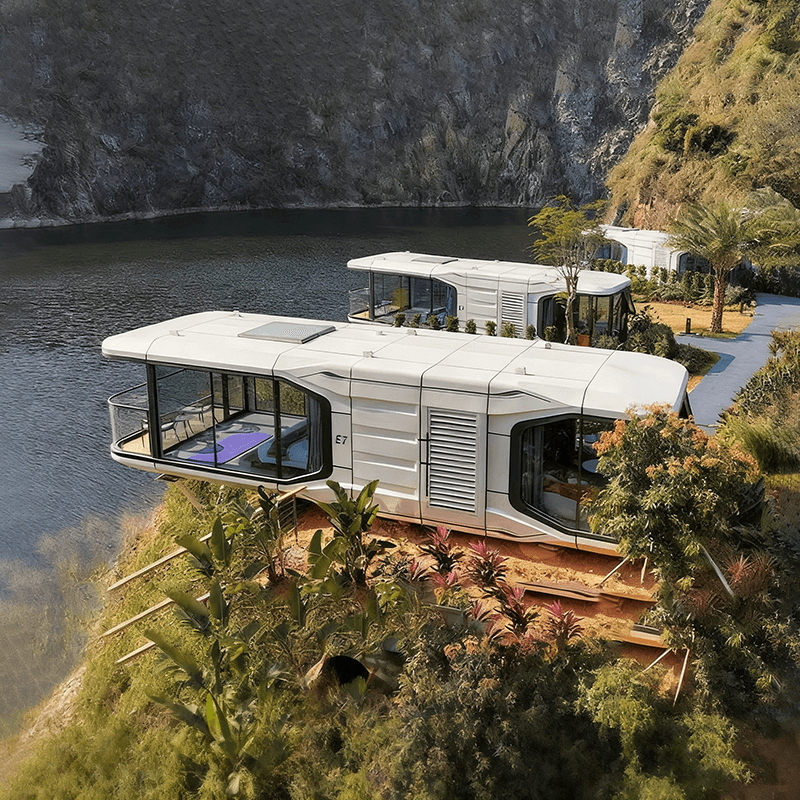
- Flexible Space: Standard modules measure 6m×3m×3m and can be freely combined through horizontal splicing or vertical stacking (up to 3 floors) to create various floor plans. For example, three modules can be spliced to form a 90㎡ two-bedroom, one-living-room rural self-built house, while six modules can be combined to create a 180㎡ LOFT-style cultural tourism homestay.
Application and Development
Prefabricated concrete technology in China began in the 1950s, initially used for factory and residential construction. It experienced a resurgence in the 21st century due to its efficiency and environmental advantages. Companies like Vanke Group have developed prefabricated shear wall residential structural systems and applied prefabricated frame technology in projects such as Nanjing Jindi Yufang. In rural areas, examples like Sichuan's prefabricated cement houses demonstrate cost-effectiveness, with a 200㎡ main structure costing only 110,000 yuan. These houses feature a full reinforced concrete structure, excellent seismic performance, and a long service life.