
Prefabricated Assembly Houses in Rural Areas
Prefabricated assembly houses are widely used in rural areas, characterized by short construction periods, good seismic performance, energy conservation, and environmental protection, and have been promoted in many places.
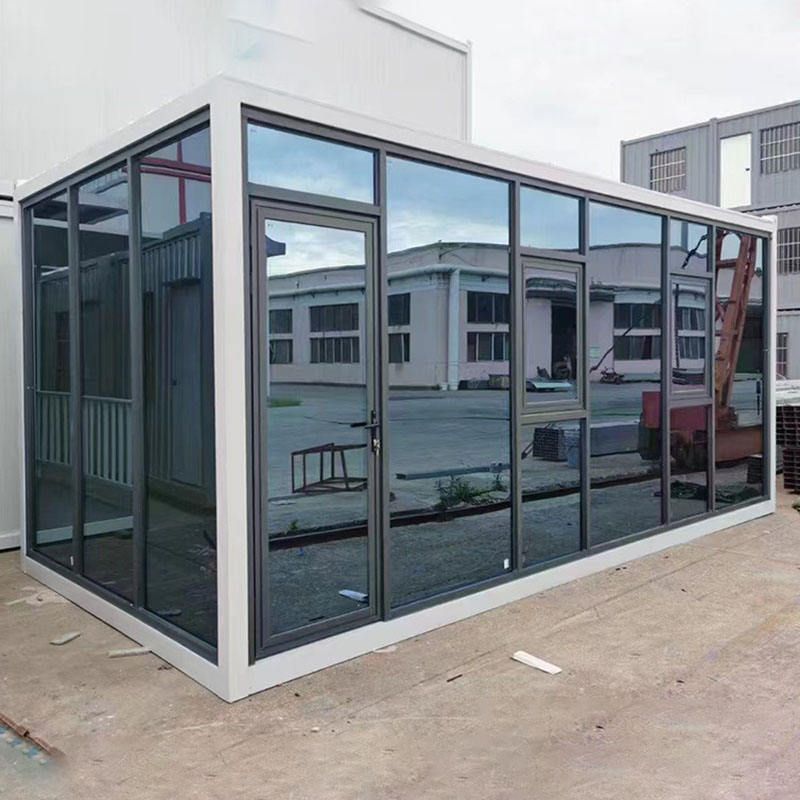
Short Construction Period, Significantly Improved Efficiency
The core components of prefabricated assembly houses (such as walls, floors, beams, and columns) are standardized and prefabricated in factories, then quickly assembled on-site after transportation, greatly shortening the construction time. For example, the main structure of the first "fully prefabricated" rural house model in Yuyao City, Zhejiang Province, took only about 7 days to build; the prefabricated concrete houses popular in rural areas of Henan Province can have their main structures of about two hundred square meters assembled in as fast as 4 hours. This model breaks through the limitations of traditional cast-in-place construction affected by weather and construction periods, making it particularly suitable for the rapid housing needs in rural areas.
Seismic Performance Tailored to Local Conditions, Requires Scientific Selection
The seismic resistance of prefabricated houses with different structures varies significantly. Light steel structure prefabricated houses (such as the light steel rural houses promoted in Zhejiang Province) enhance their overall integrity through node connection technology, offering better seismic performance than traditional brick-concrete structures, making them suitable for earthquake-prone areas. On the other hand, the prefabricated concrete houses in Henan Province, with reinforced concrete as their main body, although having high strength, may have weaker seismic performance than integral cast-in-place houses if the splicing joints are not properly constructed, so they are not recommended for selection in high seismic zones.
Policy Support and Economic Efficiency Coexist
Governments in many places promote the popularization of prefabricated rural houses through policies such as subsidies and loans. Zhejiang Province, as a national pilot province for steel structure prefabricated residential buildings, has introduced measures such as financial subsidies and preferential housing loans, with multiple light steel structure rural house demonstration communities built in Lin'an District and other places; Hebei Province launched an application system for prefabricated rural house pilot projects through the "Yunongtong" APP in 2024, simplifying the approval process. In terms of economic efficiency, the basic rough unit price of prefabricated concrete houses in Henan Province is about 300 yuan per square meter, with a standard service life of up to 70 years, offering significant cost advantages, but it should be noted that additional investment is required for interior decoration and water and electricity installation.
Outstanding Environmental Protection Advantages, Aligning with Green Building Trends
The factory prefabrication model reduces on-site wet operations, lowering dust and noise pollution, and the components can be recycled, meeting energy conservation and environmental protection requirements. For example, fully prefabricated rural houses in Zhejiang Province adopt new materials such as lightweight partition boards, improving thermal insulation performance and reducing energy consumption.
Suitable Scenarios and Precautions
Prefabricated houses are suitable for rural areas with flat terrain and convenient transportation, facilitating component transportation and lifting. During construction, it is necessary to strictly control key links such as joint treatment and node connection to avoid problems such as water seepage and cracking. In addition, homeowners need to plan interior decoration and water and electricity layouts in advance, coordinating with the production stage of prefabricated components to ensure overall quality.



