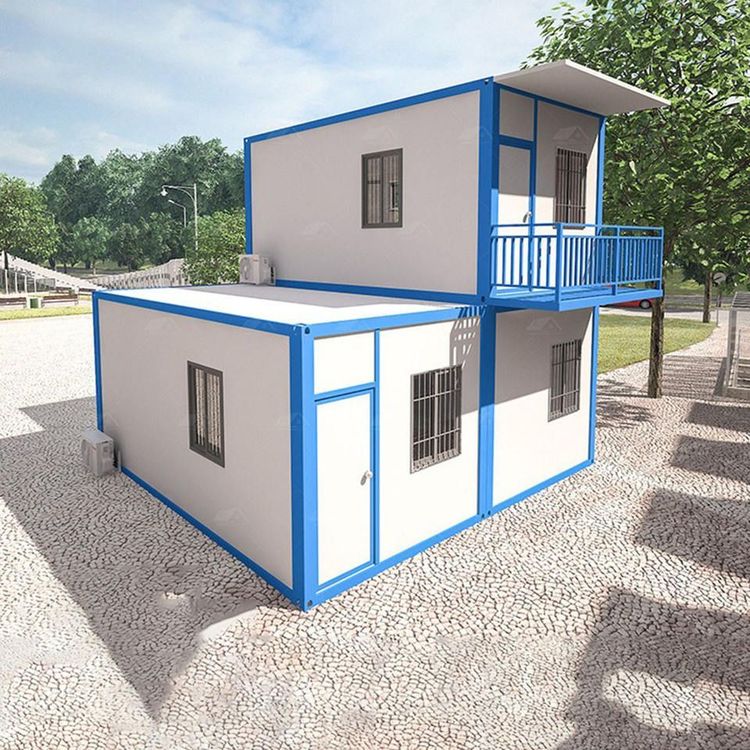
Disadvantages of Prefabricated Assembled Houses
The disadvantages of prefabricated assembled houses (prefabricated houses) mainly include the following aspects:

High Foundation Requirements
Prefabricated assembled houses have extremely strict requirements for the stability of the foundation. Due to the splicing characteristics of prefabricated components, if the foundation is not properly treated, such as the presence of soft soil layers or insufficient compaction, the house may experience tilting, cracking, and other issues due to uneven settlement. This kind of damage is often irreversible, and in severe cases, it can even lead to the failure of the entire house structure, with high repair costs and great difficulty.
Height Limitations
The load-bearing structure of prefabricated assembled houses is usually composed of prefabricated concrete components, and there are clear limitations on their design height. When the building height is too high, the bottom prefabricated components need to bear greater vertical loads. If reinforcement is not carried out by increasing the cross-sectional dimensions of the components or adding support structures, the bottom components may be crushed due to stress concentration, leading to continuous collapse accidents and threatening residential safety.
Joint Treatment Issues
The splicing joints between prefabricated components are a key link in waterproofing and structural durability. If there are defects in the joint treatment process, such as aging of sealing materials or uneven splicing surfaces, water leakage problems will persist for a long time, causing mildew and peeling on the roof and walls, and even affecting interior decoration and furniture lifespan. In addition, water leakage at the joints may also accelerate steel bar corrosion, further weakening the structural strength.
Insufficient Seismic Performance
Prefabricated assembled houses mostly adopt prefabricated structures, and the strength of the connection nodes between components is limited, with relatively weak integrity. Compared with cast-in-place concrete buildings, their seismic capacity is significantly reduced, and they are prone to component detachment, structural disintegration, and other serious damage under earthquake action. Especially in earthquake-prone areas, the safety risks of prefabricated assembled houses are more prominent.
Poor Sound Insulation and Thermal Insulation Effects
The thickness and material characteristics of prefabricated components determine their relatively poor sound insulation and thermal insulation performance. In summer, the indoor temperature is easily affected by high external temperatures, and in winter, heat is lost quickly, resulting in increased energy consumption for air conditioning and heating. At the same time, insufficient wall sound insulation will cause significant noise interference between neighbors, reducing residential comfort.
Difficulties in Internal Structure Adjustment
The load-bearing walls, floor slabs, and other components of prefabricated assembled houses are usually prefabricated standardized products, with a fixed internal space layout and difficulty in large-scale renovation. If it is necessary to adjust room functions or add partitions, it may cause safety hazards due to damage to the load-bearing structure, limiting the personalized needs of residents.
Water Leakage Risks
As the service life increases, prefabricated components may develop cracks due to material aging, temperature stress, and other factors, and the gaps between components gradually widen. This will not only exacerbate the problem of water leakage at the joints but may also lead to vertical water leakage between upstairs and downstairs residents, triggering neighborhood disputes and property losses.
Short Service Life
The design service life of prefabricated assembled houses is usually 30 to 50 years, much shorter than the over 70-year service life of cast-in-place concrete buildings. Many prefabricated panel houses built in the 1970s to 1990s have approached or exceeded their design service lives, showing aging phenomena such as component carbonization and steel bar corrosion, requiring reinforcement or demolition and reconstruction.
You may also like
Portable Toilet Durable Explained: How to Choose the Right One
Read More
Portable Toilet Size Drawings Size & Area Guide: Finding the Right Fit
Read More
Portable Toilet Anti-Corrosion Buying Guide: Options & Tips
Read More