
Portable Toilet
A portable toilet is a facility that can be moved as a whole, providing temporary or fixed toilet services to the public. Its core features and classifications are as follows:
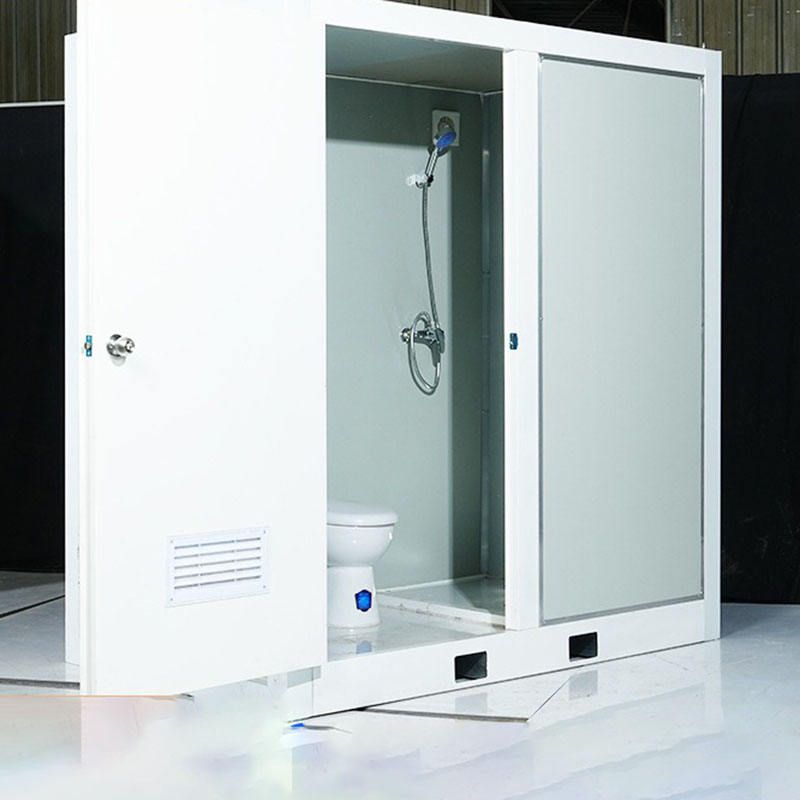
I. Basic Composition and Material Evolution
Portable toilets are typically composed of modules such as fecal sewage storage tanks (or disposal devices), floor slabs, sanitary ware, walls, washing equipment, water tanks, roofs, and mobile devices. Early models were made of wood, which had issues like absorbing odors easily and having poor durability. Modern products widely use lightweight and high-strength materials such as fiberglass and polyethylene, which offer corrosion resistance, easy cleaning, and environmental friendliness. For example, fiberglass can effectively block odors, while polyethylene shells can resist ultraviolet aging, extending the service life.
II. Classification by Structure and Mobility
- By structural form: They are divided into single-unit structures (independent units suitable for small-scale scenarios) and composite structures (multi-unit combinations that can be expanded into public restroom clusters).
- By mobility: They include lifting and handling types (relying on lifting equipment for overall transportation) and powered towing types (equipped with wheel and axle systems that can be towed by vehicles for movement), adapting to different terrains and transportation needs.
- By sewage treatment method:
- Water-flush and non-water-flush suction types: These reduce odors through water tank flushing or vacuum suction and require regular cleaning of the storage tanks.
- Recirculating water-flush types: These use biodegradation or chemical treatment technologies to purify sewage, enabling water resource recycling.
- Dry-pack types: These use biodegradable bags to collect feces, requiring no water source, and are suitable for water-scarce or environmentally demanding scenarios.
III. Core Advantages and Application Scenarios
Their greatest advantages lie in portability, combinability, and reusability. They can be quickly deployed in population-dense or temporary event venues such as stations, docks, tourist attractions, large construction sites, and squares, effectively alleviating pressure on public facilities. For example, powered towing toilets can be used immediately upon arrival at temporary events like music festivals; in post-disaster relief, dry-pack toilets can be quickly set up to avoid water source contamination risks.
IV. Design Principles
The design of portable toilets should follow three principles:
- Portability and cost-effectiveness: Optimize structural weight and modular design to reduce transportation costs.
- Environmental friendliness: Adopt water-saving technologies, biodegradable materials, and harmless treatment devices to minimize environmental impact.
- Humanitarian care: Equip with barrier-free facilities, ventilation systems, and lighting equipment to enhance user comfort and safety.



