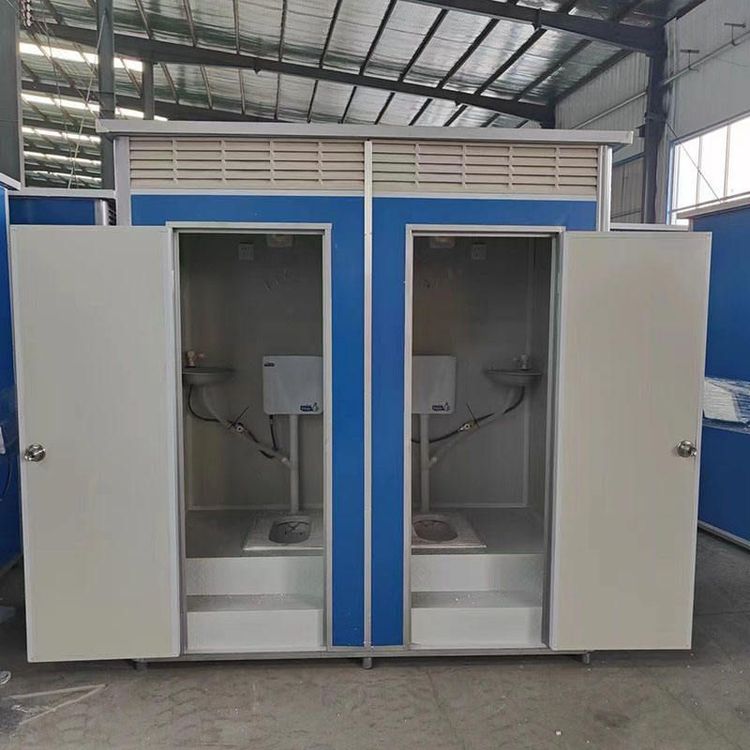
Portable Toilet Quality: A Practical Buyer's Guide
When purchasing a portable toilet, it is essential to consider factors such as material, structure, sanitation performance, functional details, safety, and scenario adaptability. Prioritize products made of durable materials, featuring modular designs, suitable sanitation methods, and international certifications.

Material and Durability
The material of a portable toilet directly affects its lifespan and suitability for different scenarios. Steel containers or high-density polyethylene (HDPE) are preferred choices. The former offers strong resistance to deformation, making it suitable for long-term outdoor use, while the latter is corrosion-resistant and wear-resistant, ideal for high-traffic public areas. For example, some outdoor products manufactured in China use steel frames combined with breathable designs to balance durability and ventilation.
Structure and Portability
Modular design is a key advantage, with detachable structures facilitating transportation to campsites, temporary event venues, and enabling quick assembly. The method of movement should be selected based on needs: single-unit structures are suitable for limited-space scenarios (such as home gardens), while composite structures offer greater functional expandability (such as multiple compartments and storage space). Additionally, hoisted, towed, or motorized portable toilets can meet the transportation needs of different scenarios.
Sewage Treatment and Sanitation Performance
Sanitation methods should match the usage environment:
- Flush toilets: Require a water connection, offering high cleanliness, suitable for areas with infrastructure (such as city parks).
- Non-flush toilets:
- Dry-packing type: Collects waste in biodegradable bags, suitable for water-scarce environments (such as wilderness camping).
- Recirculating flush type: Uses a filtration system to reuse water, reducing water consumption, suitable for high-traffic public areas.
Some brands (such as Yihui) employ self-cleaning technology, enabling automatic cleaning without a water source, enhancing sanitation.
Functional Details and User Experience
User-friendly designs reduce usage concerns:
- Leak-proof structures and quick drainage systems (such as those from the Kangji brand) prevent odor leakage.
- Elevated non-slip handrails and leather backrests (such as the Yihui YZ05 model) are suitable for special populations like the elderly and pregnant women.
- Smart features (such as intelligent cleaning and temperature-controlled seats from the Yade brand, and one-touch drying from the Dinuan TIWARM) enhance comfort.
- Silent designs and efficient disinfection systems (such as those from Junhang products) enhance privacy during use.
Certification and Safety
Choose products with international quality certifications (such as CE, WaterMark) to ensure compliance with environmental and safety standards, avoiding harmful substances released by inferior materials. For example, medical or home use requires particular attention to load-bearing capacity (such as the Yihui YZ05, which supports up to 200KG) and structural stability.
Scenario Matching
- Outdoor activities: Prioritize lightweight, wind- and rain-resistant designs, such as steel-frame modular toilets.
- Home/medical use: Focus on load-bearing capacity, non-slip features, and stability.
- High-traffic public areas: Choose recirculating flush or dry-packing types to reduce maintenance frequency.
Brand Recommendations: Brands like Yihui, Kangji, and Yade excel in environmental technology, user-friendly design, and smart experiences. Specific models can be selected based on needs (such as the Yihui YZ05 for special populations).