Portable Toilet Picture Cost Breakdown: Key Factors
The key factors influencing the cost breakdown of portable toilets include materials and structure, functional configurations, customization requirements, bulk purchase discounts, and additional services, with prices ranging significantly from budget-friendly to high-end custom models.
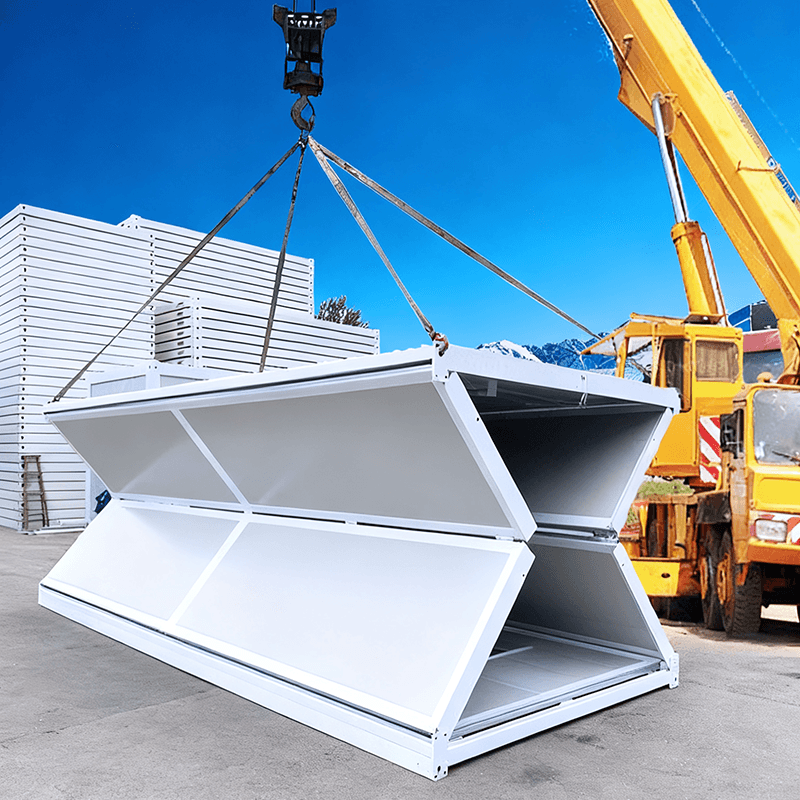
Materials and structure are fundamental determinants of cost. Budget-friendly portable toilets often utilize aluminum-based + EPS sandwich panels, costing approximately $250-300 per unit (minimum order of 10 units). This material is lightweight and cost-effective, suitable for short-term or low-frequency use scenarios. HDPE plastic toilets are priced at $550-680 per unit (bulk purchases), offering advantages such as corrosion resistance, easy cleaning, and equipped with an independent 130L wastewater tank and 390L storage tank, making them suitable for medium to high-frequency use. High-end mobile toilets employ stainless steel or galvanized steel plates, with custom unit prices reaching $6,389-7,986. These materials are more durable and include facilities such as sinks, LED lights, and exhaust fans, suitable for long-term or high-demand scenarios.
Functional configurations directly impact cost stratification. Basic models only include the toilet unit, while high-end models can be extended with showers, urinals, and washbasins, with each additional function significantly increasing costs. For example, an HDPE toilet equipped with a 390L wastewater tank costs more than a 130L model due to the need for stronger structural support and more complex piping design.
Customization requirements are a significant source of cost differences. Personalized customizations such as color, size, and logos require additional fees, such as wooden packaging and 3D design services. Transportation costs also vary depending on packaging methods (e.g., wooden crates) and volume (e.g., 22 units per 20-foot container). The higher the degree of customization, the higher the transportation and packaging costs may be.
Bulk purchase discounts are a key strategy for cost control. The larger the purchase quantity, the lower the unit price. For example, the unit price of HDPE toilets drops to $550 for orders of 100 units or more, while the unit price of high-end toilets for orders of 1-9 units can reach $7,986. This tiered pricing model encourages large-scale purchases, suitable for long-term operations or large-scale projects.
Additional services may increase hidden costs. After-sales services such as online technical support may be included in the price, but high-end models may require additional maintenance fees, especially for toilets involving complex mechanical or electronic components. Long-term maintenance costs should be factored into the budget considerations.