
Portable Toilet for Home Use
Folding commode chairs are the mainstream choice for home-use portable toilets, balancing safety and practicality; custom modifications are required for standalone facilities.
I. Core Design of Home-Use Portable Commodes
The key product for home-use portable toilets is the folding commode chair, designed specifically for household scenarios:
- Structural Stability: Utilizes thickened steel tube frames and anti-slip foot pads to ensure load-bearing capacity and balance during use, particularly suitable for elderly individuals, pregnant women, or post-operative rehabilitation patients with limited mobility.
- Portability: Supports rapid folding and storage, allowing direct placement in bedrooms, living rooms, or other spaces without requiring bathroom renovations, saving storage space.
- Hygiene Design: Features a deep commode bucket to minimize splashing risks; equipped with handles and lids for easy transport and sealing, reducing odor diffusion.
II. Differences Between Public and Home-Use Portable Toilets
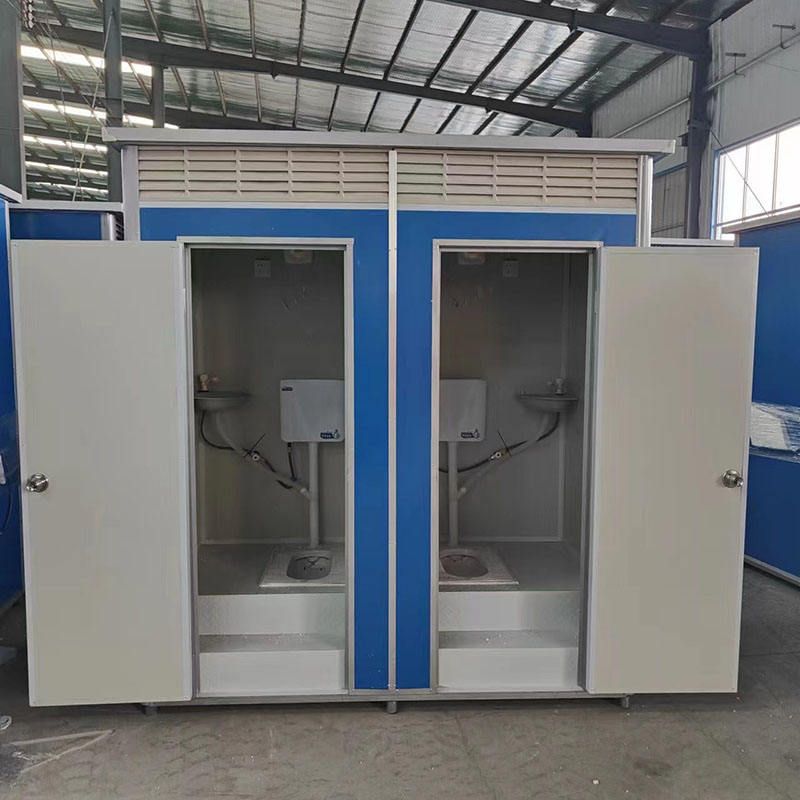
While public portable toilets (e.g., those used in tourist attractions or construction sites) offer mobility and modularity, their designs prioritize large-scale usage:
- Complex Structure: Typically include fecal storage tanks, walls, flushing systems, etc., constructed from materials like fiberglass or polyethylene, resulting in bulky sizes that are difficult to adapt to home spaces.
- Redundant Features: Public facilities must accommodate high-frequency, multi-user scenarios, whereas home environments prioritize privacy and lightweight design. For example, "dry-pack models" require manual garbage bag replacement, and "circulating water flush models" demand regular tank maintenance—both unsuitable for daily household use.
III. Adaptation Solutions for Home Scenarios
- Prioritize Folding Commode Chairs: No installation required, ready for immediate use, low-cost, and simple maintenance, ideal for short-term or emergency needs.
- Custom Standalone Facilities: For fully independent portable toilets, modifications can be made based on public facility principles:
- Dry-Pack Model: Uses a well-sealed plastic bucket as fecal storage, with a detachable toilet seat attached externally. Requires regular garbage bag disposal.
- Circulating Water Flush Model: Requires a small water tank and pump to reduce water consumption through recycling, but necessitates regular disinfection and sewage treatment—suitable for households with drainage systems.
Summary: Home-use portable toilets should prioritize safety, usability, and spatial adaptability. Folding commode chairs represent the most mature solution currently available; for standalone facilities, users must weigh maintenance costs against space requirements and choose or customize based on actual needs.



