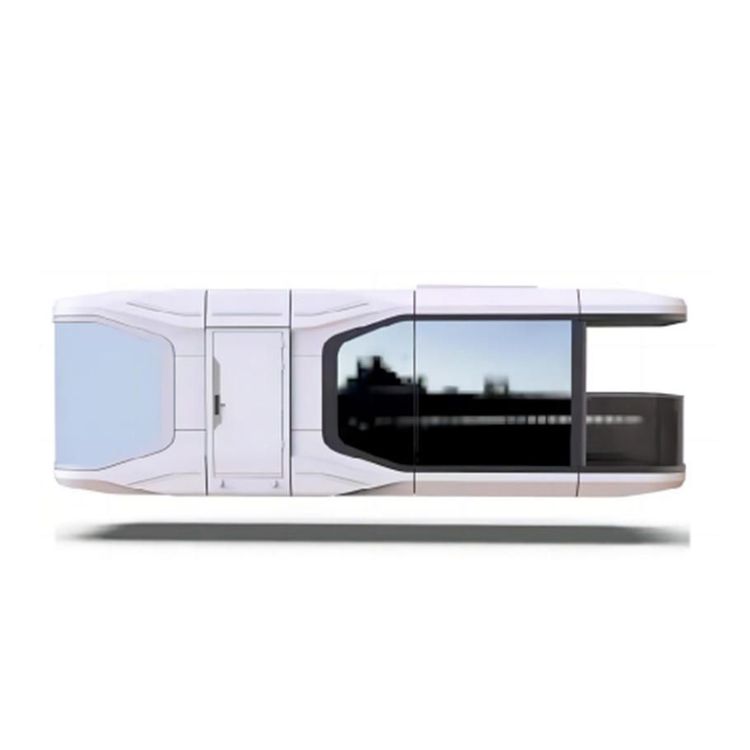
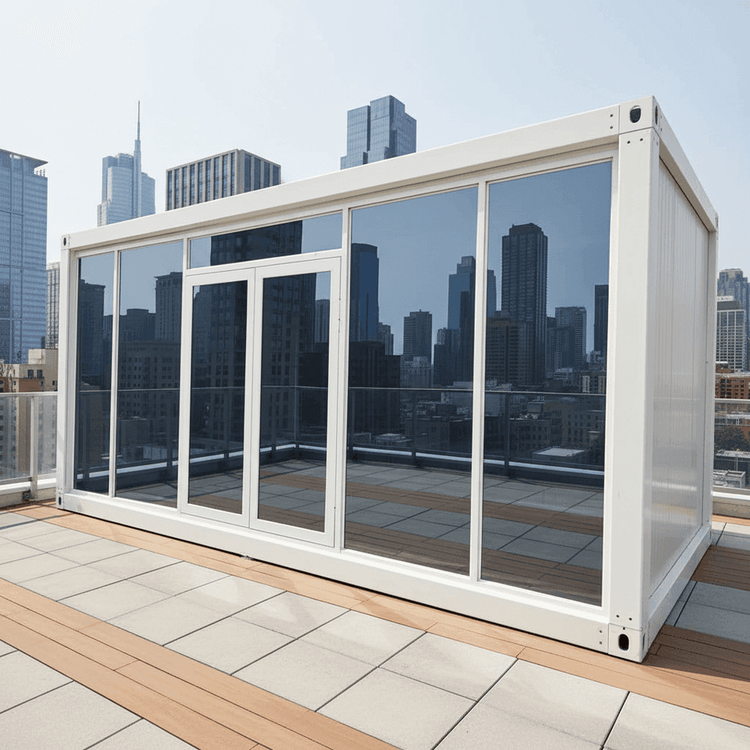
Portable Toilet Container Custom & OEM: Design & Bulk Production Guide
The customization and OEM design, as well as bulk production of Portable Toilet Containers, require comprehensive planning from dimensions such as design, materials, functionality, production, certification, and scenario adaptation, as detailed below:

1. Customized Design: Flexible Adaptation Guided by Needs
Provide multi-dimensional customization services based on the spatial constraints, functional requirements, and aesthetic demands of the usage scenario. Dimensions can be adjusted according to the actual space of construction sites, disaster areas, or temporary offices, such as reducing width to fit narrow passageways. Facility configurations support modular selection, such as adding independent shower rooms or simplifying to basic toilet functions. Waste treatment systems can be customized to chemical treatment, biodegradation, or large-capacity storage tank modes to accommodate high-frequency use or environments without sewer systems. Layout design can optimize traffic flow, such as separating sinks from toilets to reduce cross-contamination risks. Color schemes can match corporate VI or environmental themes to enhance visual harmony.
2. Material Selection: Balancing Durability and Environmental Adaptability
The main structure prioritizes corrosion-resistant steel frames paired with weather-resistant composite sandwich panels (such as fiberglass-reinforced plastic sandwich panels), capable of withstanding temperature differentials from -30℃ to 60℃ and salt spray corrosion, extending outdoor service life to over 10 years. Some models use aluminum-based + sandwich panel structures, reducing weight by 30% while maintaining structural strength, suitable for scenarios requiring frequent relocation. High-end models combine containers with ceramic materials, elevating fire resistance to Class A to meet public safety standards. Materials must pass certifications such as ASTM D5229 (sandwich panel peel strength) and ISO 9227 (salt spray testing) to ensure stable performance.
3. Functional Configuration: Synergy Between Hygiene Needs and Resource Efficiency
Basic configurations include built-in toilets, sinks, and high-capacity waste treatment systems (with a daily processing capacity of up to 200 people), supporting sustained use in commercial activities or large construction sites. Extended functions can integrate double-glazed windows (sound and thermal insulation), smart door locks (access control), electrical systems (lighting/outlets), and plumbing systems (hot and cold water supply). Some models are equipped with waste bins (capacity 50-200L) to simplify cleaning processes. High-end models introduce recirculating water systems, achieving sewage purification and reuse through membrane filtration technology, with a water-saving rate of 80%, meeting LEED green building certification requirements.
4. Production Capacity: Compatibility Between Scalability and Customization
Mainstream manufacturers have a monthly production capacity covering 500-2000 units, supporting flexible production starting from orders of 10 units. Bulk production requires establishing standardized module libraries (such as 20-foot/40-foot standard containers), ensuring precision errors ≤1mm through CNC numerical control cutting and automated welding processes. Custom orders employ 3D modeling and virtual assembly technology to pre-validate design feasibility, shortening development cycles to 15-30 days. Production processes must pass ISO 9001 quality management system certification, with 100% inspection implemented for key processes (such as welding and sealing).
5. Certification and Standards: Dual Guarantee of Safety and Environmental Protection
Products must pass core standards such as ISO 3382 (acoustic performance), CE (EU safety), SGS (hazardous substance limits), and BV (ship classification society certification) to ensure public health and safety during use. In terms of environmental compliance, German EPR certification requires a 20% reduction in the product's full lifecycle carbon footprint, while French EPR certification mandates a 95% recycling rate, driving manufacturers to adopt recyclable materials (such as recycled steel accounting for ≥30%) and modular designs to simplify disassembly.
6. Application Scenarios: Coverage of Temporary and Permanent Needs
Short-term scenarios (such as music festivals, sports events) focus on rapid deployment (2-hour installation) and low cost. Long-term scenarios (such as construction sites, government projects) require enhanced structural stability (wind resistance rating of 12) and durability. Special scenarios, such as soldier camps, necessitate bulletproof glass and blast-resistant doors, while school projects add child safety locks and non-slip floors, reflecting the refinement of functional customization.