
Portable Household Toilet Finished Product
A portable household toilet finished product is a facility that can be moved as a whole, providing toilet services for the public and customers. The following is an introduction from its composition, classification, and homemade examples:
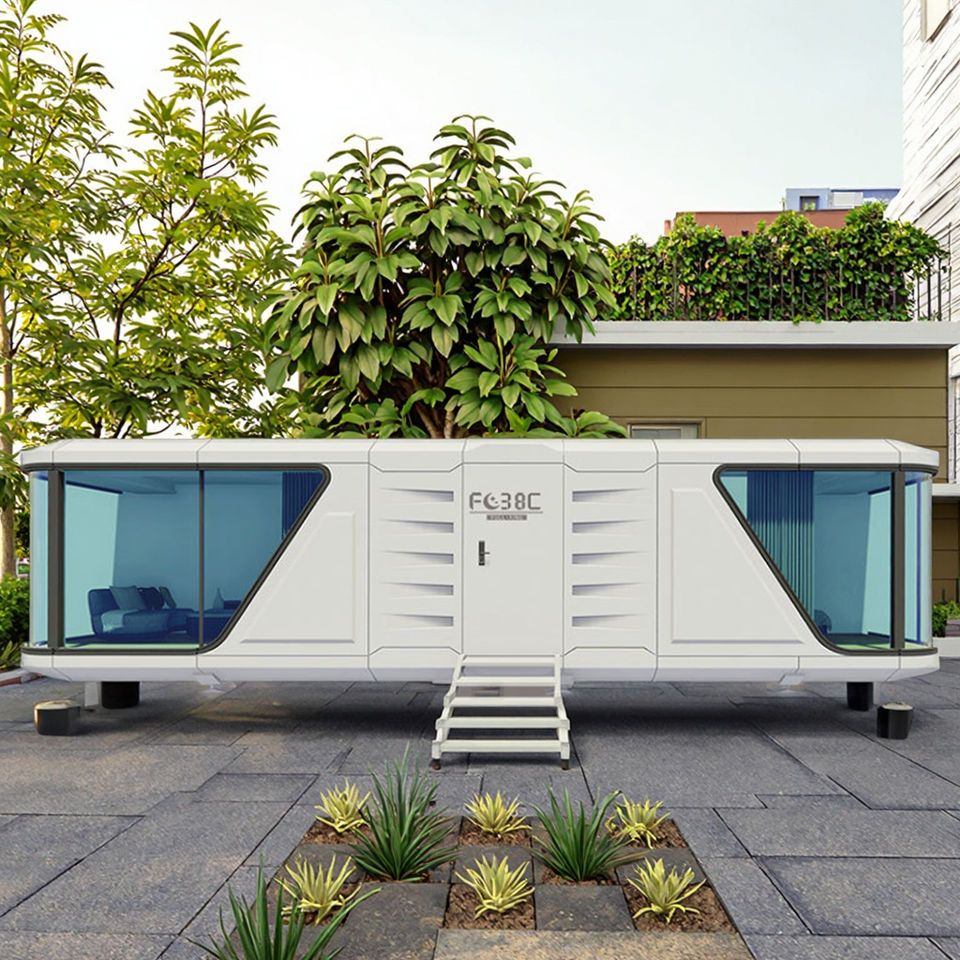
Composition: A portable household toilet finished product generally consists of multiple parts. The fecal sewage storage tank (or fecal sewage treatment device) is used to collect and treat excreta; the floor provides a stable standing and activity space; sanitary ware such as toilets is the core equipment for using the toilet; walls serve to enclose and isolate, ensuring the privacy of users; washing equipment, including washbasins, facilitates user cleaning; a water tank provides water for flushing, etc.; the roof can shield from wind and rain; and mobile devices such as wheels give the toilet mobility.
Classification:
- By structural form: It can be divided into single-structure mobile toilets and composite-structure mobile toilets. The single structure is relatively simple and independent, while the composite structure may be composed of multiple parts and may have more complex and diverse functions.
- By mobility method: There are lifting and handling-type mobile toilets, which usually require lifting equipment or manual handling to move their positions; power and trailer-type mobile toilets have their own power devices or can be moved by vehicle towing, making movement more convenient and efficient.
- By sewage treatment method: It is divided into water-flush and waterless suction-type mobile toilets. The water-flush type flushes excreta with water flow, while the waterless suction type uses suction equipment for treatment; the circulating water-flush type mobile toilet can recycle the flushing water, saving water resources; the dry-packing type mobile toilet dry-packs the excreta without using water.
Homemade examples: There are cases where individuals use common materials to make portable household toilets. For example, one young man used several buckets to build a portable toilet. He installed universal wheels on a wooden board as the base, placed the cut buckets on it and fixed them with wooden strips, cut the buckets to make entrances and exits, extended and raised them with aluminum-plastic panels, installed bucket lids, processed wooden doors, connected drainage pipes and installed floor drains after constructing the main frame, installed water pipe connectors on green buckets, and used PVC pipes to splice and make showerheads. Another young man used a water storage tank and a pallet to make a portable toilet. He fixed universal wheels at the four corners of the bottom of the pallet, placed the water storage tank, cut to form an open tank body, stacked and fixed two top-open water storage tanks, cut out a doorway, made holes in the internal floor to install drainage devices, fixed the toilet, installed faucets, washbasins, showerheads, etc., and finally installed the door.



