Plastic Mobile Toilet Manufacturing
The manufacturing methods of plastic mobile toilets mainly fall into two categories: individual creative modifications and commercial product manufacturing, as detailed below:
Individual Creative Modifications
Individual creative modifications of plastic mobile toilets typically rely on simple materials and basic tools, suitable for temporary or low-cost scenarios. For instance, some people use plastic buckets as the main structure, creating usable space by cutting the bucket body, installing pulley devices for mobility, and using wooden strips to elevate the bucket for enhanced stability. To ensure privacy, slits are cut into the bucket body as the toilet door, with the top covered by a cut section of the plastic bucket to prevent peeping. Another modification method uses wooden boards as the base material, with universal wheels installed in the corners for mobility. Wooden strips are fixed and cut to form a door frame structure, with aluminum sheets inserted to increase the frame height. The top is covered with a cut section of the plastic bucket neck, and finally, white cement is applied for surface beautification. These modification methods offer high flexibility but are limited by materials and craftsmanship, typically meeting only basic usage needs and exhibiting poor durability and hygiene conditions.
Commercial Product Manufacturing
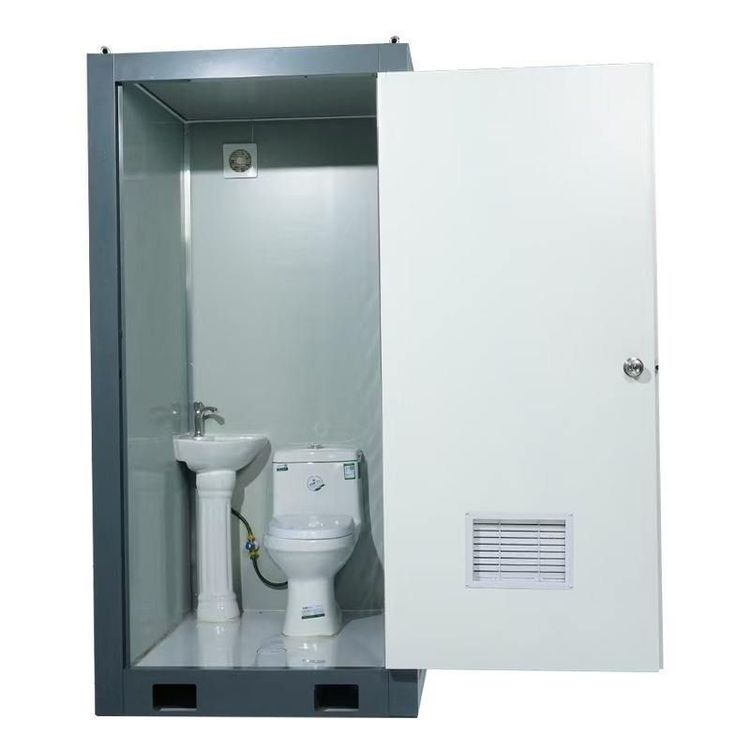
Commercial product manufacturing of plastic mobile toilets focuses on standardized and large-scale production, suitable for public scenarios such as construction sites, outdoor events, parks, and tourist attractions. Taking Guangzhou Kening Environmental Protection Technology Co., Ltd. as an example, its products use polyethylene plastic as the main material, molded through injection or blow molding processes, featuring corrosion resistance, easy cleaning, and light weight. Internally, they are equipped with foot-operated flushing squat toilets, foot-operated water outlet sinks, and other facilities, enabling touchless operation through mechanical linkage to enhance hygiene levels. Some high-end products also integrate modules such as septic tanks, ventilation systems, and lighting devices to meet long-term usage needs. During production, the company achieves mass manufacturing through multiple production lines, offering over ten product types covering different sizes, functions, and design styles, enabling rapid response to market demands. Additionally, commercial products must pass quality inspections and environmental certifications to ensure compliance with relevant standards, and are exported to domestic and international markets.
The two manufacturing methods differ significantly in material selection, process complexity, functional configuration, and application scenarios. Individual modifications emphasize flexibility and low cost, while commercial manufacturing focuses on standardization and durability.