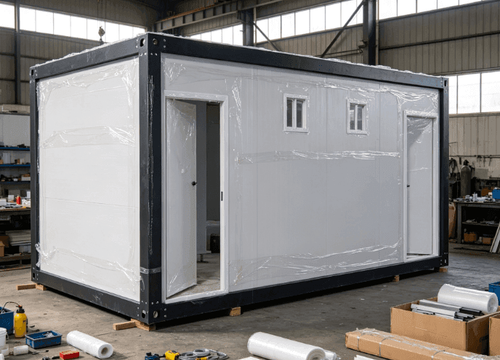
Pickup Truck Mobile Toilet
A pickup truck mobile toilet typically refers to a trailer-mounted mobile toilet that needs to be towed and transferred by a towing vehicle, such as a pickup truck. Its internal structure includes a freshwater tank, a wastewater tank, and a flushing system, making it suitable for rental needs in various scenarios.

Structure and Functional Characteristics
The core structure of a trailer-mounted mobile toilet is designed around the water tanks and the flushing system. The freshwater tank usually has a capacity of 200-500 liters. It is made of high-density polyethylene, which is corrosion-resistant and impact-resistant, enabling it to adapt to complex outdoor environments. The wastewater tank is set up independently from the freshwater tank, with a capacity that matches the freshwater tank to avoid frequent cleaning. The flushing system comes in two types: the manual pump-type completes flushing through mechanical pressure. It has a simple structure and a low failure rate, making it suitable for scenarios with limited resources or high stability requirements; the electric sensor-type relies on battery power, offering a better user experience but requiring regular battery checks. For example, the electric equipment provided by a rental company in Hedong District, Tianjin, can support about 3 days of regular use on a full charge.
Scenario Adaptation and Configuration Differences
The functional requirements for mobile toilets vary significantly across different activity scenarios. Large-scale outdoor performances or sports events require ultraviolet disinfection functions. Ultraviolet lamps are used to kill bacteria, ensuring hygiene and safety. At the same time, forced ventilation systems can quickly remove odors, enhancing user comfort. Construction sites place greater emphasis on the durability and wind resistance of the equipment. The outer shells are usually made of thickened steel plates or high-strength plastics, with reinforced structures to withstand strong winds and collisions. Some equipment also adds anti-slip pedals and splash-proof designs to adapt to muddy site environments.
Rental Considerations
When renting a pickup truck mobile toilet, it is necessary to clarify core parameters. For example, the water tank capacity directly affects the usage duration. A 200-liter unit is suitable for small events (about 50 person-times per day), while a 500-liter unit can support 200 person-times per day. If choosing an electric flushing system, it is important to confirm the battery endurance and understand the charging method (such as whether it supports on-board charging). In addition, the responsibility for equipment maintenance should be agreed upon in advance, including the frequency of wastewater tank cleaning and the response time for fault repairs, to avoid affecting the event process due to management oversights.
Special Scenario Expansions
In extreme climates or remote areas, mobile toilets may require additional configurations. For example, in cold regions, insulation layers need to be installed to prevent the water tanks from freezing. In desert areas, sand-proof filters and sealed designs should be adopted to reduce sand intrusion. Some high-end equipment also integrates intelligent monitoring systems that display real-time data such as water levels and battery levels, facilitating remote scheduling by management personnel.