
Pickup Truck Mobile Container House
Pickup truck mobile container houses generally refer to movable, modular container-style houses suitable for pickup truck transportation or parking scenarios. Their design, functionality, and market positioning closely revolve around portability, functionality, and scenario adaptability. The following analysis is conducted from three aspects: core features, application scenarios, and market cases.
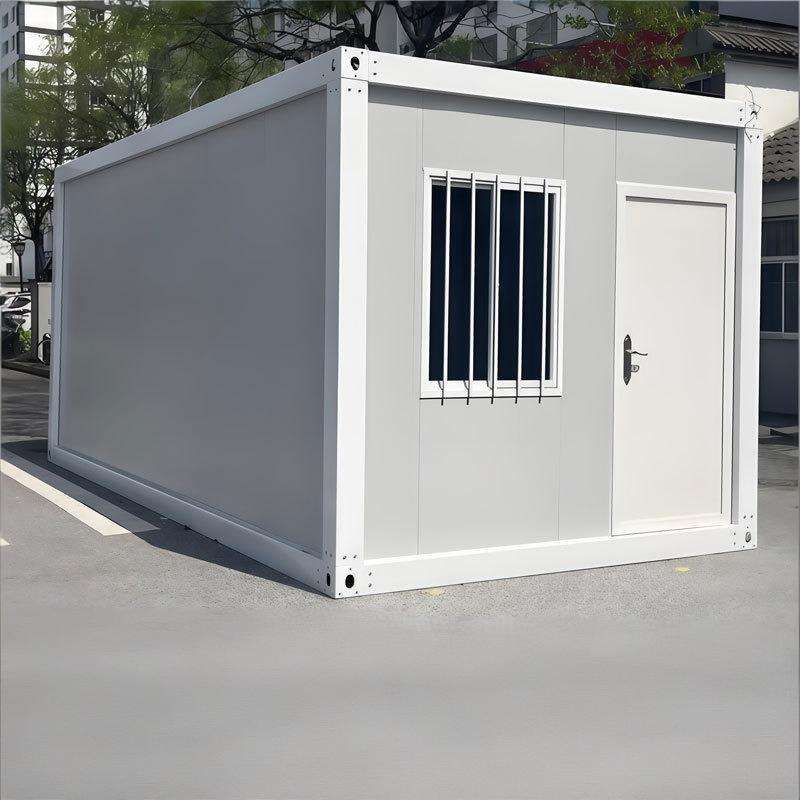
I. Core Design Features
Structural Reinforcement and Portability
To adapt to pickup truck transportation or extreme environments, such container houses often employ thickened steel frames (e.g., 6×120 channel steel bottom beams), densified purlin structures, and standardized wiring configurations to ensure structural stability during transportation. Some products (e.g., Zhengbin containers) are optimized for cold regions, using 10cm thick insulated integrated panels and six-sided insulation technology to maintain indoor temperatures in environments as low as -30°C. Additionally, through integral welding structures, they enhance wind and snow resistance, addressing issues of poor insulation and deformation in traditional panel houses.Modularity and Expandability
Most products support rapid assembly and disassembly. For example, foldable container houses can be compressed to standard container dimensions for easy sea or land transportation. Expandable designs (e.g., dual-wing expansion, flat-lay expansion) allow flexible adjustment of house area to meet different occupancy needs. Some models (e.g., 20-foot self-folding mobile panel houses) integrate a two-bedroom, one-living room layout with built-in kitchen and bathroom facilities, enabling 'move-in ready' accommodation.Functional Integration
Modern designs emphasize functional complexity, such as integrating solar power systems, rainwater collection devices, or equipped with electric rolling shutters and high-weather-resistant fluorocarbon paint exteriors (corrosion-resistant, aging-resistant) to extend service life. Some products (e.g., luxury prefabricated micro-homes) also incorporate smart home modules to enhance the living experience.
II. Typical Application Scenarios
Temporary Residence and Emergency Support
As construction site dormitories, post-disaster reconstruction housing, or military camps, their rapid deployment capabilities are significant. For example, container movable panel houses provided by Suzhou Zhongnan Steel Structure are fire and moisture resistant, support folding assembly, and can form large-scale residential areas in a short period.Commercial and Leisure Scenarios
Modular design makes them suitable for commercial spaces such as coffee bars, pop-up shops, and scenic area homestays. For example, a 10-foot mini container house has been transformed into an outdoor café, attracting customers with its sloped roof and U-shaped flat design.Special Environment Adaptation
For extreme environments like cold regions or deserts, products need enhanced insulation and wind-sand resistance. Zhengbin containers, with their densified structures and thick insulation layers, have become the preferred choice for construction site dormitories in Northeast China. Some export models (e.g., 40-foot folding houses for the US market) optimize sea freight packaging and customs clearance processes to reduce cross-border transportation costs.
III. Market Cases and Cost-Effectiveness
Take the 40-foot folding house purchased by an American couple on Alibaba.com as an example. This house includes a bedroom, kitchen, and bathroom, with a finely decorated area of 70 square meters. The total landed cost is approximately $29,000 (including freight and tariffs), comparable to the price of a high-end pickup truck. Such products significantly reduce unit area costs through standardized production and modular design, while shortening construction cycles (some models can be shipped within 48 hours), making them a cost-effective choice for overseas individual users and small and medium-sized enterprises.
In summary, pickup truck mobile container houses, centered on 'movability, modularity, and scenario adaptation,' cover diverse needs from temporary residence to commercial operations through structural reinforcement, functional integration, and cost optimization, becoming an important branch in the modern construction field.



