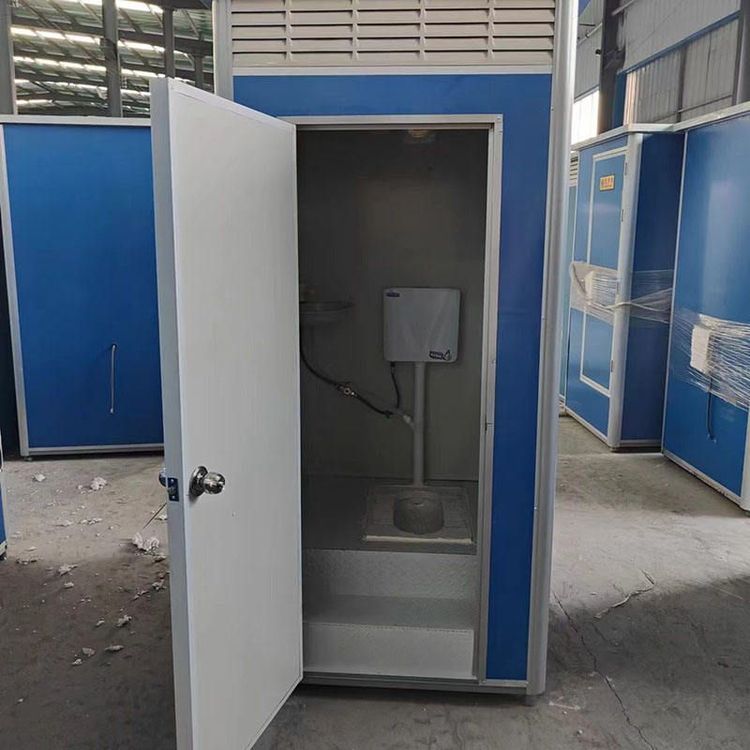
Personal Home Portable Toilet
A personal home portable toilet is a convenient sanitation facility designed to meet the special needs of households, especially suitable for the elderly, pregnant women, and other individuals with mobility issues. Here is a科普 (popular science, here translated as 'general introduction') introduction from three aspects: applicable scenarios, structural composition, and classification methods:

Applicable Scenarios and Core Advantages
For household scenarios, portable commodes are a typical application. Their design focuses on the needs of individuals with mobility issues. For example, the elderly do not need to struggle to get up at night to use the toilet, and pregnant women can easily use them despite physical limitations. These products usually have super strong load-bearing capacity, can stably support users of different body types, and enhance safety and comfort through optimized details such as height and handrails. In addition, the flexibility of portable toilets allows them to be adjusted according to the layout of the household space, avoiding the hassle of renovating a fixed bathroom.
Structural Composition and Functional Modules
Portable toilets are composed of multiple functional modules:
- Basic Structure: Includes flooring (slip-resistant and easy to clean), walls (insulating and soundproof), and a roof (waterproof and ventilated), which together form an enclosed usage space.
- Sanitation System: The core consists of sanitary fixtures (such as commodes and urinals), paired with a water tank (providing flushing water) or a dry-packing device (for use in waterless scenarios).
- Storage and Treatment: A fecal sewage storage tank is used for temporary storage of waste, and some high-end models are equipped with fecal sewage treatment devices for preliminary decomposition or disinfection.
- Mobility Devices: Overall relocation is achieved through methods such as hoisting, towing, or power-driven movement, adapting to different scenario requirements.
Classification Methods and Technical Characteristics
According to structure, mobility method, and sewage treatment technology, portable toilets can be classified into the following types:
- By Structural Form: Single-unit portable toilets are independent and complete units, easy to install; composite-structure portable toilets are composed of multiple modules, allowing for functional or capacity expansion.
- By Mobility Method: Hoisting and handling types rely on external equipment (such as cranes) for movement; powered and towed types achieve autonomous movement through vehicle traction or built-in power systems.
- By Sewage Treatment Method: Water-flush and waterless-flush suction types require connection to a water source or regular suction of waste; circulating water-flush types achieve water reuse through filtration and disinfection technologies; dry-packing types use biodegradable bags to collect waste, requiring no water, suitable for water-scarce or environmentally demanding scenarios.
When selecting for household use, it is necessary to comprehensively evaluate based on the needs of the users, spatial conditions, and budget, prioritizing models that meet load-bearing standards, are easy to operate, and have low maintenance costs.